

state laws

Content tagged with "state laws"

Displaying 51 - 60 of 389

Tennessee Senator Tries Again With Bill to Restore Local Authority

Senator Janice Bowling has become a broadband hero in rural Tennessee and on the pages of MuniNetworks.org. Year after year, she introduces legislation aimed at expanding local authority to allow communities the ability to improve connectivity. She’s back this year with several bills aimed at expanding fiber in rural areas. 

Seeking Better Connectivity…That’s All

Like Bowling’s past legislation, related bills SB 489, SB 490, and SB 494 grant municipal electric utilities the authority “to provide telecommunications service, including broadband service” and specifies that they can do so beyond their electric service area. This change in the current law would allow places like her own community of Tullahoma to expand to serve neighboring towns. There is no fiscal impact from the Senator’s bills.

Bowling has seen firsthand how access to fiber optic infrastructure, such as Tullahoma’s LightTUBe, lifts economic development, improves educational opportunities, and helps a local community reduce costs. The city has thrived since investing in the network in 2009, while many of the communities that have had to rely on subpar service from the larger incumbents have limped along. 

SB 489 also extends authority for municipalities to collaboration for telecommunications and broadband service, to ease any uncertainty about public-private partnerships.


Minnesota Homegrown Connectivity, Christensen Communications - Community Broadband Bits Podcast 346

Brent Christensen, Chief Operating Officer of Christensen Communications, came into our Minneapolis office to sit down and have a chat with Christopher this week for podcast 346. Their interview comes a short time after Christopher and several other Institute for Local Self-Reliance staff took a tour of the Christensen Communications facilities.

Brent has an additional role as President and CEO of the Minnesota Telecom Alliance (MTA) a group that advances policies encouraging expansion of broadband connectivity. Brent describes some of the ways MTA has helped Minnesota and local leaders establish policies to help private sector telecom companies bring better connectivity to local communities, especially in rural areas. He and Christopher spend time discussing Minnesota’s Border to Border Broadband Program and why they think it’s been a success.

The conversation also covers the permitting process, railroads, and partnerships, in addition to other topics. Brent and Christopher discuss some suggestions for communities that are interested in working with local companies, based on Brent’s years in the industry and the knowledge he’s gained from his family’s business.

This show is 36 minutes long and can be played on this page or via Apple Podcasts or the tool of your choice using this feed

Transcript below. 

We want your feedback and suggestions for the show-please e-mail us or leave a comment below.

Listen to other episodes here or view all episodes in our index. See other podcasts from the Institute for Local Self-Reliance here.

Thanks to Arne Huseby for the music. The song is Warm Duck Shuffle and is licensed under a Creative Commons Attribution (3.0) license.

Baby Step Toward Better Broadband in Arkansas

Earlier this month, we learned about a Senate bill in the Arkansas State Legislature that, in it’s original form, would have rescinded state restrictions preventing many municipalities from improving local connectivity. After amendments, SB 150 lost most of its effectiveness, but the bill that became law this week is still a small step in the right direction for a state where the rate of broadband connectivity is some of the lowest in the country.

Beginning Promise

For years, Arkansas has been one of the states that doesn’t allow government entities from providing broadband services to the public. The ban specifically disallowed “directly or indirectly, basic local exchange, voice, data, broadband, video, or wireless telecommunication service.” There has always been an exception to the ban for communities that have their own electric or cable utilities and want to offer telecommunications services. No municipality may offer basic exchange service, interpreted as telephone service.

Only a few communities have taken advantage of the legal exception, such as Paragould, Clarksville, and Conway. In recent years, electric cooperatives are deploying in rural areas, but many of the state’s rural residents rely on DSL, fixed wireless, and satellite. In the few more populous communities, there may also be scattered cable connections available. 

seal-arkansas.png Even though large incumbent ISPs have collected federal grant funding in the past, deployment in Arkansas has been inadequate to connect all Arkansans. According to the FCC, connectivity to households is near the bottom of the list.
D.C. Screening and Discussion Rescheduled: "Do Not Pass Go" on March 26th

Winter has not been kind this year. In addition to interrupting our kids’ learning with numerous snow days, stranding the Minnesota office in our homes due to dangerously cold weather, and interrupting our typically prolific workflow with day after day of shoveling, minor ice related traffic accidents, and sick kids, there’s one other unforgivable offense that rests square on the shoulders of Mother Nature: the cancellation of the D.C. screening of Do Not Pass Go. An impending winter storm forced the cancellation of the event, which was scheduled for February 20th. The organizers are ready to try again, however, and the new event date is March 26th, 2019, 5 - 7 p.m. The venue will be the same — the offices of the National League of Cities/National Association of Counties at 660 North Capitol Street NW.

Register for the free screening and the discussion.

The Coalition for Local Internet Choice (CLIC), Next Century Cities, the Institute for Local Self-Reliance (ILSR), and the National League of Cities (NLC), will lead the discussion about the film and the policies that influence the events of the film and the people living in Pinetops, North Carolina. 

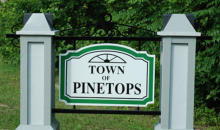
Do Not Pass Go, a documentary by Cullen Hoback, tells the story of Pinetops, where the community finally obtained high-quality Internet access when their neighbor, Wilson, connected Pinetops to Greenlight. The Greenlight community fiber optic network later had to disconnect Pinetops, however, when the state chose to protect incumbents from competition. Hoback’s film tells the Pinetops story and examines how lack of competition has negatively impacted rural communities.

After the screening, the group will discuss regulatory and legislative barriers, and actions that local and federal government can adopt to help communities that consider municipal networks an option.

The panel will include:

Michigan Lame Duck Legislature: Lip Service on Rural Broadband Investment

Big cable and telecom lobbyists managed to locate a legislative vehicle for the components of last December's bill to fund rural broadband, locking out some of the state's most promising opportunities to bring better connectivity to those who need it the most. There’s still time for Michiganders to express displeasure and the result and possibly influence change. You can file a public comment online through February 15th.

The Problems

When we reported on Michigan’s HB 5670 in December, it was set to appear before the House Communications and Technology Committee. Prior to the hearing, however, Chair Michele Hoitenga removed it from the agenda. Regular readers will remember Hoitenga, whose support from cable and telecom companies has inspired her to introduce anti-muni legislation in the past.

The bill, dubbed the “Broadband Investment Act,” established a fund to provide grants for infrastructure deployment, but specifically locked out municipalities and other government entities from eligibility. Consequentially, local ISPs that might want to provide services via publicly owned fiber were also stifled from projects because this provision essentially ended the possibility of public-private partnerships or any competition with large incumbents.

According to the language of HB 5670, “broadband” was defined as 10 Megabits per second (Mbps) download and 1 Mbps upload. While we have seen state broadband legislation from several years ago falling back upon this outdated definition of “broadband,” Michigan condemns rural residents to slow, unreliable, last-century technology. It indicates a thinly veiled attempt to hand over state funds to telecom companies with no interest in providing anything better than what they already offer in rural Michigan — DSL or satellite Internet access.

Film Screening and Discussion in D.C.: "Do Not Pass Go" on Feb. 20th

The story of tiny Pinetops, North Carolina, and how large corporations blocked their ability to obtain high-quality Internet access from a nearby municipal network comes to life in Do Not Pass Go, a documentary by Cullen Hoback. On February 20th, you can attend a screening of the film and stay for the discussion after. The event will be in Washington, D.C., at the office of the National League of Cities/National Association of Counties from 5 - 7 p.m.

Register for the free screening and discussion.

Join the Coalition for Local Internet Choice (CLIC), Next Century Cities, the Institute for Local Self-Reliance (ILSR), and the National League of Cities (NLC), who will be guiding the discussion about the film and the policies that come into play. The group will discuss regulatory and legislative barriers, and actions that local and federal government can adopt to help communities that consider municipal networks an option.

After the screening, a panel discussion will include:

  • Christopher Mitchell from ILSR
  • Terry Huval: Former Director, Lafayette Utilities System, Lafayette, LA
  • Joanne Hovis: Co-Founder and CEO, Coalition for Local Internet Choice; President, CTC Technology & Energy
  • Dr. Christopher Ali: Assistant Professor, Department of Media Studies, University of Virginia; Faculty Fellow, Benton Foundation; Fellow, World Economic Forum
  • Suzanne Coker Craig:Managing Director, CuriosiTees of Pinetops LLC; former Commissioner, Pinetops, NC

Following the panel discussion, the Networking Reception will allow participants to continue the conversation and share their individual experiences.

Register online for the free D.C. screening.

Pinetops, Wilson, and Greenlight

Predictions for 2019, Year in Review for 2018 - Community Broadband Bits Podcast 337

We left our crystal ball, tarot cards, and astrology charts at home, but that won’t stop us from trying to predict what will happen in 2019 for this week’s annual predictions podcast. Each year, we reflect on the important events related to publicly owned broadband networks and local connectivity that occurred during the year and share our impressions for what we expect to see in the next twelve months. As usual, the discussion is spirited and revealing.

This year we saw the departures of Research Associate Hannah Trostle and Communications Manager Nick Stumo-Langer as both decided to head off to grad school. This year, you’ll hear our new Communications Specialist Jess Del Fiacco and Research Associate Katie Kienbaum keeping those seats warm. Hannah and Nick take time out of their schedules to offer some predictions of their own at the end of the show.

In addition to recaps of last year's predictions for state legislation, cooperative efforts, and preemption, we get into our expectations for what we expect to see from large, national incumbent ISPs, local private and member owned providers, and governments. We discuss federal funding, local organizing efforts and issues that drive them, concentration of power, our predictions for digital equity, efforts in big cities, open access, rural initiatives, and more. This podcast is packed with good stuff!

This show is 45 minutes long and can be played on this page or via Apple Podcasts or the tool of your choice using this feed

Transcript below. 

We want your feedback and suggestions for the show-please e-mail us or leave a comment below.

Listen to other episodes here or view all episodes in our index. See other podcasts from the Institute for Local Self-Reliance here.

Thanks to Arne Huseby for the music. The song is Warm Duck Shuffle and is licensed under a Creative Commons Attribution (3.0) license.

Cortez, Colorado, Looking for Private Sector Partner

In early December, the city of Cortez, Colorado, released a request for proposals in their search for a private sector partner to help bring last mile fiber connectivity to premises throughout the community. The city is seeking a way to bring high-quality Internet access to the entire community, but will not expand it’s municipal fiber infrastructure. They're looking for ways to overcome some of the same challenges other small communities face as they attempt to improve local connectivity to every premise.

At A Crossroads

Smith told us that the city is at a crossroads and community leaders think that a public-private partnership (P3) might be the quickest way to get the people of Cortez better services they’re looking for at the affordable rates they deserve. The city faces the challenge of funding the expansion. Approximately $1 million from the Colorado Department of Local Affairs (DOLA) funded the Cortez middle mile infrastructure and connections to community anchor institutions (CAIs), including schools, healthcare facilities, and municipal facilities. Cortez is not able to obtain more grant funding from DOLA for last mile expansion.

Opelika Opts to Privatize

Once again, restrictive state laws designed to help big ISPs maintain their monopolies have helped push a publicly owned network to privatization. Opelika, Alabama, recently announced that they will sell their OPS One fiber optic network to Point Broadband, headquartered in West Point, Georgia. They expect the deal to be finalized in early November.

The Road to Now

The city of Opelika installed the network to overcome poor services from Charter and to improve municipal electric services with smart grid applications. In 2010, Charter’s astroturf campaign to stop the network failed when local voters supported the ballot initiative to build the broadband infrastructure to allow the city to provide services. By 2014, Opelika Power Services (OPS) was making Fiber-to-the-Home (FTTH) available for residents and businesses; folks in the community were loving the service from Alabama’s “Gig City.”

Nearby communities still stuck with poor Internet access wanted OPS to serve them also and OPS wanted to add more subscribers, but state law prevents Opelika from expanding beyond their current coverage area. As in the case of Bristol, Virginia, when a state prevents a municipal network from growing and increasing revenue, the state makes it difficult for the network to remain sustainable.

Mayor Gary Fuller recently told WLTZ:

“We attempted on three occasions to get the legislature to [allow us to] expand beyond our city limits, into North Auburn and rural Lee County, Beauregard, and we could never do that because we couldn’t get the law changed.”

Governor Signs Bill Eliminating Restrictions for Rural Community Broadband

While major media outlets cover news about California Governor Jerry Brown’s decision to sign the state’s network neutrality bill, we’re high-fiving his signature on AB 1999. On September 30th, Gov. Brown approved the bill that removes state restrictions limiting publicly owned options for rural Internet access. The change signifies what we hope to see more of - state action empowering local communities set on improving local connectivity.

We’ve been following the development of the bill, introduced by Assembly Member Ed Chau, since early this year when it began to make its way through committee. Christopher went to California in May to testify in support of the bill at a hearing of the Assembly Communications and Conveyance Committee.

Easing the Way for Rural Communities

AB 1999 focuses on the responsibilities and authority of community service districts (CSDs), created to provide necessary services. CSDs are independent local governments usually formed by residents in unincorporated areas for the purpose of providing the kinds of services city-dwellers often take for granted: water and wastewater management, trash collection, fire protection, etc. In keeping with the ability to raise funds for these services, CSDs have the authority to create enhanced infrastructure financing districts (EIFDs). CSDs are allowed to use EIFDs to fund development of Internet access infrastructure in the same way they would sewer infrastructure, or convert overhead utilities to underground, or other projects that deal with infrastructure and are in the public interest.

Prior to the adoption of AB 1999, however, a CSD would first have to engage in a process to determine that no person or entity was willing to provide Internet access before the CSD could offer it to premises. Additionally, if a private sector entity came along after the infrastructure was deployed and expressed a willingness to do so, the CSD had no choice by law but to sell or lease the infrastructure they had developed rather than operate it themselves.

With the passage of AB 1999, CSDs no longer need to adhere to those strict requirements.