
regulation

Content tagged with "regulation"

Displaying 41 - 50 of 134

Network Neutrality Update

The FCC is hearing the massive public outcry over its plan that would allow the big cable and telephone companies to create fast and slow lanes on the wires most of us depend on to access the Internet. Chairman Wheeler has made some bold claims that he would not allow commercially unreasonable deals but many doubt the FCC has the authority to enforce his tough talk. Now we see that FCC Commissioner Rosenworcel wants to slow down the rulemaking for "at least a month" given the outcry. Resistance to the plan does seem to be building with the emergence of over 100 Internet-dependent companies decrying the possibility of fast and slow lanes. Full letter here [pdf]. Mozilla has developed an alternative approach to reclassification that some are saying just might work, but as a naturally conservative person, I will want to see it vetted by trusted experts like Harold Feld. The main problem with reclassification seems to be that Republicans would demagogue it as Obama attempting to take over the Internet - a problem for Democrats already facing an uphill battle in November. However, Barbara van Schewick - one of the most knowledgeable people on this matter - makes a strong case for the FCC rebooting the whole process, gathering more input, and ultimately reclassifying Internet access as Title II while forebearing many of the Title II powers that would allow the FCC to wield too much control over access to the Internet. Much like the FCC has long overseen telephone access without censoring the content of our speech, it would be possible for the FCC to reclassify Internet access without getting involved in content. However, the larger problem remains - the market power of the massive firms like Comcast and AT&T.

Bill Moyers on Network Neutrality and Threat from Comcast

Bill Moyers has returned to again discuss Network Neutrality with guests Susan Crawford and David Carr from the New York Times. The show is embedded below and well worth watching, especially toward the end as Bill reveals the revolving-door between the top levels of the Federal Communication Commission and industry lobbyists. During the show, they also discuss the importance of ensuring communities are able to build their own networks as an alternative to the massive cable monopolies. Finally, a post from John Nicols on BillMoyers.com outlines what action you can take to ensure the FCC protects the open Internet. Scroll about halfway down for the specific steps.

Michael Powell said What?? Why Everyone Should Ignore the Cable Lobby

Stop and think for a second. Would you regard the electricity grid and water system as an abysmal failure or success? If you are lobbying for cable companies in DC, you apparently think they are monumental failures. Michael Powell, former Chairman of the FCC must be dizzy after his trip through the revolving door on his way to heading the national cable lobbying association. From his remarks at their cable show [pdf]:
It is the Internet’s essential nature that fuels a very heated policy debate that the network cannot be left in private hands and should instead be regulated as a public utility, following the example of the interstate highway system, the electric grid and drinking water. The intuitive appeal of this argument is understandable, but the potholes visible through your windshield, the shiver you feel in a cold house after a snowstorm knocks out the power, and the water main breaks along your commute should restrain one from embracing the illusory virtues of public utility regulation.
Pause for a second and think of the last time your water rate went up. Think of what you were paying 10 years ago for water and what you pay now. Compare that to anything you get from a cable company. His point seems to be that because more regulated utilities like water and electricity are not PERFECT, regulation has failed and we should just let the private sector handle that. Well, some communities have privatized their water systems and the results have been disastrous - see a company called American Water in David Cay Johnston's book The Fine Print and also explored here. Let's imagine if electricity was not tightly regulated and the market set the rates. How much would you pay for illumination at night? A refrigerator? Probably 10 times what you do now if that was your only option. Maybe 100 times after a few Minnesota winter nights. Market-based pricing for electricity would at least encourage conservation and efficiency, I'll give it that. Public utility regulation is far from perfect but the alternative is far scarier. There is no "market" for these services over the long term. There is monopoly.

History of the Quickly Subverted 1996 Telecommunications Act - Community Broadband Bits Episode 89

If all had gone according to the plan behind the 1996 Telecommunications Act, we would have lots of competition among Internet service providers, not just cable and DSL but other technologies as well. Alas, the competing technologies never really appeared and various incarnations of the FCC effectively gutted the common carriage requirements at the heart of the Act. Earl Comstock joins us today to explain what they had in mind when they spent years developing the goals and text of the Act. A staffer to Senator Stevens - and yes, we discuss the legacy of Senator "series of tubes" Stevens and you might be surprised when you learn more about him - Earl helped to craft the Act and then had to watch as the FCC and Courts misinterpreted it. At the heart of our conversation is what they believed would be necessary to achieve the goals of expanding access to telecommunications service to all. Read the transcript from our conversation here. We want your feedback and suggestions for the show - please e-mail us or leave a comment below. Also, feel free to suggest other guests, topics, or questions you want us to address. This show is 30 minutes long and can be played below on this page or via iTunes or via the tool of your choice using this feed. Listen to previous episodes here. You can can download this Mp3 file directly from here. Find more episodes in our podcast index. Thanks to Valley Lodge for the music, licensed using Creative Commons. The song is "Sweet Elizabeth."

Big Incumbents At It Again In Kentucky; Mimi Pickering in the Richmond Register

Yet again, lobbyists from AT&T, Windstream, and Cincinnati Bell are lobbying state elected officials under the false guise of improving communications in Kentucky. In a Richmond Register opinion piece, Mimi Pickering from the Rural Broadband Policy Group revealed the practical consequences of Senate Bill 99.

Republican Senator Paul Hornback is once again the lead sponsor on the bill. As usual, backers contend the legislation moves Kentucky communications forward. Last year, Pickering and her coalition worked to educate Kentuckians on SB 88, that would have eliminated the "carrier of last resort" requirement. We spoke with Pickering about the bill in Episode #44 of the Broadband Bits podcast. They had a similar fight in 2012.

In her opinon piece, Pickering describes the practical effect of this policy change:

It would allow them to abandon their least profitable customers and service areas as well as public protection obligations. But it is a risky and potentially dangerous bet for Kentuckians. Kentucky House members should turn it down.

Everyone agrees that access to affordable high-speed Internet is a good thing for Kentucky. However, despite what AT&T officials and their numerous lobbyists say, SB 99 does nothing to require or guarantee increased broadband investment, especially in areas of most need.

AT&T Kentucky President Hood Harris claims that current Kentucky law prevents the company from investing in new technology. As Pickering points out, AT&T refused to build in unserved areas when offered federal funds. Those funds came with minimum obligations; AT&T was not interested.

FCC to Investigate Barriers to Community Networks

We are supportive of the announcement today from the Federal Communications Commission. We salute the FCC for beginning to examine how state level barriers against municipal networks deter investment in the networks both communities and the nation desperately need. From the statement:
The Commission will look for opportunities to enhance Internet access competition. One obvious candidate for close examination was raised in Judge Silberman’s separate opinion, namely legal restrictions on the ability of cities and towns to offer broadband services to consumers in their communities.
The FCC has a history of encouraging states not to pass such laws (Commissioner Clyburn, previous FCC Chair, former Commissioner Copps) and the National Broadband Plan made recommendation 8.19: "Congress should make clear that Tribal, state, regional and local governments can build broadband networks." Even if communities choose not to build their own networks, having that capacity changes the dynamic of the big cable and telephone companies - something Franklin D. Roosevelt described as the "birch rod" in the cupboard (regarding municipal electricity):
But on the other hand the very fact that a community can, by vote of the electorate, create a yardstick of its own, will, in most cases, guarantee good service and low rates to its population.

Susan Crawford on National Public Radio

"Unless somebody in the system has industrial policy in mind, a long-term picture of where the United States needs to be and has the political power to act on it, we'll be a Third World country when it comes to communications."

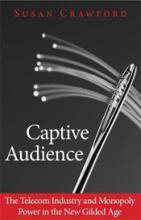
Susan Crawford recently spoke with Dave Davies on NPR's FreshAir. During the conversation Crawford touches on a variety of interrelated topics that affect telecommunications in the U.S. The interview is worth a listen; Crawford and Davies discuss her book, Captive Audience: The Telecom Industry and Monopoly Power in the New Gilded Age, and get into U.S. telecommunications policy.

Crawford discusses the recent U.S. Court of Appeals for the D.C. Circuit decision on network neutrality. Davies and Crawford also tackle the inteplay between the court decision and role of government in bringing access to more people:

I think the problem is actually much more profound than mere discrimination by a few cable actors when it comes to high-speed Internet access. We seem to currently assume that communications access it a luxury, something that should be left entirely to the private market, unconstrained by any form of oversight.

The problem is, that's just not true in the modern era. You can't get a job, you can't get access to adequate healthcare, you can't educate your children, we can't keep up with other countries in the developed world without having very high capacity, very high-speed access for everybody in the country. And the only way you get there is through government involvement in this market.

That's how we did it for the telephone. That's how we did it for the federal highway system. And we seem to have forgotten that when it comes to these utility basic services, we can't create a level playing field for all Americans or indeed compete on the world stage without having some form of government involvement.

You can listen to the 38 minute interview and read the transcript at the NPR website.

Webinar on IP Transition from Public Knowledge and Center for Media Justice

Public Knowledge and the Center for Media Justice have an eye on the transition from traditional copper landline telephone service to Internet-protocol services. As we move forward, both organizations continue to educate citizens on telecommunications policy and how it can affect us.

On December 12, at 2:00 p.m. EST, both groups will collaborate for a webinar on the transition. What's the Hang Up: A Webinar to Understand the Phone Network Transition and Defend Your Communication Rights, will offer info on the transition and will introduce participants to the "What's the Hang Up" toolkit, designed to help consumers get involved as we move forward. Presenters will be Stephani Chen, Amina Fazlullah, and Sean Meloy.

From the webinar announcement:

The largest telephone companies in the U.S. have announced they want to upgrade the technology that delivers phone service to an all internet-protocol (IP) based telephone network.  The telephone has made universal communications possible keeping families connected, becoming a lifeline in times of crisis, and an economic engine for small businesses.

In order for our communities to continue to experience the benefits of the telephone, we must get involved.  Over the coming months the Federal Communications Commission and other government agencies will be considering how to roll out this transition.

You can register online for the presentation. For some great information on the transition, listen to Chris interview Harold Feld from Public Knowledge in episode #52 of the Broadband Bits podcast.

New Free Press Infographic: Stop the Corporate Cyclops From Gobbling Up Local Media

When we think of the enormous cyclops we don't usually imagine him in a suit and tie but the Free Press does and it works. In their recent Media Giants infographic, the Free Press uses the hulking one-eyed beast to represent corporate behemoths slowly taking control of our media through smaller shell companies.

As media power is consolidated, every one else's voices fade. We all become like the one-eyed cyclops: seeing things through his limited vision. The Free Press sums it up like this:

Media companies are using shady tactics to dodge the Federal Communications Commission’s ownership rules and snap up local TV stations across the U.S.

Gannett, Nexstar, Sinclair and Tribune are on major buying sprees. To grow their empires, these corporations are using shell companies to evade federal caps on how many stations one company can own. And so far the FCC has done nothing to stop this trend.

In some communities, one company owns two, three and even four local TV stations — and airs the same news programming on all of these outlets. The result: An echo chamber where all the news looks and sounds the same.

Take action now through the Free Press' campaign or contact your elected officials directly.

Mark Creekmore Takes on Windstream - Community Broadband Bits Podcast #69

Earlier this year, Mark Creekmore transitioned from a frustrated DSL customer to a champion for better Internet access in Georgia. A concerned citizen and tech consultant, Mark joins us for the latest Community Broadband Bits podcast. He discusses his history with Windstream and the steps he went through to improve his Internet access. Along with this interview, you can read a how-to guide he wrote on DSL Reports. Mark documented the times his connection speeds fell, his calls to tech support, and their inability to deliver what they promised. Finally, he helped the CBS Atlanta affiliate to cover Windstream's failure to deliver promised services. We became aware of Mark as he became aware of Windstream's efforts to revoke local authority from local governments to build networks that would deliver the services that Windstream would not. Read our coverage of those legislative fights from 2013 and 2012. Read the transcript of our conversation here. We want your feedback and suggestions for the show - please e-mail us or leave a comment below. Also, feel free to suggest other guests, topics, or questions you want us to address. This show is 22 minutes long and can be played below on this page or via iTunes or via the tool of your choice using this feed. Listen to previous episodes here. You can can download this Mp3 file directly from here. Find more episodes in our podcast index. Thanks to Mudhoney for the music, licensed using Creative Commons.