
FTTH

Content tagged with "FTTH"

Fiber to the Home
Displaying 581 - 590 of 1312

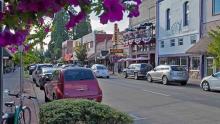
Vinton, Iowa, Stepping Forward on Fiber Network Deployment

It was more than two years ago when voters in Vinton, Iowa, resoundingly gave their blessing to the city to form a telecommunications utility. After study and consideration, the municipality is now ready to move from design to deployment.

In mid-December, a Notice to Bidders went out from the Vinton Municipal Electric Utility (VMEU) and the engineering firm working with the community to develop a publicly owned Fiber-to-the-Premise (FTTP) network. According to the notice, Vinton plans to build the network “in its entirety” over the next year.

According to the media release, the city plans an underground deployment and anticipates the network will include approximately 82 miles of fiber. The Media Release indicates that several RFPs will be forthcoming throughout 2019.

Read the Notice to Bidders Media Release here.

It’s Feasible

In the fall of 2015, after Vinton voters decided 792 to 104 to put VMEU in control of the broadband initiative, it took until early 2017 for the city to hire a firm to develop a feasibility study. Many people in the community of about 5,100 people were tired of poor Internet access via slow DSL. Cable Internet access is available in some areas of town, but both residents and businesses feel that without high-quality connectivity, Vinton will lose out to other Iowa towns  that already have created municipal networks.

Cedar Falls and Waverly are both within an hour's drive north of Vinton. Other communities in Iowa have invested in fiber networks to improve economic development, including Spencer, Lenox, and Harlan.

Phase Two for Rock Falls

After finishing its first phase of broadband build out covering businesses and industrial parks, Rock Falls, Illinois, will begin focusing on residential customers in early 2019. While residents living close to business areas will have early access to the gigabit fiber network, the city of 9,000 will use the fiberhood approach to reach its remaining residential areas.

Growing a Gigabit City

The plan to invest in citywide Fiber-to-the-Home (FTTH) began taking shape when Rock Falls residents became increasingly frustrated with the incumbent cable provider Comcast. Mayor Bill Wescott called for support for the project during his 2017 State of the City address, saying “The time is now to advance Internet in Rock Falls.” Later in April, the City Council approved the use of a $5.3 million general obligation bond issuance to fund the first phase of the build out, and an overall cap of $13 million for the duration of the project. The estimated cost of the project ended up being significantly reduced because the Rock Falls Electric Department (RFED) had already installed extra fiber-optic cable to connect substations as early as 2004.

By using GO bonds to finance their infrastructure deployment, Rock Falls departs from the typical funding approach. Most municipalities issue revenue bonds or employ interdepartmental loans and money they've saved from avoided costs when ending expensive leased lines to telecommunications companies. In recent years, other methods of funding fiber optic build outs have become increasingly popular as broadband infrastructure has obtained utility status in local communities.

Charlemont Chooses Muni Fiber Over Comcast Cartel

The people of Charlemont, Massachusetts, are ready to pay approximatly $1.5 million to own broadband infrastructure rather than shell over $462,000 to Comcast for cable Internet access in their community. At a packed December 6th town meeting, voters showed up to handily defeat the proposal from the cable giant and express their support for a publicly owned fiber optic network.

Making the Best Choice for Charlemont

According to Robert Handsaker, who chairs the Charlemont Broadband Committee, the standing room only crowd at the local school defeated the Comcast proposal by a 20 percent margin. He went on to state that the town already has a design prepared, which it developed with Westfield Gas + Electric (WG+E). WG+E has been working with approximately 20 western Massachusetts towns interested in publicly owned broadband networks in several different capacities, including consulting and design. Having developed their own network, WhipCity Fiber, the Westfield utility is now offering skills as a consultant and as a network operator to nearby communities.

The Comcast proposal required Charlemont to kick in more than $462,000 while only serving 96 percent of the community. Ownership of the infrastructure would have remained with the national company. The city has been exploring options for at least two years, after plans for the broadband cooperative Wired West changed. When voters at a 2015 town meeting voted to approve borrowing for the project, community leaders considered Leverett’s financing model, using moderate property taxes to fund the project.

Possibilities, Challenges, Risks : Chicopee, Massachusetts, Considers A Muni - Community Broadband Bits Podcast 335

By the time a local community is ready to light up their municipal fiber optic network, they’ve already invested several years' worth of debate, investigation, and energy. While deploying a network is certainly a complicated task, educating the community, growing support, and helping elected officials determine the best approach is equally difficult. What’s it like in the early stages for those visionaries who feel that their city or town needs a publicly owned option?

This week we find out from Chicopee’s Joel McAuliffe, Councilor for Ward 1. He’s been advocating for a municipal broadband network for several years and his message is growing. In addition to working to educate his fellow council members about the need for local high-speed Internet access, Joel has reached out to folks in the community. Last fall, he encouraged citizens to sign an online petition supporting the proposal and to contact their elected officials to urge them to move forward on the matter.

Joel describes how the city has certain advantages that he’d like to capitalize on for a citywide fiber network. He talks about local concerns that are driving the effort, such as high rates and poor services, and that with a municipal network to offer competition, he believes Chicopee can attract new business and new residents from the Boston area. Chris and Joel also discuss the challenges for a city council in making decisions based on technology when they are not well-versed in those technologies.

When Joel introduced his petition to the community, he also published this short video to encourage people to sign and share:

This show is 37 minutes long and can be played on this page or via Apple Podcasts or the tool of your choice using this feed

Transcript below. 

We want your feedback and suggestions for the show-please e-mail us or leave a comment below.

Listen to other episodes here or view all episodes in our index. See other podcasts from the Institute for Local Self-Reliance here.

Thanks to Arne Huseby for the music. The song is Warm Duck Shuffle and is licensed under a Creative Commons Attribution (3.0) license.

Estes Park Local Media Encourages Board to Move on Fiber

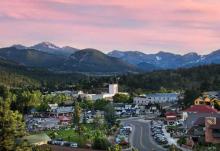
During the February 2015 referendum, approximately 92 percent who voted on the measure, chose to opt out of SB 152 in Estes Park. The mountain town of 6,300 has experienced catastrophic outages dues to ice and flooding, including in 2016 and in 2013 when telecommunications were wiped out for days.

Estes Park has their own electric utility and is part of a regional public power initiative that involves the Platte River Power Authority (PRPA). As a result the town has a fair amount of publicly owned fiber optic infrastructure in place. City officials hired consultants to offer recommendations and by 2016 had entered a design engineering phase of a possible Fiber-to-the-Home (FTTH) initiative. Experts estimated the cost to connect the community to be around $30 million and recommended a retail model.

At their recent November meeting, members of the Board of Trustees unanimously voted to allow Estes Park staff to issue a Request for Proposals (RFP) to find broadband bond underwriters. To keep the momentum moving forward, the Trail Gazette published an editorial encouraging Estes Park leadership to continue the process and to bring better connectivity to the community:

…Estes Park needs more action and less discussion for greater access to information and global connectivity. No longer is accessible, fast and reliable broadband Internet a luxury; it is a necessity in our digital world.

Editors stressed that Longmont, Fort Collins, and Loveland have either deployed or are in the process of creating gigabit networks and that Estes Park will be left behind in many ways if forced to depend on the same slow, unreliable Internet access that has left them stranded in the past.

Grant PUD in Washington Aiming to Connect Entire County - Soon!

At their November 27th meeting, Commissioners from the Grant County Public Utility District (Grant PUD) in Washington approved the funds to complete countywide fiber optic deployment. They’ve decided to dedicate an additional $12.6 million in new funding toward infrastructure to speed up the project. The total 2019 fiber budget is now set for $18.4 million to pay for expansion, maintenance and operation, and new customer connections.

According to Wholesale Fiber senior co-manager Russ Brethower, Grant PUD will have a more accurate and detailed timeline calculated in the spring. Approximately 30 percent of Grant County residents have yet to be connected to the network. While some communities have partial connectivity, there are still a few with no connections to the fiber and the new accelerated plan aims to change that.

Big Ambition for A Big County

With approximately 3,000 square miles, connecting the entire county is no small feat. Grant County, known for its large potato farms, contains expansive tracts of rural areas and several dense population centers. Add in the fact that soil varies from rock to easily plowed soil, and the Grant PUD has faced an extensive education in all manners of deploying fiber.

Christopher talked with Brethower for episode 279 of the Community Broadband Bits podcast about the network and the start of Grant PUD's efforts in 2000. Brethower discussed the fact that the county is an ideal place for data centers, as companies are encouraged by inexpensive real estate, the climate, low electric rates, and the fiber network.

Brethower also described how connecting the remaining residents and businesses in the county has become a priority for the Grant PUD and that their open access network, as required by state law, has attracted two dozen service providers.

With the additional funding for 2019, the Grant PUD will reduce the original deployment goal from 10 years to five.

Listen to the November 2017 interview with Russ Brethower here to learn more about the story behind Grant PUD’s fiber network:

Dalton, Georgia, Officially A Gig City

In a recent episode of the Community Broadband Bits podcast, host Christopher Mitchell spoke with Hank Blackwood from Dalton Utilities in Georgia about their publicly owned network, OptiLink. Hank described an upcoming milestone for the community of around 35,000 and a few surrounding rural areas with access to the network. Now it’s official — OptiLink is the first municipal network in the state that offers residential gigabit Internet access to subscribers.

Updates, Updates

Gigabit connectivity is coming on the heels of another improvement for OptiLink subscribers. This fall, officials at Dalton Utilities launched their new video product, VidLink. Hank described that the old video equipment needed a facelift after providing services to the community for 15 years.

With VidLink and the new subscriber base it began to attract, and the desire to give Dalton the economic development tools for a truly tech-centered economy, network officials decided it was time to expand gigabit connectivity. They had offered the service to businesses for about four years and on November 19th, 2018, officially launched residential symmetrical gig service.

Residential GIGLink service is an affordable $79.95 per month when bundled with VidLink and voice. Stand alone GIGLink service costs $84.95 per month.

Households can still sign up for three other symmetrical tiers as low as $41.95 per month for 50 Megabits per second (Mbps). Bundling with voice and video saves subscribers $5 per month.

It All Began With SCADA

Beyond Mapping With VETRO FiberMap - Community Broadband Bits Podcast 333

Whether it’s a local government or ISP that chooses to invest in fiber optic infrastructure accurate, dependable, mapping is critical before, during, and after initial deployment. This week’s guests deliver that service through VETRO FiberMap. CEO Will Mitchell and COO Sean Myers join Christopher to discuss their mapping platform, the creative ways they use it, and their expectations for the future of fiber networks.

Will and Sean explain how in working with ISPs and local communities interested in providing better connectivity, they’ve found that they’ve been able to adjust FiberMap to deliver specialized services. FiberMap has provided the information needed to not only deploy, expand, and manage fiber networks, but it has also allowed companies and publicly owned networks to develop marketing plans and expand their future visions.

Christopher, Will, and Sean discuss GIS data, where they can access it and where it’s more challenging to obtain this data that is so important to creating a successful deployment plan. They also get into some of the many projects where local communities have used VETRO FiberMap, including some of the better-known deployments in Maine, where recent changes in the law have encouraged an increase in regional efforts.

Check out this video and learn more about VETRO FiberMap at their website.

This show is 33 minutes long and can be played on this page or via Apple Podcasts or the tool of your choice using this feed

Transcript below. 

We want your feedback and suggestions for the show-please e-mail us or leave a comment below.

Listen to other episodes here or view all episodes in our index. See other podcasts from the Institute for Local Self-Reliance here.

Thanks to Arne Huseby for the music. The song is Warm Duck Shuffle and is licensed under a Creative Commons Attribution (3.0) license.

After Years of Consideration, South Hadley Electric Department Moves Forward With FTTH Network

Ninety miles west of Boston, the small town of South Hadley, Massachusetts, will soon have a new, municipal option for Internet access. In October, the South Hadley Electric Light Department (SHELD) Board of Commissioners unanimously approved plans to build a Fiber-to-the-Home (FTTH) network throughout the town of 17,000. The network would bring high-speed fiber connectivity to South Hadley businesses and residents, who can currently choose between Comcast and Verizon for Internet access, while also enabling the municipal electric utility to implement smart grid technologies.

SHELD has been considering offering fiber optic Internet access to residents for several years. After hiring the current General Manager, Sean Fitzgerald, in 2017, management started to seriously examine the possibility of building a FTTH network. “What we’ve really been focused on this last year and a half,” Fitzgerald shared at the SHELD Board of Commissioners meeting, “is being diligent in reviewing the costs, the risks, the economic benefits for our customers and the South Hadley community at large.” In approving the network, Commissioner Vern Blodgett said, “SHELD is really ready financially and management-wise to take on a project like this.”

Smart Grid, Economic Development Benefits

One reason for SHELD’s interest in a fiber network is the potential to deploy Automated Metering Infrastructure (AMI). While evaluating plans to provide Internet access, electric department management realized that current meters needed to be replaced, providing a perfect opportunity to upgrade to smart meter technology that could be integrated into the fiber network. This technology could help the utility better manage the electric grid load and respond to outages, ultimately saving SHELD money and improving customer experience. “It’s the future [of electric service],” Fitzgerald explained to the board. “If your power goes out, we will know maybe even before you do.”

After 15 Years, OptiLink Still Innovating in Dalton, Georgia - Community Broadband Bits Podcast 332

Dalton, Georgia’s OptiLink has served the community for around 15 years, making it one of the first citywide Fiber-to-the-Home (FTTH) municipal networks. In this interview, Chief Technical Services Officer of OptiLink and for Dalton Utilities Hank Blackwood talks with Christopher about the past, the present, and the immediate future of OptiLink.

Hank describes the original purpose for bringing fiber into the community. From utilities to businesses to residents, city leaders realized that Dalton needed better connectivity and that the best source was a hometown utility that cared about subscribers. In addition to economic development, advancing telehealth, and inspiring entrepreneurs, the OptiLink network has allowed the community to celebrate its diverse culture.

Now that it’s time to update their video offerings, says Hank, OptiLink has discovered a great new video product that is attracting new subscribers. Over the years, they’ve tried to introduce new technologies to Dalton in order to keep the community up to speed and now that they’re introducing gigabit service, they are truly a tech city.

This show is 28 minutes long and can be played on this page or via Apple Podcasts or the tool of your choice using this feed

Transcript below. 

We want your feedback and suggestions for the show-please e-mail us or leave a comment below.

Listen to other episodes here or view all episodes in our index. See other podcasts from the Institute for Local Self-Reliance here.

Thanks to Arne Huseby for the music. The song is Warm Duck Shuffle and is licensed under a Creative Commons Attribution (3.0) license.