
California

Content tagged with "California"

Displaying 1 - 10 of 266

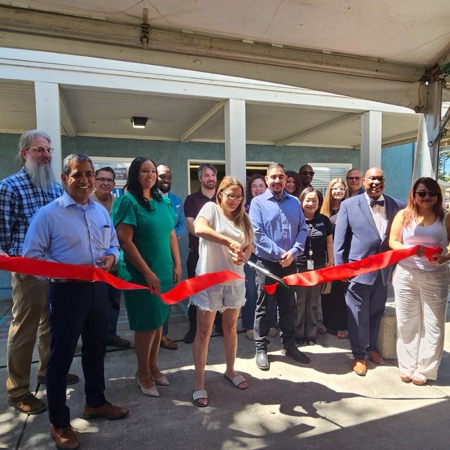
Fresno, California Celebrates Launch of Free Internet Initiative on Back of Community-Owned Network

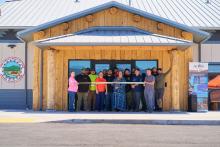
California community leaders, activists, and a coalition of partners gathered earlier this month to celebrate the launch of a new broadband infrastructure project at Sequoia Courts and Sequoia Courts Terrace in Fresno, bringing free high-speed Internet access to more than 350 residents.

The plan to bring broadband access to residents at no cost was made possible through a partnership with Fresno Housing, Fresno Coalition for Digital Inclusion (FCDI), United Way Fresno & Madera Counties, and Central Valley Community Foundation (CVCF). The Fresno Housing Authority will own and maintain the finished network.

The expansion, which leverages a hybrid fiber-wireless approach, was directly funded by California’s ambitious Broadband For All initiative, a $6 billion effort aimed at dramatically boosting broadband competition and access across the Golden State. Much of that effort was funded, in part, by the 2021 American Rescue Plan Act (ARPA).

Image
A group of community leaders and housing resident cut red ribbon in front of building

The Fresno grant was for $471,000, with $1,000 or less per unit cost to build, according to details on the project included in a California Public Utilities Commission (CPUC) filing, which notes that the enterprise-grade wireless mesh network used in the project was more costly, but provided “flexibility and scalability for future expansion.”

A California Democrat Is Trying to Gut the State’s Broadband Watchdog

Today, the American Prospect published an analysis – “A California Democrat Is Trying to Gut the State’s Broadband Watchdog” – authored by our own Sean Gonsalves that examines a recently filed bill in California which aims to “strip telecommunications oversight authority away from the California Public Utilities Commission (CPUC) and shift it to a more easily lobbied state legislature and a hypothetical state broadband office that doesn’t yet exist.”

The piece details how the CPUC has become a national model for broadband consumer protection, extracting landmark affordability commitments from the proposed Charter-Cox merger, launching a state-funded broadband subsidy program, and administering the only public loan fund in the nation dedicated exclusively to community-owned Internet networks.

Here's a few excerpts:

“Given what the CPUC has done over the past several years to ensure that every family in California can afford internet access, Boerner’s characterization of her poison pill is enough to make Orwell blush and MAGA operatives smile.”

“To understand what’s really at stake in Boerner’s proposal, it helps to understand what the CPUC has built, mostly behind the scenes, and what would be lost.”

“On telecom issues, the CPUC is not just a passive regulator. In the words of Ernesto Falcon, branch manager of the Communications and Broadband Policy division of the agency’s Public Advocates Office, the CPUC is something closer to ‘a public defender in the regulatory space.’”

“The office employs 22 public servants—attorneys, researchers, and policy specialists—whose sole job is to advocate for California consumers in a regulatory arena dominated by monopoly telecom companies with virtually unlimited resources to influence lawmakers and set the agenda.”

California Assembly Member Moves to Strip CPUC Broadband Oversight, Undermine Affordability Efforts

In the last few years, the California Public Utilities Commission (CPUC) has been more intensely focused on ensuring that broadband in California is affordable. 

So it’s curious to see the California State Assembly vote 67-1 on May 18 to strip telecom oversight authority away from the CPUC and shift it to a more easily lobbied state legislature – and an as-yet-undefined state broadband office.

The effort still has a long road before it’s formalized.

Assembly Constitutional Amendment 9, authored by Assemblymember Tasha Boerner, D-Encinitas, now moves on to the California Senate, where it needs to secure a two-thirds vote before appearing on a statewide ballot before California voters.

Image
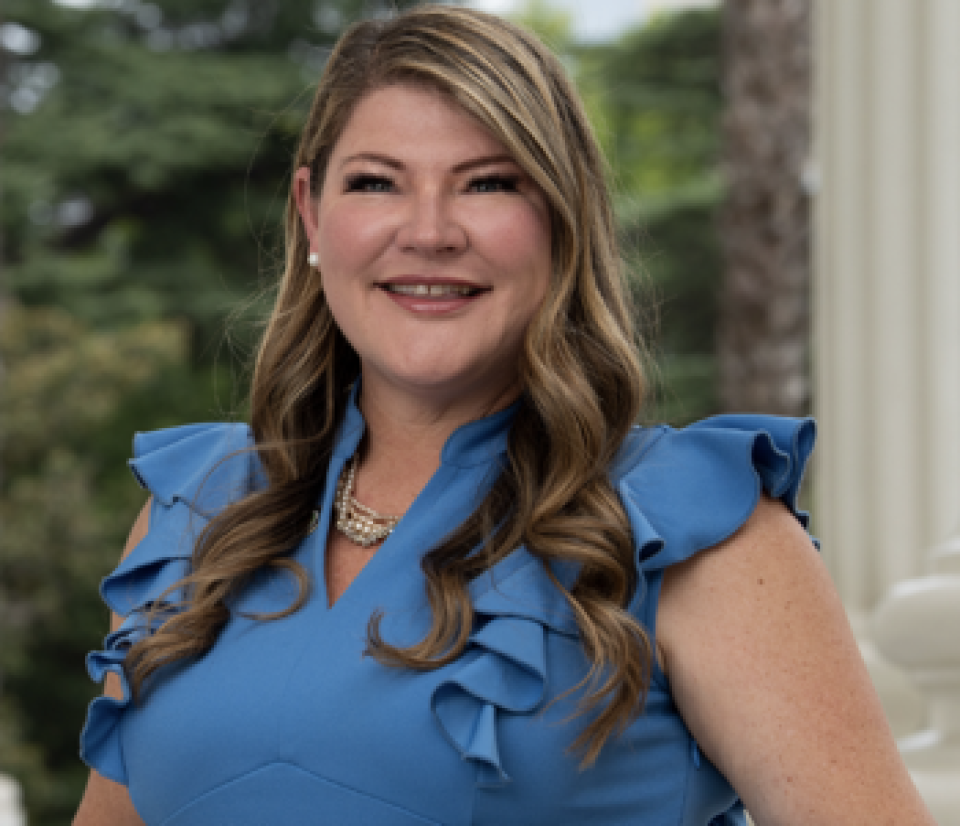
CA Assembly member Tasha Boerner smiles at camera wearing a light blue sleeveless dress with ruffles

The proposal would remove the state constitutional requirement to define and regulate telecommunications as a public utility, something long supported by telecom giants. Boerner’s amendment (and companion bill AB 2289) gives lawmakers leeway to strip the CPUC of its telecom portfolio and hand it over to a newly created state broadband office by 2028.

Consumer Advocates Are 'Shocked' and Skeptical 

Boerner’s proposal is being sold to state lawmakers and the local press as a way to keep the CPUC focused on soaring electrical costs.

When Giant ISPs Get Bigger, State Commissions Fight Back - Episode 8 of Unbuffered

Unbuffered Logo - Two text bubbles

In this episode of Unbuffered, Chris is joined by Ernesto Falcon, Program Manager of Communications and Broadband Policy with the Public Advocates Office for a conversation about competition, mergers, and how to make sure the lowest-income households have access to an Internet connection that allows them to participate in the economy and civic life, as well as access telehealth and educational services on an equitable playing field.

Along the way, they talk about how public advocate offices like the state of California's serve the public interest, and serve also to inform policies that make state infrastructure and affordability programs as impactful as possible. Ernesto shares how recent research (and community partners) have driven new insight and tools to help level the playing field in a marketplace mishapen by promotional pricing schemes by the biggest ISPs. Finally, Chris and Ernesto talk about the Charter Spectrum/Cox merger, and the strong set of comittments the state of California has gotten in exchange for letting the action proceed, including multi-year commitments that should make getting online easier for all households.


Remote video URL

This show is 50 minutes long and can be played on this page or via Apple Podcasts or the tool of your choice using this feed

You can also check out the video version via YouTube.

Transcript below.

We want your feedback and suggestions for the show-please e-mail us or leave a comment below.

Listen to other episodes (formerly Community Broadband Bits) or view all episodes in our index. See other podcasts from the Institute for Local Self-Reliance.

Thanks to Whitedrift for the song Operator, licensed Creative Commons Attribution (3.0).
California PUC Issues $3.29 Million In Digital Literacy Grants

As digital inclusion advocates across the nation push for the restoration of Digital Equity Act funding a year after President Trump unilaterally “terminated” the bipartisan Congressional law, the California Public Utilities Commission (CPUC) has approved $3.29 million in grants aimed at dramatically shoring up digital training and public broadband access in communities across the state.

All told, more than 18 new digital literacy projects and three expanded public broadband access projects will be funded, impacting more than 16,000 Californians.

According to the CPUC announcement, the projects, paid for from the California Advanced Services Fund (CASF) Broadband Adoption Account, will provide digital literacy training to 5,345 participants and deliver broadband access to 10,800 additional community members in underserved areas.

The funded CPUC projects run the gamut across all corners of the state, from $180,325 to provide digital literacy and data skills training for veterans in Santa Barbara and Ventura counties, to $751,780 to help fund five different digital literacy projects assisting older Americans in Alameda County, Orange County, Riverside County, San Francisco, and San Jose.

Image
CPUC office building with state seal above doorway

The biggest grant, $1.19 million, will be used to help fund eight Golden Bridge Program digital literacy projects serving seniors, low-income residents, justice-involved youth, and high school students in the Sacramento region.

California Activates Nation’s Largest Middle-Mile Network, Connecting Tribal, Rural Areas

*The following story by Broadband Breakfast Reporter Kelcie Lee was originally published here.

California just activated the nation’s largest open-access middle-mile network, bringing it one step further in closing the digital divide. 

On Thursday, the California Department of Technology (CDT) announced that after five years of planning, building, and promising access, the state’s $3.2 billion Middle-Mile Broadband Initiative (MMBI) is now operational. The high-speed network connected the last mile to the state’s first customer, the Bishop Paiute Tribe, a Native American community in Inyo County. 

This connection represents a key resource for places across the country that have been historically underserved or unserved, including rural and tribal areas. California Gov. Gavin Newsom said the MMBI plans to construct 8,000 miles of fiber across the state, and he hopes to get more than 5,300 miles completely built out by the end of 2026.  

California’s MMBI milestone was celebrated by a ceremonial signing between CDT and Bishop Paiute Tribe leadership as well as a live network light up demo. As the switch was flipped, students and children were seen using computers with their new internet service.

Abundant Home Broadband for All Californians: A Pathway to Digital Prosperity

Image
Abundant Home Broadband

Broadband ISPs should be held to a higher public interest standard and regulated like traditional utilities in California, a new joint study by nonprofit state policy news outlet Cal Matters and UC Berkeley’s Possibility Lab argues. 

The study specifically looked at the broadband sector in California, where 15 percent of California households – predominately in low income and minority communities – lack broadband access. This neglect has resulted in a stark digital divide between affluent and marginalized communities across rural and urban communities alike. Data has consistently shown that lower income, marginalized communities often wind up paying significantly more money for notably slower service than their more affluent, less diverse counterparts. The study concludes that dramatic federal and state policy failures have resulted in unchecked monopolies and muted competition that directly harms the public interest. It urges state leaders to aggressively embrace municipal broadband cooperatives to address regionalized market failure and improve overall accountability.

Read Abundant Home Broadband for All Californians: A Pathway to Digital Prosperity [pdf].

California Should Regulate Broadband ISPs Like Utilities, Report Says

Broadband ISPs should be held to a higher public interest standard and regulated like traditional utilities in California, a new joint study by nonprofit state policy news outlet Cal Matters and UC Berkeley’s Possibility Lab argues. State governments should also vocally support community broadband networks as a direct challenge to monopoly power, the authors state.

The study specifically looked at the broadband sector in California, where 15 percent of California households – predominately in low income and minority communities – lack broadband access. It concludes that dramatic federal and state policy failures have resulted in unchecked monopolies and muted competition that directly harms the public interest.

While the study lauds California’s dramatic $6 billion “Broadband For All” initiative, which is driving historic new investment into last and middle mile network upgrades, it also states that the state’s full vision for equitable access cannot be achieved without rate controls, universal access requirements, and strict reliability standards for large incumbent ISPs.

The study also urges state leaders to aggressively embrace municipal broadband cooperatives to address regionalized market failure and improve overall accountability.

“California should actively encourage and support the formation of municipal broadband
cooperatives across the state, particularly in underserved rural and suburban communities
where incumbent providers have failed to deliver adequate service,” the study observes.

Monopoly Dysfunction, Muted Competition

Like most U.S. states, California communities are dominated by a handful of cable and phone giants that have leveraged their immense political power to box out local competition creating dominant regional monopolies and duopolies.

Fort Bragg Fiber Deployment Sees Delays, Higher Costs

Fledging efforts to build a fiber network in Fort Bragg, California have seen some headwinds in the wake of the project’s original build partner being dismissed. The need to find a new vendor to help the city toward its goal has resulted in significantly higher costs and some notable delays, though city leaders say they’re still dedicated to guiding the project to completion.

The original plan to deploy affordable fiber broadband to the city of 7,000 was slated to cost somewhere around $14.7 million. When the city announced its plan to begin construction last year, that number jumped to $17.3 million. Recently issues have now increased the planned total cost for the project to $18.9 million.

Construction began last Spring, but it didn’t take long for the city to realize that the fiber deployment was going to exceed the city’s original projections.

“In July or June, it became obvious that the level of restoration in the streets was going to far exceed what we could afford,” City Economic Development Manager Sarah McCormick told the Fort Bragg City Council at a meeting back in January.

At the same time, the city's original build partner, construction management firm GHD, was dismissed by the city after it could not originally account for being over budget due to boring costs. GHD had been awarded a $1.4 million contract to oversee the project.

“We quickly terminated that part of the contract because that was his job — to track the project,” McCormick said.

Analysis later found that the higher costs were due to the late addition of telecom fiber flower pots – enclosures allowing for the core fiber trunk to be split off to serve individual locations and residences – something inexplicably omitted from the original design.

“When they made that change, they didn’t change the bill of materials for boring,” McCormick said. “That would have been like a real no-brainer thing to see if you were the construction manager and tracking the project.”

Navigating a New Path

Updated Resource: Community Networks Continue to Win Big in California's Infrastructure Grant Program

Last May, we shared a dashboard we built to track how community networks were doing in California's Last-Mile Federal Funding Account broadband grant program. With a new round of winners recently announced, we've updated our dashboards to show who, where, and how much community networks are getting. In the first round, they were seeing unprecedented success, punching far above their weight in comparison to the monopolies (which have a long track record of success in landing the bulk of state broadband grant dollars across the country). 

We're happy to say that the latest round shows community networks doing equally well. In late 2025 and early 2026, California announced an additional nine grants. Every county in California has now received grant funding for last-mile broadband expansion. Two of the awards were multi-county projects, stretching to include counties that were also served through the first round of funding.

Hoopa Valley Utility Authority was a big winner again, selected for a nearly $40 million award to serve areas of Trinity and Humboldt Counties. The project, called Hoopa TRAIL for Hoopa Trinity Rural Access Initiative Linkup, will serve nearly two thousand locations with gigabit symmetrical speeds. Taken together, community networks secured half of the awards and funding announced in this round. Other awards went to the Contra Costa Transportation Authority, for a planned public-private partnership, Comcast, AT&T, a regional Internet service provider, and a unique nonprofit-private partnership. Altogether, over $110 million was awarded in this round of grants, bringing the running total in the program to $1.23 billion.