
California

Content tagged with "California"

Displaying 41 - 50 of 266

Building Better Middle Mile Networks

On the most recent episode of the Connect This! Show, the panel was joined by California-based Internet Exchange builder Matt Peterson of SFMIX. Matt has been in the broadband space for many years on the deployment and operations side of the wholesale and peering system, and joined the show today to talk about the need for better, more practical, more forward-thinking middle mile networks across the United States. However the federal Broadband Equity, Access, and Deployment program (BEAD) ultimately ends up, if we want to see more competition and the most efficient use of public dollars there is no doubt that we will need additional infrastructure connecting those last-mile networks that hook up businesses, residents, and community anchor institutions around the country.

These are the networks that connect our networks back to the larger Internet; they traverse county roads and state highway systems. Some are owned by and exclusive to the largest providers, like AT&T. Others, like Project THOR in Colorado, were collectively built to increase resiliency for the public good, as well as stimulate last-mile retail service in underserved and unserved parts of the country. California is in the midst of multi-billion dollar middle mile endeavor, and a handful of others states are likewise making significant investments. 

So the question is: are we building enough middle mile in the United States, and equally importantly, are we building it correctly? With all sorts of public and private interests involved, and networks that are often measured in the thousands of miles (or tens of thousands of route-miles of fiber), often with public money, it's an important thing to get right.

We wanted to underline the importance of these things by featuring this segment of the show. The panel talks about the consequences of decisions about everything from where these networks are built, how they are funded, transparency and marketing, and the importance of talking to the last-mile operators that will be interconnecting with them. 

Watch Christopher Mitchell (ILSR) and Travis Carter (USI Fiber) with regular guests Kim McKinley (UTOPIA Fiber) and Doug Dawson (CCG Consulting), joined by special guest Matt Peterson (SFMIX) talk about it all below. 

The middle-mile discussion starts at the 36:00 mark.

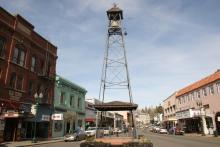
Placerville, California Strikes Gold With New Grant to Build City-Owned Open Access Fiber Network

Placerville, California will soon be a place with a municipally-owned open-access fiber network as the city of 10,000 looks to provide its residents and businesses with local choice and more affordable broadband service.

The years-long effort was launched after frustration with what the city’s 2021 Broadband Master Plan described as the “equivalent of an ISP (Comcast) Monopoly.”

“Because of this,” the plan noted, “residents and businesses in Placerville are exposed to the common limitations of monopolies” – a high-priced reality that prompted 98 percent of city survey respondents to say “yes” to a municipally-owned network.

Now, three years after that report was published – and thanks to a $20.1 million award from the California Public Utilities Commission (CPUC) Last Mile Federal Funding Account (FFA) grant program – a city that was once nicknamed “Hangtown” is now set to cut the noose of the ISP monopoly.

Nice Knowing You, BEAD, and Building Better Middle Mile Networks | Episode 101 of the Connect This! Show

Connect This! Show

Catch the latest episode of the Connect This! Show, with co-hosts Christopher Mitchell (ILSR) and Travis Carter (USI Fiber) joined by regular guests Kim McKinley (UTOPIA Fiber) and Doug Dawson (CCG Consulting) and special guest Matt Peterson (SFMIX). They talk about some of the sea changes we expect to see with the change in federal administrations with relation to BEAD before a long conversation with California-based IX builder Matt Peterson about whether we need more middle mile in this country and how we might best build it.

Join us live on November 8, at 2pm ET or listen afterwards wherever you get your podcasts.

Email us at broadband@communitynets.org with feedback and ideas for the show.

Subscribe to the show using this feed or find it on the Connect This! page, and watch on LinkedIn, on YouTube Live, on Facebook live, or below.

Coalition Building Success Takes Center Screen On B4DE Livestream

As Digital Inclusion Week 2024 swings into action, frontline digital inclusion practitioners from across the nation will come together for a timely Building for Digital Equity (#B4DE) livestream event today that focuses on “Coalition Building for Success.”

The popular (and free) virtual gathering – co-hosted by Institute for Local Self-Reliance (ILSR) Community Broadband Networks Initiative and the National Digital Inclusion Alliance (NDIA) – will go live today from 3 to 4:15 PM ET.

Image
Building for Digital Equity

For Digital equity advocates or interested guests who have yet register for the event, there is still time to register here.

The third #B4DE of the year will delve into how coalitions are finding success in pushing the digital equity movement forward as Digital Equity Act grant programs are being established.

The keynote speaker for today’s livestream will be Georgia Savage, Deputy Director of #OaklandUndivided, who helped lead the way in securing $38.5 million in grant funding that will expand broadband infrastructure and distribute Internet-connected devices to thousands of low-income households across East and West Oakland, California.

Indio, California Gets $9 Million Grant For Fiber Network

Indio, California has been awarded a $9 million state grant the city will use to expand affordable broadband access. The grant award was made possible by California’s $2 billion Last Mile Federal Funding Account Grant Program (FFA), part of a broader $6 billion California “Broadband For All” initiative aimed at bridging the digital divide in the Golden State.

According to Indio officials and the now-finalized CPUC award, Indio – an incorporated city located in Riverside County and home to 92,000 residents – will receive $8.9 million to deliver gigabit-capable fiber to 479 unserved locations and an estimated 3,632 unserved local residents.

“We are still in the design phase and should release an RFP within the next couple of months for the actual build,” Indio Director of Information Technology Ian Cozens told ILSR.

Image
Indio CA fiber map

With 75 percent of the project’s initial target area classified as low-income, city leaders say residents can expect static pricing for at least ten years. The city will also ensure there’s a low-cost option for low-income families left adrift after House and Senate Republicans blocked the funding renewal of the federal Affordable Connectivity Program (ACP).

City officials, however, do not intend to stop there. The plan is to build a citywide fiber network, the full cost of which is estimated to be $35.2 million.

Plumas-Sierra Telecom Nabs $67 Million In FFA Grants Across Four California Counties

A California telecom and electrical cooperative says the state’s ongoing last-mile broadband grant program will help deploy affordable fiber to multiple communities across four heavily unserved and underserved California counties.

Back in July, Imperial, Lassen, and Plumas Counties were the latest to receive broadband expansion grants courtesy of California’s $2 billion Last Mile Federal Funding Account Grant Program (FFA). The program, part of a broader $6 billion California “Broadband For All” initiative, is aimed at boosting broadband competition and driving down costs statewide.

Plumas-Sierra Telecommunications (PST), a subsidiary of Plumas-Sierras Rural Electric Cooperative (PSREC) has been a major early winner in ongoing California FFA awards. The cooperative says it’s poised to receive roughly $67 million in FFA grants to expand affordable broadband to roughly 6,600 unserved and underserved locations across Sierra, Plumas, Lassen, and Nevada Counties.

Image
Plumas-Sierra fiber install in Gold Mountain

California Public Utilities Commission (CPUC) recently announced another $86 million in FFA grants that will help fund broadband expansion across 21 different California towns, cities, counties, and tribal communities. One Plumas grant award is for a $14.5 million project to bring fiber to 834 unserved locations and 1,169 unserved residents across Plumas County.

Mapping the Future: How Community Networks Are Expanding Broadband - Episode 615 of the Community Broadband Bits Podcast

In this episode of the podcast, Chris and Sean discuss various broadband initiatives and community networks across the United States. The conversation kicks off with updates on California’s Fiber Fund Account and the inclusion of Tribal Communities in broadband projects. 

They both highlight the Paul Bunyan Cooperative’s innovative approach to broadband, including Capital Credit distributions to its members and its impact on local communities. They also explore the potential challenges of spending remaining Federal Rescue Plan Funds before key deadlines and the importance of investing in broadband infrastructure. 

Finally, the episode delves into Harrison County’s partnership with Etex Communications and the release of ILSR’s updated Community Networks Map, which tracks municipal and cooperative broadband projects nationwide. This episode provides valuable insights into the evolving landscape of community broadband and the exciting possibilities it offers.

This show is 34 minutes long and can be played on this page or via Apple Podcasts or the tool of your choice using this feed.

Transcript below.

We want your feedback and suggestions for the show-please e-mail us or leave a comment below.

Listen to other episodes or view all episodes in our index. See other podcasts from the Institute for Local Self-Reliance.

Thanks to Arne Huseby for the music. The song is Warm Duck Shuffle and is licensed under a Creative Commons Attribution (3.0) license

Alpine County Open Access Fiber Among Big Winners In Latest California FFA Grants

The California Public Utilities Commission (CPUC) has announced another $237 million in new grants that will help fund broadband expansion across 21 different California towns, cities, counties, and tribal communities. Meanwhile, numerous additional grants that are waiting in the wings are expected to get formal approval sometime in September.

Alpine, Mono, Nevada, Placer, Santa Barbara, and Tulare counties are among the latest winners in California’s $2 billion Last Mile Federal Funding Account Grant Program (FFA).

That program is an extension of California’s ambitious Broadband For All initiative, a $6 billion effort aimed at dramatically boosting broadband competition and access across the Golden State.

At an August 22 meeting, CPUC officials formally approved both a third and fourth round of FFA broadband funding. With these latest two rounds of funding, the CPUC says it has doled out $434 million in grant awards across 22 counties across California.

Open Access Fiber Comes To Alpine County Via Third FFA Round

The third round of formally approved grant awards included $95 million in funding for 10 broadband projects across California’s Alpine, Modoc, Riverside, Santa Barbara, and Tulare counties. This round of awards also included grants for the Fort Bidwell Indian Community in Modoc County and the Santa Ynez Band of Chumash Indians in Santa Barbara County.

Alpine County’s $7 million grant for fiber broadband expansion will be managed by the Golden State Connect Authority and help fund the Alpine County Broadband Network, an open access fiber network that will deliver fiber for the first time to 721 unserved locations and 818 unserved residents across Alpine County.

Shot Clock Winding Down on ARPA Funds For Broadband Projects

Communities looking to leverage American Rescue Plan Act (ARPA) funding for broadband or other local infrastructure need to act soon or risk losing access to a once-in-a-generation funding resource.

Most ARPA recipients seem well aware of the deadline, but data suggests more than a few communities could drop the ball.

As part of the 2021 American Rescue Plan Act (ARPA), $25 billion was specifically earmarked for broadband expansion.

But the law also created the State and Local Fiscal Recovery Funds (SLFRF) program, which doled out $350 billion for states, municipalities, and tribal governments to offset pandemic losses or flexibly invest in local infrastructure.

Oakland Secures $15 Million Grant To Bring Broadband Into Underserved Neighborhoods

After two years enmeshed in the unglamorous work of coalition-building, speed test data collection, and pushing state leaders to invest in better telecommunication infrastructure across Oakland’s most disadvantaged neighborhoods, digital equity advocates in the East Bay city are finally seeing the fruits of their labor pay off.

The city was recently awarded a $15 million grant from the state’s $2 billion dollar Federal Funding Account, administered by the California Public Utilities Commission (CPUC).

The grant will fund the construction of a city-owned, open-access, hybrid middle mile/last mile fiber network – one of a half-dozen grant awards the CPUC approved in the first round of funding, most of which went to support community broadband initiatives.

Courtesy of federal Rescue Plan dollars, the infusion of cash will allow the city to deploy nearly 13 miles of new middle mile 144-count fiber, upgrade almost 12 miles of existing city-owned fiber, and add 9 miles of new last mile fiber connections. As the city’s network is built, it will be connected to the state’s new massive open access middle mile network now under construction.

The FFA grants are part of California’s larger Broadband For All initiative, a $6 billion effort aimed at seeding competition and expanding broadband access across the Golden State.

The Oakland project not only paves the way for the city to connect 14 community anchor institutions (CAIs) and nine public safety buildings, it will also expand high-speed Internet access to thousands of unserved and underserved addresses in West and East Oakland.