

New Mexico Gov. Michelle Lujan Grisham signed into law today new legislation that aims to provide tens of thousands of low-income households in “The Land of Enchantment” an Internet lifeline similar to the now-expired federal Affordable Connectivity Program (ACP).
It makes the state the first to step up in the absence of federal action to support households that just can’t afford to pay for monthly service, and will directly support 173,000 households.

Senate Bill 152 – first filed on January 26 of this year by State Sen. Michael Padilla, (D) Majority Whip – will update the state’s Rural Telecommunications Act and empower the New Mexico Public Regulation Commission (PRC) to offer up to $30/month for qualified households to pay for Internet service.
The broadband bill, known as the Low-Income Telecommunications Assistance Program (LITAP), passed through the formal legislative session in high-speed fashion. It was first introduced at the end of January, passed by the House, and then the Senate by a 38-0 margin last Thursday (Feb. 12), making its way to the governor’s desk to be signed into law today. That’s a 25-day marathon from legislative start-to-finish.
“The way we structured it was, in the first year, the Public Regulation Commission would have up to $10 million for the program, which we estimate will service about 27,000 households. Then in years two and beyond, the Commission would be able to spend up to $45 million (annually),” Padilla told ILSR as he headed to the bill signing ceremony. “We came to that $45 million cap because we believe statewide implementation would cost about $42 million annually.”
The new law, he added, will subsidize low-cost Internet plans for households earning $45,000 or less a year “and we believe that will reach 173,000 households, offering (a subsidy of up to) $30 per month.”
That price point mirrors the now-defunct ACP program which, before it expired in May 2024, provided 23 million income-eligible households across the nation with a $30/month subsidy to pay for Internet service ($75/month for citizens living on Tribal lands).
The New Mexico law is slated to go into effect on July 1, 2026.

At a bill signing press conference today, the Governor praised Padilla and his Senate colleagues for working diligently and quickly to advance several affordability-related bills, including the new broadband affordability law.
The “cradle-to-the-career investments in this state ... had a whole lot of shared vision in this room and a whole lot of efforts … a lot of those big giant steps, so that we could build it, happened because we have leaders like you,” Lujan Grisham said about Padilla to a packed press conference audience.
When Padilla was invited to speak, he said that “in 2024, the federal program on affordability for high speed broadband and Internet was completely brought to a halt – complete surprise to all the states – but we rolled up our sleeves governor and… this year we have created an Internet affordability program…”
“It will be something less than $30 a month for families so they can have access to high speed broadband. And we know that brings economic development and job creation … Some communities have never had a health care professional – ever – in their communities. This is going to bring telehealth and telemedicine to those communities. And then, of course, distance learning.”
Fiscal Impact
The new law will be “funded by the state rural universal service fund (SRUSF), to ensure affordable access to telecommunications services for eligible low-income households in New Mexico,” according to the Fiscal Impact Report (FIR) prepared by the Legislative Finance Committee.
The new law will:
- “Repeal the Low-Income Telephone Service Assistance Act, which provides a similar affordability program focused solely on telephone service.”
- “Allow eligible telecommunication carriers to use certain national databases, or an alternative mechanism approved by PRC, to verify eligible households and provide reduced rates to those households.”
- “Require the HCA (Health Care Authority) to provide data to assist PRC in identifying eligible individuals to receive LITAP assistance.”
The good news for state taxpayers is that “there will be no fiscal impact to the state general fund or agency appropriations” because the program “will be exclusively funded through SRUSF (the state’s rural universal service fund), which is funded through surcharges passed on to subscribers,” the FIR says.
However, the FIR is also blunt in acknowledging “non-eligible households and businesses in the state will incur additional subscription costs to cover the subsidies provided to low-income households,” though the current surcharge of $0.061 per “communication connection” is only expected to increase to about $2 per connection.
That means for just $1.50 more on their monthly bill, New Mexicans who can afford to connect to the Internet will ensure that their economically disadvantaged neighbors will too. And when everyone can connect to the Internet, benefits flow back in all directions.

A Real ‘Benefit of the Bargain’
Like every state and territory in the nation, New Mexico is poised to receive a sizable share of the $42.5 billion federal BEAD program to build new networks to reach unserved and underserved homes and businesses long left on the wrong side of the digital divide.
However, as the FIR notes:
“Despite large infusions of state and federal funding for broadband infrastructure, particularly post-pandemic, broadband subscription rates remain unaffordable for many New Mexicans.”
The state’s Office of Broadband Access and Expansion (OBAE), which Sen. Padilla was instrumental in establishing through legislation in 2021, is poised to administer $675 million in federal BEAD funding, which the state expects will result in extending Internet connectivity to “virtually every broadband serviceable location in New Mexico by the end of 2026.”
However, the OBAE found:
“Affordability – not access – is the single largest barrier to New Mexico families subscribing to broadband service.”
Now, with the passage of the new law in New Mexico, it appears to be the first and only state in the nation to have established an ACP-like program at the state level.
And while the FIR did not analyze or try to calculate how much of an economic benefit broadband subsidies can provide, there have been national studies that have quantified the net benefits.

A study published by the Brattle Group in March 2025 found that the ACP generated more savings for taxpayers than it cost, explaining how the $7.3 billion annual program price tag was more than compensated by the $28.9 to $29.5 billion taxpayers would save from access to remote telehealth visits, which are estimated to be 23 percent less expensive than in-person visits.
The Brattle Group study also found the ACP generated $3.7 billion in increased annual earnings for students due to expanded remote education opportunities, and $2.1 to $4.3 billion in annual wage gains from expanded labor force participation.
In a similar study published by the USC Annenberg School for Communication, it found that access to affordable, high-speed Internet improves employment outcomes by enabling remote work and greater labor market participation, such that “when these employment impacts are factored in, the benefits of ACP far outweigh its costs.”
Other States March Toward Affordability Legislation
New Mexico is not alone in trying to address the broadband affordability crisis. A handful of states have either passed legislation or have been advancing bills that – instead of providing an ACP-style subsidy for low-income households – would mandate Internet Service Providers (ISPs) who operate in their states to offer a low-cost option.
New York passed its own Affordable Broadband Act that was implemented in January of 2025 that requires ISPs in New York to offer a low-cost option for $15/month. Connecticut passed legislation to mandate a $40/month low-cost plan, while California, Vermont, Massachusetts, Maryland, and Illinois have all advanced different versions of similar bills.
Watch the Governor’s Bill Signing Press Conference (beginning at the 21:49 min mark) below:
Header image of New Mexico cityscape courtesy of Sean Pavone, CC BY-NC 4.0, Attribution-NonCommercial 4.0 International
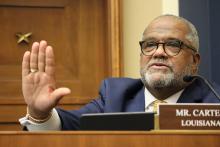
Inline image or Sen. Michael Padilla courtesy of New Mexico State Legislative website
Inline screenshot of Governor's bill signing press conference on YouTube
Inline table of SB 152 budget impacts courtesy of the Fiscal Impact Report (FIR) prepared by the New Mexico Senate Legislative Finance Committee