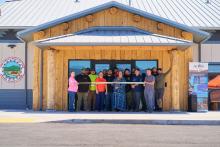

The Bois Forte Band of Chippewa (also referred to as Ojibwe) has officially begun construction on a foundational fiber optic broadband expansion project in northern Minnesota that is poised to bridge the digital divide for thousands of Tribal residents.
The ambitious undertaking is supported by a significant $20 million grant awarded under the 2021 Tribal Broadband Connectivity Program, marking a major step forward in modernizing infrastructure for the sovereign nation.
The massive project aims to overhaul the existing connectivity landscape across the Bois Forte Reservation.

Once completed, the new network will deliver a high-speed, future-proof up to 10 gigabit per second (Gbps) fiber-to-the-home network to over 2,097 largely-underserved Native American households, businesses, and community anchor institutions.
Many Tribal nations were skipped over by past fiber deployments either due to outright hostility to Tribal interests, or a disinterest in the work required to align for-profit deployments with the needs and wishes of what is often multiple Tribal territories.
For Bois Forte, this new fiber network is expected to have a transformative impact across several key sectors, fundamentally improving community access to vital services:
- Education: Students will gain equitable access to online learning resources, enabling remote coursework completion and participation in digital educational programs without the frustration of slow or unreliable connections. COVID-era lockdowns resulted in a renewed push country-wide for more reliable and affordable connectivity.
- Telemedicine: The high-bandwidth capacity will support advanced telehealth services, allowing residents access to remote healthcare, reducing travel burdens and providing better, more timely healthcare access, particularly for elders and those with chronic health conditions.
- Economic Opportunities: Local businesses and entrepreneurs will benefit from the ability to seamlessly engage in the digital economy, fostering self-sufficiency and creating new avenues for commerce and sustainable growth on the reservation.
Partnership and Timeline
The project is the culmination of a multi-year effort that began with the application for the federal broadband grant in 2021. To ensure the successful deployment and long-term operation of the network, the Bois Forte Band has partnered with Minnesota Broadband Cooperative CTC, which will deliver ISP services and local support to local community members.

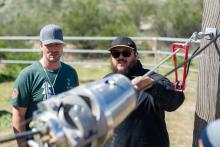
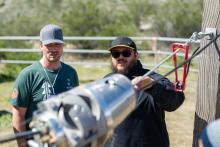
The construction phase, now underway, will include the deployment of thousands of miles of fiber-optic cable. The community can anticipate a phased rollout of services, with general availability expected to continue into early 2026, depending on residents’ precise location within the service area.
“The project, while exciting, has been held up by years of permitting approvals required by State and Federal agencies,” the Tribe wrote in a recent update. “Initially planned for construction in 2022-2023 and to serve nearly 3,000 locations, the project had to incur a change in scope as costs have increased substantially in recent years. The decision was made to remove the project's highest cost of construction locations to provide service to the greatest number of locations.”
Much of the fiber deployment work is being built on the back of backbone fiber deployments by the Northeast Service Cooperative (NESC) conducted more than a decade earlier.
“What NESC built is the freeway system, and that freeway system provides on and off ramps to it in Tower, in International Falls, Mt. Iron, Virginia,” CTC’s Joe Buttweiler recently told local outlet The Timberjay. “Only at those larger towns and cities on the Iron Range are where you can get on and off the NESC freeway. So now we’re building from those points. From Tower, where we’re accessing the NESC fiber, we’re building the south shore of Lake Vermilion.”
Many of these areas are going from no broadband connectivity at all, to some of the fastest, most reliable service available.
“There is a place for low Earth satellite internet,” Buttweiler said in a nod to efforts to drive more federal subsidy dollars to LEO services like Elon Musk’s Starlink. “But many locations could be served with fiber optic that is scalable and will last for decades to come, and probably at a significantly lower cost to the consumer.”
The investment is part of a larger national movement to address the critical infrastructure needs of Tribal nations long left on the wrong side of the affordable connectivity gap (ILSR routinely supports Tribal Broadband Bootcamps, co-founded by ILSR’s Community Broadband Networks Initiative Director Christopher Mitchell, aimed at collaborative approaches to expand reliable connectivity).
Trump Administration Claws Back Promised Grants
The Department of Commerce's National Telecommunications and Information Administration (NTIA) noted the importance of the Tribal Broadband Connectivity Program in its 2022 grant announcement, highlighting projects like Bois Forte's as essential for ensuring digital equity across the country.
“We are making an historic investment in Tribal communities to ensure reliable, affordable high-speed Internet for all,” Commerce Secretary Gina Raimondo said at the time.
All told, the NTIA’s Tribal Broadband Connectivity Program delivered $2.24 billion in broadband grant awards across 94 Tribal entities. Those investments in turn were made possible by the more than $65 billion in broadband investments included in the 2021 Infrastructure Investment and Jobs Act (IIJA).
The program was originally slated to deliver $3 billion in Tribal broadband deployments; far less than was needed to complete the job. More recently the Trump administration delayed the deployment of $400 million in new Tribal investment, and has frozen the promised deployment of more than $160 million in already-announced broadband grants.
A late November update from the Trump NTIA insisted the agency was implementing “reforms” that are likely to deprioritize reliable fiber, and, as we’ve seen outside Tribal territories, elevate the interests of Elon Musk and his less reliable, less affordable Starlink satellite access.
See our updated Community Networks Map that now displays the location of existing Tribally-owned networks across the United States here.
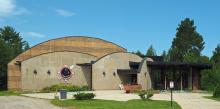
Header image of Bois Forte Band of Chippewa Heritage Museum courtesy of Wikimedia Commons, CC BY-SA 4.0, Attribution-ShareAlike 4.0 International
Inline map of Bois Forte Indian Reservation courtesy of Wikimedia Commons, CC BY-SA 3.0, Attribution-ShareAlike 3.0 Unported