
federal funding

Content tagged with "federal funding"

Related Topics
Displaying 61 - 70 of 132

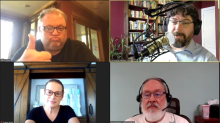
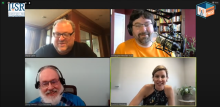
Watch Connect This! Episode 10 - How Communities Can Prepare for Broadband Funding in the American Rescue Plan

On Episode 10 of Connect This!, hosts Christopher Mitchell and Travis Carter (USI Fiber) were joined by Joanne Hovis (President, CTC Energy and Technology) and Doug Dawson (President, CCG Consulting) to talk about how communities can prepare for the unprecedented money poised to flow from the federal government for Internet infrastructure.

The panel first gives an update on the upcoming Emergency Broadband Benefit and how cities and small ISPs can plan for a successful deployment. They then discuss the upcoming infrastructure funding, including what to consider when putting together a plan, how to use the funds effectively, balancing the needs of today with a long-term plan, and how to avoid getting taken advantage of by bad actors.

Resources mentioned during the show include the Blandin Foundation in Minnesota and the Michigan Moonshot Initiative.

Subscribe to the show using this feed, or visit ConnectThisShow.com

Email us broadband@muninetworks.org with feedback and ideas for the show.

Watch the show here, or below.

Join Us Live on Thursday at 5pm ET for Connect This! Episode 10 - How Communities Can Prepare for Broadband Funding in the American Rescue Plan

Join us for Episode 10 of Connect This!, where hosts Christopher Mitchell and Travis Carter (USI Fiber) will be joined by Joanne Hovis (President, CTC Energy and Technology) and Doug Dawson (President, CCG Consulting) to talk about how communities can prepare for the unprecedented money poised to flow from the federal government for Internet infrastructure.

The panel will dig into what to consider when putting together a plan, how to use the funds effectively, and how to avoid getting taken advantage of by bad actors.

The show will begin on Thursday, April 29th at 5pm ET/4pm CT via this link, or watch below.

Subscribe to the show using this feed

Email us broadband@muninetworks.org with feedback and ideas for the show.


Federal Government Devotes Billions to Internet Access: A Community Guide to Current Broadband Funding

In the American Rescue Plan Act, Congress and the Biden Administration included a multi-billion dollar appropriation to help expand high-speed Internet access. This guide offers an overview of the different funding opportunities for communities interested in expanding broadband services. As application deadlines vary in some cases and other money must be spent within certain time frames, it is critical for states, municipalities, community organizations, and Tribal governments to start planning initiatives now. 

It’s also worth emphasizing that 18 states still put localities at a disadvantage when it comes to spending anticipated funding effectively by preserving laws that interfere with community investment in broadband infrastructure. Much of this money could also be funneled for other purposes due to a lack of good plans and community engagement. 

The amount of funding flowing into communities is unprecedented. Localities should prepare to spend funds on needed, futureproof infrastructure. This is an historic, once-in-a-lifetime investment in Internet infrastructure and communities who develop a clear, actionable plan and are as ready as possible once the money starts flowing will prosper.

Directory

If you’re a homeowner looking for assistance paying your Internet bill…look to the Emergency Broadband Benefit Program or Homeowner’s Assistance Fund

If you’re an HBCU or Minority-serving institution looking to expand Internet access to your students, or if you’re a minority business enterprise or nonprofit organization in the surrounding community...look to the Connecting Minority Communities Pilot Program.

if you’re a Tribal government, Tribal organization, or Tribal college or university, including native Hawaiian organizations, education programs and native corporations…look to the Tribal Broadband Connectivity Program.

If you’re a city interested in partaking in a public-private partnership…look to the Promote Broadband Expansion Grant Program

If you’re a school or library whose main concern is obtaining remote Internet access devices...look to the Emergency Connectivity Fund.


Federal Aid Directly To States, Counties, Localities and Territories

Broadband Infrastructure Funding in the American Rescue Plan - Episode 9 of Connect This!

On Episode 9 of Connect This!, hosts Christopher Mitchell and Travis Carter (USI Fiber) are joined by Kim McKinley (Chief Marketing Officer, UTOPIA Fiber) and Doug Dawson (President, CCG Consulting) to talk about the recently signed American Rescue Plan Act, which has the potential to funnel an unprecedented level of funding to communities which can be used for Internet infrastructure.

The group talks about the different buckets of money that will become available and how cities, counties, and states might use them. They discuss the ways that communities can use the federal funds to reduce risk for local projects and push them forward, create partnerships with public organizations and private firms, and what local officials need to do to ensure that they are ready when the money starts flowing to effect long-term positive change.

Watch via this link, or watch below.

Subscribe to the show using this feed

Email us at broadband@muninetworks.org with feedback and ideas for the show. 

Join Us Live on Monday at 4pm ET for Connect This! Episode 9 - Infrastructure Funding in the American Rescue Plan

Join us for Episode 9 of Connect This!, where hosts Christopher Mitchell and Travis Carter (USI Fiber) will be joined by Joanne Hovis (President, CTC Energy and Technology) and Doug Dawson (President, CCG Consulting) to talk about the recently signed American Rescue Plan Act, which has the potential to funnel an unprecedented level of funding to communities which can be used for Internet infrastructure.

Together they'll talk about what can be done with this money, what restrictions exist, and how communities can ready themselves to embark upon broadband projects quickly. Christopher, Travis, Joanne, and Doug will also explore the viability of the variety of technologies available for deployment, and what it would look like for local officials to boldly take the reins and move the needle on locally owned information infrastructure for their communities.

The show will begin on Monday, April 5th at 4pm ET/3pm CT via this link, or watch below.

Subscribe to the show using this feed

Email us broadband@muninetworks.org with feedback and ideas for the show.

“This Isn’t a Game:” The RDOF Auction, Unforced Errors, and Getting Infrastructure Funding Right - Episode 448 of the Community Broadband Bits Podcast

The conclusion of the RDOF auction was met with a good deal of drama and uncertainty, leaving many of us working after the fact to understand the policy and practical impacts of its outcomes.

This week on the podcast Christopher talks with Jonathan Chambers, a partner at Conexon, a network solutions provider for electric cooperatives around the United States who helped organize a consortium of nearly 100 cooperatives to successfully bid for more than $1 billion in funding from the recent Rural Digital Opportunity Fund Auction administered by the FCC. 

Christopher and Jonathan unpack the design and implementation of RDOF not only in the context of the current broadband landscape, but the history of FCC auctions and federal infrastructure subsidy policy. They discuss how the funding will support upcoming projects which will bring fiber networks — many of them owned and operated by electric cooperatives — to hundreds of thousands of Americans over the next decade. 

But they also talk about the multitude of winning bids that went for a worryingly low percentage of what it will actually cost to build those networks across the country. Jonathan and Christopher discuss why we saw that happen, but also what kind of guardrails we don’t but should have in place to make sure that public money for broadband infrastructure doesn’t go to waste and, equally importantly, so that households in those areas don’t go another decade without a quality Internet connection. 

This show is 53 minutes long and can be played on this page or via Apple Podcasts or the tool of your choice using this feed

Transcript below. 

We want your feedback and suggestions for the show-please e-mail us or leave a comment below.

Listen to other episodes here or view all episodes in our index. See other podcasts from the Institute for Local Self-Reliance here.

Thanks to Arne Huseby for the music. The song is Warm Duck Shuffle and is licensed under a Creative Commons Attribution (3.0) license.

Predictions for 2021, Year in Review for 2020 - Episode 441 of the Community Broadband Bits Podcast

2020 is nearly over, and it's that time of the year we sit back with a cold glass of eggnog and reflect on what was, what is, what might have been, and what will be. In this episode of the Community Broadband Bits podcast the MuniNetworks team cranks up Zoom for the zillionth time this month to review our previous years' predictions to see who swung the hardest and missed back in 2019, and who might be hiding a secret gift at prognostication that would put Zoltar to shame.

With the departure of Lisa and Katie, GIS and Data Researcher Michelle Andrews is the only one who must reckon with her predictions head on. Also on the show are two recent arrivals: Senior Writer and Editor Sean Gonsalves, and Senior Researcher Ry Marcattilio-McCracken. Hannah Trostle returns from a short hiatus as well, to offer insight and secretly watch Chris to make sure he hasn't turned into a total despot. During the show we talk state preemption laws, progress by municipal networks, electric cooperatives, and county governments in expanding affordable broadband, the recent RDOF auction, New Hampshire, Sean's water feature, and our favorite stories of the year. 

This show is 50 minutes long and can be played on this page or via Apple Podcasts or the tool of your choice using this feed

Transcript below. 

We want your feedback and suggestions for the show-please e-mail us or leave a comment below.

Listen to other episodes here or view all episodes in our index. See other podcasts from the Institute for Local Self-Reliance here.

Thanks to Arne Huseby for the music. The song is Warm Duck Shuffle and is licensed under a Creative Commons Attribution (3.0) license.

Image of John Dee’s Crystal ball by Vassil [CC0], from Wikimedia Commons.

Vermont Communication Union Districts Want Federal Assistance to Help Meet the State’s Broadband Goal

As Vermont’s nascent Communication Union Districts (CUD) push to bring universal, truly high-speed Internet connectivity to the more rural parts of the Green Mountain State, CUD leaders are calling for changes in how federal funds get funneled to local municipalities, and for a change in how the federal government defines “high-speed” access.

Enabled by a 2015 Vermont law that allows two or more towns to join together as a municipal entity to build communication infrastructure, these local governmental bodies were formed to help the state reach its goal of having universal access to broadband by 2024. The idea is for CUD’s to operate like a water, sewer, or school district as a way for local communities to build their own broadband infrastructure. Establishing a CUD also puts rural regions of Vermont in a position to borrow money on the municipal bond market and eases access to grants and loans to fund broadband projects.

The formation of Communication Union Districts across the state began to pick up steam in the months following Gov. Phil Scott’s signing of H.513 in June of 2019. That legislation, which set aside $1.5 million to support broadband projects, increased funding to help provide Internet service in unserved or underserved parts of the state. It also created a new Broadband Expansion Loan Program within the Vermont Economic Development Authority (VEDA) to assist start-up broadband providers in developing community-based solutions.

Funding Gaps

In a Zoom call last month with U.S. Rep Peter Welch, D-Vt., leaders from the state’s nine CUD’s met virtually with Welch to update the congressman on the status of their efforts and what they see as crucial to succeed in fulfilling their mission without burdening taxpayers.

Congress Introduces Rural Broadband Acceleration Act to Speed Deployment During Pandemic

In an attempt to hasten broadband expansion in response to the ongoing Covid-19 pandemic, politicians in both the U.S. Senate and House of Representatives have now introduced the Rural Broadband Acceleration Act. The bipartisan legislation — introduced in the House in late May and in the Senate just last week — would direct the federal government to speed up the disbursement of $20.4 billion in funding for rural broadband access, in order to connect communities that have been further isolated by the public health crisis.

We wrote previously about a push from electric cooperatives, led by consultant Conexon, calling for expedited rural broadband funds. Having quicker access to the planned subsidies, they argued, would allow the co-ops to connect the unserved rural Americans who are desperately in need of better connectivity to work remotely, attend online school, and participate in telehealth appointments during the pandemic.

Beyond electric cooperatives, the current legislation also has support from advocates and businesses that promote high-quality, often fiber-based broadband networks, but some have raised concerns that the funding process would be reliant on inaccurate federal broadband data.

A Bill in Two Acts

In the U.S. House, Majority Whip James Clyburn of South Carolina and Representative Fred Upton of Michigan introduced the Rural Broadband Acceleration Act, HR 7022, back in May. The two legislators have since been joined by a bipartisan group of more than 30 cosponsors.

Last week, a similarly bipartisan set of senators introduced a version of the legislation, SR 4201, in their chamber as well. The cosponsors in the Senate are Senators Rob Portman and Sherrod Brown of Ohio, Mike Braun of Indiana, Michael Bennet of Colorado, and Doug Jones of Alabama.

Don’t Miss Out On Broadband Funding — The NTIA Has a Tool For You

Funding can seem like an insurmountable barrier to expanding Internet access and adoption. But for states, local communities, nonprofits, or other organizations looking for some help, the National Telecommunications and Information Administration (NTIA) has updated its federal funding search tool for 2020. 

Whether you’re looking to find money specific to your region, to pair a broadband project with transportation infrastructure, to expand access on tribal lands, or to connect your community’s anchor institutions, the NTIA can help. The funding search tool also lets users sort through options depending on what stage of the process they’re at, so whether you’re exploring your options via a feasibility study or looking to evaluate or expand adoption rates, the tool has you covered. It also, helpfully, provides funding sources for those looking to fund programs to expand digital literacy skills and training.

You can find, for instance, the USDA ReConnect program there, which helps fund projects in rural areas. We’ve written about how communities in Virginia, Maine, Iowa, and elsewhere have secured ReConnect funding to advance community broadband development in their states. Likewise, we recently wrote about how Cumberland County, Maine, used a U.S. Department of Housing and Urban Development Community Development Block Grant to fund a broadband plan that brought together several communities seeking better Internet connectivity in the region. 

See the USDA's complete Broadband Funding Guide [pdf] or dive into the online search tool.

More Resources