
Tribes

Content tagged with "Tribes"

Displaying 1 - 10 of 118

Our Community Network Map Now Shows Tribal Networks Across the United States

We've been adding features and functionality to our brand new community network map to show in more detail where and what publicly owned networks are building around the United States. Built on a new engine and running from our new database of networks across the country, the new map is an exciting next step in our tracking and storytelling efforts. We're excited to announce that we've added Tribal networks to it. There are 82 active Tribal Internet Service Providers in the United States, returning control of this core service to the people it service. 

Image
Tribal Networks Map

Navigate the map using the filters on the left or by clicking around with your mouse. Tribal networks initially show up as pins, but when you zoom the reservation shape will resolve. Click on any pin or reservation to see the same details as for our municipal networks: name, community population, business model, and network link. Our Tribal network stat cards also show whether that Tribe participated in the Rural Tribal Priority Window during the 2.5GHz auction in 2020 - a move that has proven to be a critical step for many in serving as the foundation for current and future deployments. If you're interested in combining our map data with your own, or just learning more about the economic, demographic, or other dminensions of the communities these networks serve, we show the Tribe's FIPS code as well.

ILSR, Tribal Nations, and Other Groups Call For Tribal Licensing Window in Upcoming Spectrum Auction

This week, the Institute for Local Self-Reliance joined with other public interest groups and Tribal nations to urge the Federal Communications Commission (FCC) to adopt a Tribal Licensing Window (TLW) in the upcoming auction of Upper C-Band spectrum.

“Meaningful access to licensed spectrum is critical for addressing persistent connectivity gaps on Tribal lands,” the comment states. A Tribal Licensing Window “is a targeted mechanism that helps ensure Tribes have a fair opportunity to [...] exercise self‑determination in broadband deployment.”

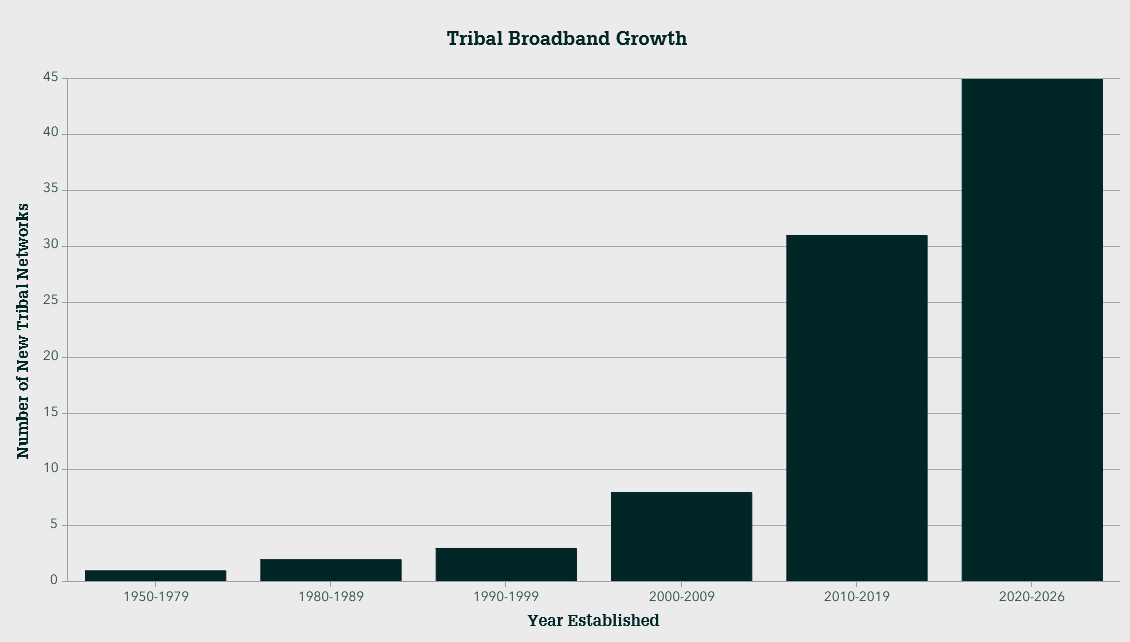
First instituted in radio broadcasting in 2010, the use of a Tribal licensing window gained steam in 2020 with the launch of the Tribal Priority Window in the 2.5 Ghz auction.

The 2.5 Ghz opportunity was enormously popular. As the story goes, the FCC expected something on the order of 10 applications from Tribes. Instead, more than 300 unique Tribal entities applied and were awarded licenses covering at least part of their Tribal lands.

And it has been a success. Tribes across the country have incorporated use of the spectrum into their retail broadband, public safety, and Tribal communications systems.  

ILSR and other commenters are hopeful that a Tribal Licensing Window in this auction can be even more impactful. For one, this auction pertains to greenfield spectrum - meaning that there are no existing license holders and the spectrum is available across the country - as opposed to the more limited availability in the 2.5 auction, which meant that some Tribes had no or only partial licenses available to them. This offers the chance for Tribes to access many times more spectrum capacity to address gaps in what are some of the most difficult places to build.

Secondly, during the 2.5 auction, the Commission elected to limit participation to Tribes in rural areas. Advocates hope that the FCC will instead permit all federally-recognized Tribes to participate in a C-Band Tribal Licensing Window, and will recognize Tribal trusts as well as reservation lands.

Building Broadband from the Ground Up - Episode 667 of the Community Broadband Bits Podcast

In this episode of the podcast, Chris speaks with Mauricio Rodriguez about the realities of managing broadband infrastructure projects—particularly on tribal lands.

Mauricio shares lessons learned from years of navigating permitting, environmental reviews, land negotiations, and the complexities of coordinating with community members, federal agencies, and contractors.

They discuss the critical importance of setting standards, realistic timelines, and hiring experts with local experience, as well as the unexpected challenges that arise—from zoning hurdles to wildlife encounters.

Mauricio offers advice for community leaders stepping into this work for the first time, emphasizing patience, planning, and the value of strong partnerships in building networks that last.

This show is 32 minutes long and can be played on this page or via Apple Podcasts or the tool of your choice using this feed.

You can also check out the video version via YouTube.

Transcript below.

We want your feedback and suggestions for the show-please e-mail us or leave a comment below.

Listen to other episodes or view all episodes in our index. See other podcasts from the Institute for Local Self-Reliance.

Thanks to Arne Huseby for the music. The song is Warm Duck Shuffle and is licensed under a Creative Commons Attribution (3.0) license

Broadband Bootcamp for Great Lakes Tribes to Take Place in August

*The following story by Broadband Breakfast Reporter Jennifer Michel was originally published here.

From August 18-21, the Sault Ste. Marie Tribe of Chippewa Indians will host a four-day Tribal Broadband Bootcamp on the Tribe's Marquette campus in Michigan’s Upper Peninsula.

The Bootcamp aims to equip Tribal Nations with the skills to build, manage, and expand their own broadband networks. It will be the second held in the Great Lakes region, designed primarily for members of 36 federally recognized Tribes across Michigan, Wisconsin and Minnesota.

The first Tribal Broadband Bootcamp took place in California in 2021, organized by Matthew Rantanen and Christopher Mitchell, co-founders of the broadband advocacy group Waskawiwin, who hoped to build and encourage nontraditional broadband networks.

Image
Tribal Networks Map

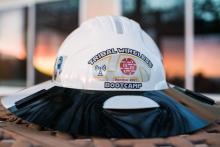
Seventeen bootcamps have occurred since 2021, each with an agenda adjusted to the experiences and interests of hosting Tribes. Overall, the training program has hosted more than 400 participants from more than 70 Tribal Nations across the United States and Canada.

The training program, led by Rantanen and Mitchell, will unite tribal technology staff, community leaders, and broadband advocates for hands-on instruction in network design, deployment and management.

According to Mitchell, the goal of the Bootcamp “is to connect people working in Indian Country on Internet access to build skills and share knowledge on how to make sure everyone is well connected.”

Shared Airwaves, Public Good: Why CBRS Matters More Than Ever - Episode 652 of the Community Broadband Bits Podcast

In this episode of the podcast, Chris is joined by David Zumwalt, President and CEO of WISPA, to sound the alarm on threats to shared spectrum—specifically CBRS (Citizens Broadband Radio Service).

They dig into how CBRS has empowered wireless ISPs, school districts, airports, and tribal nations to innovate and serve hard-to-reach communities, all while coexisting peacefully with the Department of Defense. But with corporate giants lobbying to reassign CBRS for exclusive use, this unique model of dynamic spectrum sharing could be in jeopardy.

Tune in for an urgent conversation about the fight to preserve shared spectrum and what’s at stake for connectivity and the future of broadband.

This show is 32 minutes long and can be played on this page or via Apple Podcasts or the tool of your choice using this feed.

Transcript below.

We want your feedback and suggestions for the show-please e-mail us or leave a comment below.

Listen to other episodes or view all episodes in our index. See other podcasts from the Institute for Local Self-Reliance.

Thanks to Arne Huseby for the music. The song is Warm Duck Shuffle and is licensed under a Creative Commons Attribution (3.0) license

Tribal Broadband Bootcamps in Action - Episode 641 of the Community Broadband Bits Podcast

In this episode of the podcast, Chris sit down again with Matt Rantanen to discuss the transformative impact of the Tribal Broadband Bootcamps. 

Rantanen shares insights on the evolution of these hands-on training sessions, which empower tribal communities with the technical skills and policy knowledge needed to build and sustain broadband networks. 

We explore the challenges tribes face in accessing high-quality Internet, the role of community-driven solutions, and what’s next for broadband expansion in Indian Country. 

Tune in to learn how these bootcamps are equipping Indigenous leaders with the tools to close the digital divide.

This show is 37 minutes long and can be played on this page or via Apple Podcasts or the tool of your choice using this feed.

Transcript below.

We want your feedback and suggestions for the show-please e-mail us or leave a comment below.

Listen to other episodes or view all episodes in our index. See other podcasts from the Institute for Local Self-Reliance.

Thanks to Arne Huseby for the music. The song is Warm Duck Shuffle and is licensed under a Creative Commons Attribution (3.0) license

Jemez Pueblo Tribe Seeks ‘Light,’ Fiber Knowledge To Advance Digital Sovereignty

For Angela Diahkah, what started as a self-described “side hustle” is now her full-time job.

Diahkah – or “Ange,” as she sometimes goes by – is five years into serving as Network Operations Supervisor and Digital Navigator Program Manager for JNET, the Tribally-owned broadband provider for the Pueblo of Jemez.

Just 50 miles northwest of Albuquerque, Angela leads the charge in building a new fiber network, the gold-standard of Internet connectivity, that once complete will serve her community (one of the 19 Pueblos in New Mexico).

Last week, she was at the 17th Tribal Broadband Bootcamp (TBB) in Aguana, California in the hills above Temecula Valley, along with a half dozen JNET technicians-in-training and JNET Director Kevin Shendo. The 30 or so other TBB participants – representing broadband leaders from several other federally-recognized Tribes – were also there for the three-day immersive learning experience focused on building and operating Tribal Internet networks.

Held in different tribal regions several times a year since the initiative began in 2021, this most recent bootcamp was back at TBB co-founder Matthew Rantanen’s “RantanenTown Ranch.”

Image
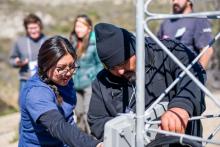
Angela looks at her crew explore fiber splicing equipment on a table outdoors on RantenenTown Ranch in the desert-like foothills of Anguana, Califonia

“We're basically trying to find a light in a dark tunnel and just work with what’s best for us,” Angela told ILSR in describing why she and her JNET crew had come, just as they are in the early stages building out their own fiber-to-the-home network.

“We want to expose them to the network,” literally and figuratively, she said.

Cold Springs Rancheria Joins Seven Tribes and More Than 20 Public Entities as California Broadband Funding Winners

As federal broadband funding sources face continued uncertainty, California’s massive last-mile grant program continues to plow ahead, looking increasingly like a vital lifeline for communities hoping to ensure that every individual has access to robust, reliable, and affordable Internet access.

Cold Springs Rancheria of Mono Indians was among the applicants celebrating a winning grant application in the California Public Utilities Commission’s (CPUC) latest Federal Funding Account (FFA) announcement.

The grant marks the eighth successful application by a Tribal nation in this program and another in a long list of community-focused projects led by public entities like municipalities.

Image
Cold Springs Rancheria Tribe logo

Cold Spring Rancheria’s application, for up to $1.5 million dollars, will bring much-needed connectivity to a total of 94 units, including 5 anchor institutions, on the Reservation in Fresno County with 100 percent of the households served by this project qualifying as low-income.

Many residents on the Reservation lack access to a terrestrial Internet service offering speeds anywhere near the definition of broadband (100 Mbps Upload/20 Mbps Download). Those that do have access to purported “broadband” speeds must rely on out-of-date DSL connections and, as a result, struggle with slow and spotty connections.

After working for several years to find a viable solution to these connectivity challenges, Tribal officials can now look forward to the fastest and most reliable Internet access via fiber-to-the-home technology.

The new, Tribally-owned broadband network will help the Tribe achieve universal access.

Four Tribal Communities in Alaska Ready To Come Out Of Connectivity Freeze

If the cloud of uncertainty suddenly hovering over federal broadband funding programs is lifted, four Tribal communities in Alaska can fully celebrate the announcement last week that state-of-the-art fiber connectivity will soon arrive at their homes on Kodiak Island just off the south coast of Alaska.

On January 16, Old Harbor Native Corporation secured a portion of $162 million in grants in the second round of funding from the Tribal Broadband Connectivity Program (TBCP) administered by NTIA.

Old Harbor Native Corporation will undertake the project, named Project Nunapet for an Alutiiq word meaning “our lands,” in partnership with Alaska Communications.

According to a recent press announcement, a 155-mile subsea cable originating at Alaska Communications’ fiber landing station in Homer will cross the Shelikof Strait to reach Kodiak Island in Ouzinkie before circling the eastern coast of the island with stops in Narrow Cape, Old Harbor, and Akhiok. Project Nunapet will also bring fiber-to-the-home connectivity to Old Harbor, Chiniak, Akhiok, and Womens Bay.

Image
Alaska Kodiak Island map

The two corporations hope that the infrastructure will serve as a foundation for future network expansion in the area.

North Dakota Nearing 100 Percent Fiber Connectivity

With the incoming Trump administration and the ascendance of GOP leaders taking aim at key aspects of broadband expansion initiatives embedded in the Bipartisan Infrastructure Law, industry insiders expect the $42.5 billion Broadband Equity, Access, and Deployment (BEAD) program to likely get a major facelift in the coming months.

GOP Senate leaders have signaled they will push for BEAD to be scaled back or reconfigured.

One way they may do that is to remove the law’s preference for funding fiber network deployments and create a path for subsidizing Musk’s satellite Internet company, arguing that Starlink would be a more cost-effective solution to bring broadband to rural America.

Late last week, in fact, NTIA released its “Final Guidance for BEAD Funding of Alternative Broadband Technology.” And while the updated guidelines still considers fiber deployments as “priority broadband projects,” the agency administering the BEAD program now explicitly says that states can award “LEO Capacity Subgrants.”