
municipal broadband

Content tagged with "municipal broadband"

Displaying 101 - 110 of 198

Houston, Missouri’s Municipal Fiber Network Revs Up City’s Economic Development Engine With Big City Connectivity

In the Show Me State – cradled in the center of the Ozarks – Houston, Missouri is the biggest small city in Texas County.

And what local officials have shown its 2,100 or so residents over the last four years is that it can build its own modern telecommunication infrastructure to help spark economic development and offer big city Internet connectivity at affordable rates.

It began with a citizen survey in 2019, asking residents if they would be interested in a municipal broadband service, given the inadequate offerings of the big incumbent providers. Since then – not only has the city built an 18-mile fiber ring for an institutional network (I-net) to connect the city’s facilities – it has built a fiber-to-the-home (FTTH) network that now covers 95 percent of the 3.6 square-mile county seat.

Image
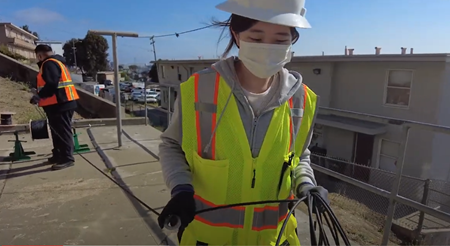
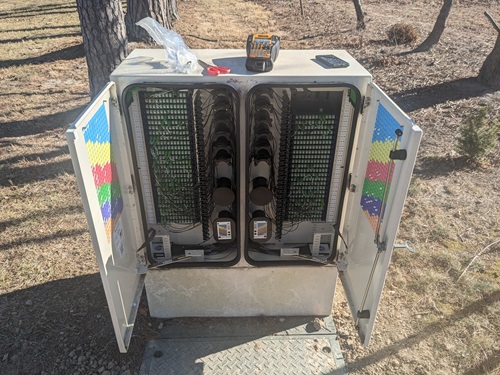
Houston MO fiber cabinet

“The project started in 2020 and we went live in the spring of 2021,” Randon Brown, Technology Director for the City of Houston Fiber Department, tells ILSR. “Construction of the project has taken approximately four years. (Today) 95 percent of the town (network) is operational and can be serviced.”

The city has spent $3 million of its own money to fund construction of the aerial fiber network, Brown said.

The network passes 1,200 premises with 272 subscribers now getting service from Houston Fiber, “which encompasses a mixture of residential and business customers” – though that number will soon rise to 364 (30 percent take rate) in the near future as more residents and businesses are in the pipeline waiting to be connected, he added.

Destination Crenshaw Breathes Life Into 'Open Air Museum' and Emerging ‘Digital Equity Zone’

On a map, the Crenshaw District is a 2.9 square-mile neighborhood in South Central Los Angeles, home to nearly 30,000 mostly black residents.

In the popular imagination, Crenshaw is the backdrop for the Oscar-nominated movie "Boyz In the Hood" – the real life neighborhood that cultivated the likes of former Los Angeles Mayor Thomas Bradley; rappers-turned-actors Ice Cube and Ice T; and the late rapper/entrepreneur Nipsey Hussle.

But on the streets of Crenshaw, a transformative vision is unfolding – an initiative local leaders describe as “a reparative development project.”

The idea is to inspire and empower neighborhood residents with strategic investments rather than displace them through gentrification. The effort is being led by Destination Crenshaw, a nonprofit community organization established in 2017 to celebrate the history and culture of Black Los Angeles.

The most visible part of the vision is to create the largest Black public art project in the nation along Crenshaw Boulevard, the 1.3 mile spine of the neighborhood – or what Destination Crenshaw describes as an “open air museum” centered around “pocket parks” and a “comprehensive streetscape design” that will feature commissioned murals and sculptures from local Black artists.

Yellow Springs, Ohio Eyes Next Steps After Successful Fiber Trial

Yellow Springs, Ohio has been thinking about a city-owned fiber network since 2016, when the municipality issued its first white paper discussing its potential benefits.

Since then, the city has made steady inroads on making those plans a reality, recently culminating in a fiber pilot project currently being used by 100 local homes and businesses.

Launched in 2022, the pilot project currently offers locals two tiers of fiber access: A “standard tier” at a symmetrical 300 megabits per second (Mbps) for $45 a month, and a “premium” tier offering symmetrical gig speed service for $65 a month. There currently are no usage caps, long-term contracts, or installation fees.

Image
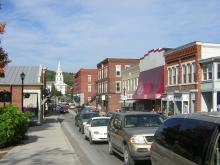
Downtown Yellow Springs

“Final pricing will be determined after the pilot project, and could be higher or lower depending on the ‘take rate,’ customer service offerings, and other knowledge gained from the pilot,” the project FAQ states.

Currently the fiber network covers roughly 600 potential homes around Yellow Springs, and was funded entirely via a $300,000 grant from Broadband Ohio. The city also provides free Wi-Fi via 12 Wi-Fi access points spread throughout the city’s downtown business district.

Like so many U.S. communities, Yellow Springs sees a dearth of meaningful broadband competition, resulting in spotty access, high prices, and substandard service.

Charter Communications (Spectrum) enjoys a monopoly over next-gen broadband access across the majority of the city. Some areas are peppered with sluggish and expensive AT&T DSL.

Minnesota Strikes Down Preemption Laws Blocking Municipal Broadband

Community broadband advocates have scored a major victory in Minnesota as state lawmakers there have repealed the state’s preemption laws that prevented cities and towns in the Land of 10,000 Lakes from providing municipal broadband services.

The new legislation, signed into law yesterday by Gov. Tim Walz, took aim at two statutes that sought to protect large monopoly telecommunications providers from competition.

New Law Unwinds Antiquated Statutes

One antiquated law that had been on the books for over a century (Minn. Stat. Ann. § 237.19) allowed municipalities in Minnesota to buy or construct “telephone exchanges” only if they secured a supermajority vote in a local referendum election. Though intended to regulate telephone service, the way the law had been interpreted after the invention of the Internet was to lump broadband in with telephone service thereby imposing that super-majority threshold to the building of broadband networks.

Image
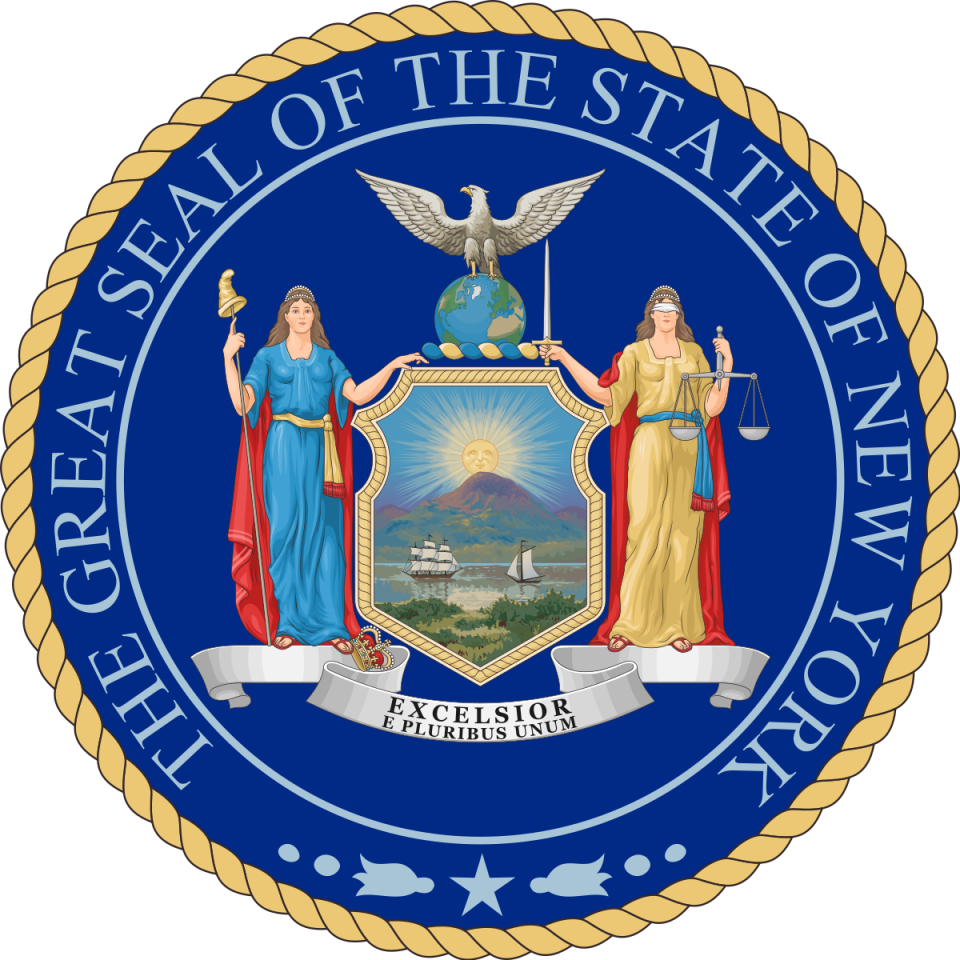
Minnesota state seal

Another law (Minn. Stat. Ann. § 429.021(19)) gave municipalities the express authority to “improve, construct, extend, and maintain facilities for Internet access” but only if a private provider was not offering service in that municipality.

But this week, with a single omnibus bill (SF 4097), those old preemption laws were repealed by state legislators and signed into law by the Gov. Walz yesterday, officially paving the way for any municipality in the state to have the option of building networks to offer municipal broadband service or partner for the same.

Wilbraham, Massachusetts Takes First Step Toward City-Owned Fiber Build

Wilbraham, Massachusetts officials are taking the first steps toward building a city-owned open access fiber network with an eye on boosting local competition and delivering affordable, next-gen broadband access to long-neglected local residents.

Having issued a request for proposal (RFP) earlier this year with the help of EntryPoint Networks, city officials are currently identifying which company they’ll hire to deploy fiber to the city of 14,749.

They say a formal plan to present to voters – as well as a total projected network cost estimate – is expected by October.

“We have no intention of raising taxes or utilizing tax dollars,” Wilbraham Broadband Advisory Committee Chair Tom Newton tells local news outlet The Reminder.

Newton says Wilbraham is hopeful the new network will be primarily financed through an enterprise fund, similar to how the town handles the cost of water and sewer. Depending on take rates, the city is also hopeful the network will be sustainable primarily through subscriber fees. How that all works out in practice remains to be seen.

Image
Map of Wilbraham

Officials are hopeful to keep the total price per household around $60 a month. A project FAQ states the city wants to deliver symmetrical 20 Mbps (megabit per second), 100 Mbps, 250 Mbps, 500 Mbps, and symmetrical 1 Gbps (gigabit per second) service tiers to residents.

Net Neutrality Is Really A Debate Over Monopoly Power

With a 3-2 vote along partisan lines, the FCC has restored both net neutrality–and its Title II authority over Internet access providers. It’s just the latest chapter in a multi-decade quest to try and prevent national telecom monopolies from abusing their market power to undermine competitors while nickel and diming American consumers.

“Consumers have made clear to us they do not want their broadband provider cutting sweetheart deals, with fast lanes for some services and slow lanes for others,” FCC boss Jessica Rosenwocel said in a statement.

“They do not want their providers engaging in blocking, throttling, and paid prioritization. And if they have problems they expect the Nation’s expert authority on communications to be able to respond,” Rosenwocel added.

Smaller ISPs and municipalities worry that the new rules saddle them with burdensome regulations as a punishment for the sins of much larger companies. But the FCC, state leaders, and consumer groups insist the rules should be a net benefit all the same.

The final rules require that ISPs be transparent about any restrictions on consumer broadband lines. They also prohibit ISPs from extorting content and service companies looking to maintain high-quality performance on telecom networks, and prohibit telecoms from undermining online competition by creating pay-to-play “fast lanes.”

Schoharie County, NY Eyes New Fiber Network On Back Of $30 Million Grant

Schoharie County, New York officials have applied for a $30 million New York State ConnectALL grant with the hopes of eventually building a $33 million, county-wide fiber network.

The shape and scope of the network has yet to be determined, but the county hopes to build a network that brings affordable access to the rural, agriculture-heavy county.

“Schoharie County applied for the grant under the NYS MIP program on April 19th, in an attempt to bring high speed broadband access to every premise in the county,” Deputy County Administrator Jim Halios told ILSR.

Notoriously over-optimistic FCC data currently states that Schoharie County enjoys 92 percent broadband coverage county-wide. In reality, broadband access in the county is largely dominated by a monopoly enjoyed by Charter Spectrum, which was nearly kicked out of the state entirely in 2019 for misleading regulators and failing to evenly deploy access.

As ACP Collapses, Newark Takes The Lead On Affordable Access

Newark, New Jersey is taking full advantage of its city-owned fiber network to expand affordable broadband access – with a particular eye on helping the city’s least fortunate.

Driven by past successes with city-owned fiber and Wi-Fi, Newark has announced the city is significantly expanding the availability of $20/month broadband service to numerous Newark Housing Authority (NHA) apartment buildings.

Image
Newark Housing Authority logo

This latest partnership with Adrena leans heavily on Newark Fiber, a 288-strand city-owned fiber network. Launched in 2016, the network has steadily been expanded to connect anchor institutions. But it’s also been a cornerstone of the city’s efforts to revitalize and assist many lower income – and long neglected – Newark neighborhoods.

“Nine percent of Newark families lack computers and about 20 percent of the city doesn't have an in-home broadband connection,” Aaron Meyerson, Chief Innovation Economy Officer & Director of Broadband for the City of Newark told ILSR.

Broadband Champion Jim Baller Presented With Lifetime Achievement Award

Whether it's supporting municipal broadband projects, fostering public-private partnerships, or advocating for laws and policies to improve local Internet choice, for decades James (Jim) Baller has distinguished himself as a telecom attorney fighting for the rights of communities to decide their own digital futures.

This week, Baller’s trailblazing career was honored at the 50th Anniversary Gala of the Institute for Local Self-Reliance (ILSR) in Washington D.C. where he was presented with a Lifetime Achievement Award as ILSR celebrated a half-century of advocacy work to promote and sustain vibrant local communities.

“I am very grateful for this award, which highlights my dedication to informed local broadband choice,” Baller said in accepting the award at the Howard Theater. “Thank you to the Institute for Local Self-Reliance for this recognition and for emphasizing the positive impact of community-driven broadband initiatives.”

Introducing Baller to a packed theater, ILSR’s Community Broadband Networks Initiative Director Christopher Mitchell described him as “someone who has shaped our work and has meant a lot for the entire nation.”

Mitchell said not only has Baller worked with countless communities and clients across the country who have benefited from his expert legal advice, but went on to note Baller's legacy and leadership:

"Jim Baller worked on the first municipal broadband project, shaped many of the people organizing for better broadband, and has consistently worked on effective ways to improve Internet access for everyone.”

Currently serving as Senior Counsel with Keller and Heckman’s Telecommunications practice, Baller has long been a leading legal practitioner helping communities do the important nitty gritty work involved in providing better broadband – from the siting of wireless network facilities and managing rights-of-way to negotiating fiber network pole attachments and public private partnerships.

Ruston, Louisiana Gives Up, Will Sell City-Owned Fiber Network

Ruston, Louisiana officials say they’re throwing in the towel, and will be selling a city-owned fiber network that has existed for the better part of 15 years.

City officials say they finalized the decision at a city council meeting earlier this month, though they’d already sent out a Request for Proposal (RFP) for potential bidders as early as February.

The network was first constructed back in 2010, and consists of over 136 miles of fiber connecting roughly 300 area businesses. The network doesn’t currently service residential customers, though that could change under new ownership.

The city had briefly considered expanding the network in 2018, but scrapped the idea two years later. Ruston Mayor Ronny Walker tells the Lincoln Parish Journal that numerous factors went into the city’s decision, including new broadband construction currently being funded by a historic new wave of federal broadband infrastructure subsidies.

“Six years ago we did a study and thought about getting into the private/home internet service,” Walker said. “We were moving along that track and then four years ago, when the federal government starting putting so much money into broadband across the United States — billions of dollars to the state of Louisiana — that’s when we decided as a staff it was time to exit that business because there were so many other large companies doing that.”

Image
Ruston LA cyclists downtown

Like countless communities, Ruston sees little meaningful broadband competition. Cable giant Optimum enjoys a monopoly over broadband access across much of the city, with AT&T DSL and fiber scattered across some neighborhoods. This muted competition has resulted in spotty access, slow speeds, high prices, and substandard customer service.