
loveland

Content tagged with "loveland"

Parent
Displaying 1 - 10 of 25

Webinar Redux: Why Cities Can’t Afford to Wait on Smart Infrastructure

Two city utility managers, an economist, and a fiber technologist walk into a virtual webinar …

And what followed was a deep dive into why delaying investment in smart city infrastructure is increasingly costly.

The hour-long livestream event  – co-hosted by the Institute for Local Self-Reliance (ILSR) Community Broadband Networks initiative and the American Association for Public Broadband (AAPB) – brought together municipal utility managers, an economist, and a leading fiber technologist to explore how cities can future-proof themselves with digital infrastructure.

Guests who appeared on “Building Smarter Cities and the Cost of Doing Nothing” today emphasized how “smart cities” are built on fiber networks and what city investments in the gold-standard of Internet connectivity can do to boost economic development while improving the quality of life for local residents and businesses.

They highlighted the real costs of inaction, pointing to slower economic growth and lost municipal revenue opportunities as something many cities or towns overlook when thinking about local infrastructure.

Image
Screenshot of the panelists talking during the webinar

The webinar featured Huntsville Utilities VP of Engineering Stacy Cantrell who provided key insights into the public-private partnership Huntsville Utilities struck with Google Fiber and what it has meant to “Rocket City.”

Another virtual case study was provided by Brieana Reed-Harmel, Broadband Manager for Pulse Fiber, discussing how the city’s fiber network is propelling economic revitalization efforts in Loveland and how the success of the network is now being extended into neighboring communities.


Webinar To Explore ‘Smart City’ Infrastructure and the Costs of Ignoring It

Once again, the Community Broadband Networks team at the Institute for Local Self-Reliance (ILSR) will team up with the American Association for Public Broadband (AAPB) to host another thought-provoking webinar – “Building Smarter Cities and the Cost of Doing Nothing.”

Moderated by AAPB Executive Director Gigi Sohn and ILSR’s Sean Gonsalves, the livestreamed discussion will bring together community-driven broadband champions who are redefining what it means to be a “smart city” — and what communities risk when they fail to invest in modern connectivity.

Slated for November 20th starting at 12 noon ET, interested attendees for the free 60 minute webinar are invited to register now here.

From Huntsville’s groundbreaking public–private partnership with Google Fiber to Loveland’s city-owned-and-operated Pulse Fiber, network operators in those communities will share real-world lessons on how they were able to turn infrastructure into opportunity. 

The livestreamed webinar will feature Stacy Cantrell, Vice President Engineering for Huntsville Utilities; Brieana Reed-Harmel, Broadband Manager for Pulse Fiber; and will also include expert insights from Dr. Bento Lobo (University of Tennessee at Chattanooga) who will unpack the economic data behind smart city investments, while Paul Dickinson (Founder of Smart Infrastructure Solutions) will offer a glimpse into the next generation of intelligent infrastructure.

As the panel dives into the why and how communities are transforming their local digital landscapes, the forum will explore the technologies, policies, and partnerships powering the cities of tomorrow — and why doing nothing is the most expensive choice of all.

Documentary: The Municipal Broadband Wave and Monopoly Response

In January, we released our new census of municipal networks in the United States for 2024, and the significant growth that we've seen over the last two years as more and more cities commit to building Internet infrastructure to add new tools for their local government, incentivize new economic development, and improve connectivity for households. 

The trend has not gone unnoticed by the monopoly players and their allies; we've seen new dark-money campaigns on both the East Coast and in the west, as astroturf campaigns and misinformation efforts have increased. 

A new short documentary by Light Reading does a great job of outlining the stakes for local governments, residents stuck on poor connections, and the incumbents as the wave of municipal networks grows. Featuring the network in Loveland, Colorado and context by advocates like the American Association for Public Broadband (AAPB) Executive Director Gigi Sohn and Washington State Representative Drew Hansen, it's well worth watching.

Remote video URL

Municipal Broadband in Colorado Big Winners In Latest Wave Of State Grants

Colorado has long been home to some of the most innovative municipal broadband projects in the country. That trend has only accelerated with last year’s voter-approved elimination of municipal broadband restrictions, and it’s now being buoyed by a massive new wave of state grants that should further expand affordable broadband to long-neglected parts of the state.

Colorado Gov. Jared Polis recently announced the first of multiple broadband investments using stimulus funding from the U.S. Treasury’s Capital Projects Fund (CPF) program. The CPF is funded by $10 billion made possible by the American Rescue Plan Act (ARPA), and is a key part of the state’s goal to bring affordable broadband to 99 percent of Colorado residents by 2027.

According to the Governor’s office, the state just authorized $113 million in CPF funds on 13 projects that will bring fiber service to nearly 19,000 homes and businesses across Colorado. State officials say the funding will be heavily focused on projects in the South and Southwest portion of the Centennial State, where connectivity needs are greatest.

Image
Colorado State Seal

The Colorado Broadband Office says it received 112 applications asking for more than $642 million in broadband funding across the state–five times greater than the allotted awards.

Loveland, Colorado’s Municipal Fiber Network Crosses Finish Line

As Loveland, Colorado’s municipal broadband network continues to rack up industry accolades on its path to providing world-class high-speed Internet service, the city is now celebrating another important milestone.

Last week, Pulse Fiber officials announced that construction of its community-owned broadband network is now complete with every household and business in this city of 77,000 now having access to affordable gig-speed service.

The $110 million construction project, which began in earnest only four years ago, is the largest capital project in the city’s history, reaching the finish line on time and on budget, city officials said.

In a press announcement Steve Adams, Loveland’s City Manager, captured the meaning of the moment:

“As we celebrate the successful conclusion of this historic project, Pulse stands as a shining example of what is possible when the community unites to pioneer innovative, collaborative solutions. We did this for ourselves, and we made it happen together.”

“This infrastructure has been designed and built with future generations in mind, ensuring Loveland remains at the forefront of modern, robust, and future-proof Internet delivery,” Pulse Broadband Manager Brieana Reed-Harmel added.

Image
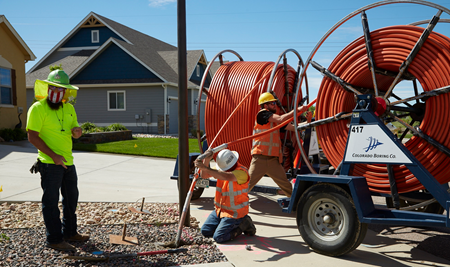
Pulse Fiber construction

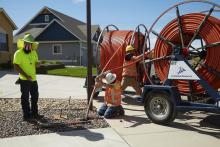
Pulse officials candidly acknowledged that the pathway to the leading edge of Internet connectivity wasn’t easy, as the city had to navigate network construction through a global pandemic, supply chain disruptions, and inflation. But despite those challenges, Pulse Fiber has deployed 631 miles of conduit and over 1,300 miles of fiber throughout the city.

Colorado and Texas Municipal Broadband Networks Nab National Awards

From Colorado to Texas, municipal broadband providers continue to rack up industry accolades, not just for delivering fiber service–the gold standard of Internet connectivity–but for these networks’ ability to provide ubiquitous access across an entire community at affordable rates.

The National Association of Telecommunications Officers and Advisors (NATOA) recently announced that its Community Broadband Projects of the Year Awards for 2023 will go to the Connexion network in Fort Collins, Colorado and TeamPharr.net in Pharr, Texas.

Awarding Community-Wide Access and Affordability

The Fort Collins award is in recognition for the city having established “a municipal broadband utility created by and for the community to improve the life of all 80,000 residential and commercial properties of Fort Collins through better, more affordable Internet,” NATOA said in announcing the award.

Image
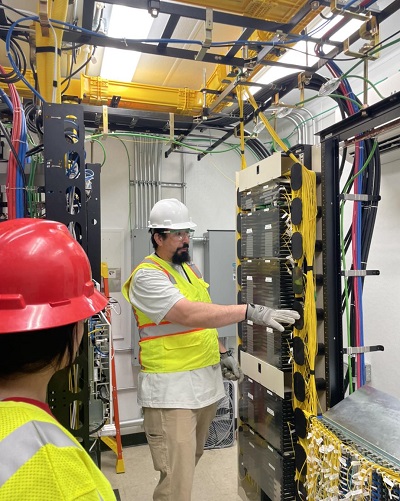
Ft Collins NOC

But it wasn’t just because Fort Collins’ network provides city-wide access to fiber. The award also recognizes that “Connexion offers the fastest Internet speeds available at affordable prices (emphasis added) as well as competitive phone and TV services.”

Timnath, Colorado and Loveland Team Up to Further Expand Celebrated Municipal Fiber Network

Loveland’s municipal broadband utility Pulse is a heartbeat away from expanding into a small neighboring Colorado town eager to offer its residents the same attractive, high-quality Internet access that can be found in Larimer County’s biggest cities.

Officials in Loveland and Timnath, Colorado (pop. 7,800) recently announced the ratification of an Inter-Governmental Agreement (IGA) that greenlight’s a plan to bring ubiquitous, affordable high-speed Internet access to yet another community in the Centennial State, as an increasing number of Colorado cities and towns embrace municipal broadband after years of frustration with the inadequate, high-priced service from the region’s monopoly incumbents.

"The selection of Pulse as our broadband service provider reflects a thorough process of assessment and consideration,” Timnath Town Planner Brian Williamson said in a press statement after the agreement was approved. “We are excited to work together, leveraging their expertise to ensure our residents have access to reliable, high-speed Internet that will contribute to the growth and prosperity of Timnath."

Keeping Up With The Loveland’s

This week Williamson spoke to ILSR about the project and why a town-wide fiber network is such valuable and vital infrastructure.

Image
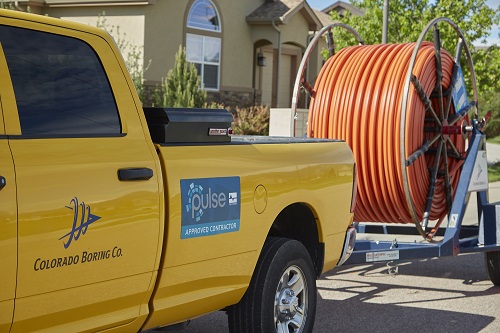
Pulse Fiber Pick Up Truck

“Timnath is an interesting place. We are predominantly a residential community and we are growing quickly,” he said, adding that in a post-pandemic world of distance learning, remote work, and telehealth, an important part of the mix when people decide where to live and work is whether that community has reliable and affordable high-speed Internet access.

Loveland’s Municipal Network is Scrappy and Driven to Serve its Community - Episode 566 of the Community Broadband Bits Podcast

This week on the podcast, Christopher speaks with Brieana Reed-Harmel, Municipal Fiber Manager for the City of Loveland, located in Colorado’s Northern Front Range about an hour north of Denver. The city is home to over 80,000 residents as well as a municipal fiber broadband network called Pulse.

Chris and Brieana discuss Loveland’s population expansion over the past few years and Pulse’s resulting plans to extend beyond city limits into the “urban fringe,” which is more difficult to receive grant funding to serve. Brieana shares the ways in which the municipal network has leveraged its relationships, having partnered with its local school district to connect unserved areas during the pandemic, and currently in conversation with the county, which will help Loveland with the matching funds it needs for upcoming grant expansions. Brieana speaks to the challenges of building out the network through inflation and the pandemic. She stresses the importance of having a solid business model and great project management, as well as the scrappiness and ongoing investment needed to ensure a municipal network is sustainable and can bring residents quality connectivity at the best value. 

This show is 25 minutes long and can be played on this page or via Apple Podcasts or the tool of your choice using this feed

Transcript below.

We want your feedback and suggestions for the show-please e-mail us or leave a comment below.

Listen to other episodes here or view all episodes in our index. See other podcasts from the Institute for Local Self-Reliance here.

Thanks to Arne Huseby for the music. The song is Warm Duck Shuffle and is licensed under a Creative Commons Attribution (3.0) license.

Capital Construction of a Municipal Broadband Utility 101

*This piece was authored by Brieana Reed-Harmel, manager of the municipal-owned Pulse fiber network in Loveland, Colorado. It was originally published by Broadband Breakfast with permission to republish here. We have extensively covered the Pulse network in Loveland examples of which can be found here and here.

***  

I am the manager for Pulse, the municipally owned broadband utility in Loveland and parts of Larimer County, Colorado. We made strong choices early on that put us on a path to success.

Having broken ground fewer than six months before the start of the pandemic, I am continually impressed with how smoothly our work has progressed. Put simply, I want you to be as successful as we have been.

Define the Plan, Assess Your Skills and Determine What You Need

Documenting the plan makes it easy to share the vision. The plan needs to include the high-level vision and strategy, but also delve into the granular, tactical details as it establishes your success criteria. What does success look like in terms of customer take rate, time to rollout and network documentation?

Include details related to long-term maintenance, and what operations will eventually look like as it will affect the network design, construction methods and the type of materials you decide to use. Understanding these details can greatly change cost models, as some choices have lower upfront costs but higher longer term maintenance costs, and vice versa, which can make or break a business model.