
FTTH

Content tagged with "FTTH"

Fiber to the Home
Displaying 701 - 710 of 1312

Madison, Wisconsin, Releases RFP: Responses Due Oct. 20th

Last year, Madison’s CIO Paul Kronberger spoke with Christopher about the city’s pilot project to bring better connectivity to several lower-income areas. They also discussed the community’s separate plan to deploy dark fiber infrastructure across the city. The city recently released its Request for Proposals as they seek a partner for deployment for a Fiber-to-the-Premise (FTTP) network. Final proposals are due October 20th.

The RFP comes about a year after the community finished a feasibility study to examine costs, interest, and business models for a city-wide municipal network.

Publicly Owned With Help From A Partner

Madison has a specific business model in mind. They are looking for a partner willing to emulate Huntsville’s approach, in which the city designs, builds, and owns a dark fiber network. A private sector partner constructs fiber drop cables from the public rights-of-way to the subscribers’ premises. The partner handles lit services responsibilities and the city takes care of all dark fiber concerns. Madison also wants its partner to take on the task of obtaining access to necessary private easements. The community is looking for a firm that is willing to establish a long-term relationship.

The city has determined that the project will consist of 114,680 residential passings, which includes both single-family and multi-family dwellings. The number of business passings has been calculated to 10,331. All community anchor institutions (CAIs) will also be connected.

The Vision For Madison

Approximately 247,000 people live in the state's capital city, having seen an increase of 8.6 percent since 2010. Madison is considered a town with an exceptional quality of life, in part because the city has established a set of Racial Equity & Justice (RESJ) goals. Their desire to invest in the infrastructure to bring equitable service to all of the community is an extension of those goals.

Holland's Muni Fiber Pilot Expands in Michigan - Community Broadband Bits Podcast 269

Holland is expanding its pilot area for municipal Fiber-to-the-Home (FTTH) services in Michigan's Dutch outpost. To explain the past, present, and expected future of muni fiber in Holland, Broadband Services Manager Pete Hoffswell for the Board of Public Works, joins us in episode 269 of the Broadband Bits podcast.

The city has some 25 years of experience with dark fiber and open access with 6 ISPs serving some 200+ business locations. In recent years it has looked to expand that network, starting with a gigabit passive optical network (GPON) network in the higher density areas of downtown. 

We discuss the city's decision to become a service provider and plans for further expansion, as well as how the city is reacting to increased investment from the existing cable and telephone companies. 

In our discussion, we mention HollandFiber.org

This show is 30 minutes long and can be played on this page or via Apple Podcasts or the tool of your choice using this feed

Transcript below. 

We want your feedback and suggestions for the show-please e-mail us or leave a comment below.

Listen to other episodes here or view all episodes in our index. See other podcasts from the Institute for Local Self-Reliance here.

Thanks to Arne Huseby for the music. The song is Warm Duck Shuffle and is licensed under a Creative Commons Attribution (3.0) license.
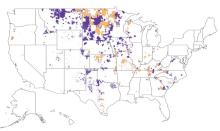
NTCA Survey Examines Indie Telcos And Fiber Deployment

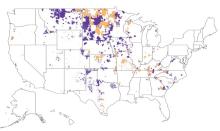
When it comes to rural areas, it’s no secret that national providers have little interest in serving the sparsely populated communities. Cooperatives and small local providers typically pick up the slack but it isn’t easy. In a recent survey indicated that small rural telephone companies are overcoming hurdles to deploy fiber and making long-term plans to continue the trend. Furthermore, rural subscribers are proving that they are hungry for high capacity connectivity.

Local ISPs Are Doing It

Approximately 89 percent of “NTCA 2016 Broadband/Internet Availability Survey Report” revealed that the expense of Fiber-to-the-Home (FTTH) deployment was the most difficult barrier to break through. Even though they faced the difficult problem of financing, 52 percent of survey respondents in the midst of fiber deployments in the spring of 2017 were serving at least half of their customers with FTTH.

Planning For The Future

Fiber is the future for most of the survey respondents. Eighty-two percent reported long-term fiber strategies with 66 percent of those with strategies planning on offering FTTH to at least half of their customers. Another 39 percent of those with long-term fiber strategies will offer fiber to the node to more than 75 percent of their customers by the end of 2019. Thirty-one percent of local telcos with long-term fiber plans who responded to the survey report said that they have already completed their fiber deployment plans.

Subscribers Want More

According to survey respondents, rural subscribers are choosing faster speeds tiers. Relative to the same survey one year ago, the demand for download speeds in excess of 25 Megabits per second (Mbps) more than doubled from eight percent of subscribers to 17 percent of subscribers. As the percentage of subscribers choosing a faster speed tier is increasing, the number of subscribers signing up for slower speeds is decreasing. The report describes rural subscriber behavior as, “moving up the broadband speed chain” and says that “…providers need to be prepared to offer them the level of service they demand.”

What Does The Survey Tell Us?

Islesboro, Maine, Finalizes Fiber Agreement To Mainland

Residents and businesses of Islesboro, Maine, are waiting eagerly to connect to their new Fiber-To-The-Home (FTTH) network this fall. Recently, the community finalized an important step when it signed an agreement with Central Maine Power Company (CMP).

One Piece Of A Larger Plan

In 2016, community leaders were already well into their efforts to bring better connectivity to the island community. They expected to lease poles from CMP to hang fiber, but CMP’s plans to install a new fiber optic line to enhance electric service soon became part of the community network design. The new cable installation was necessary to replace the original 1955 cable to the island and to to serve as a redundant line to a cable that was in stalled in 1992.

Network planners asked CMP to include a fiber line within the 3-mile undersea cable running across the Penobscot Bay. The community will lease CMP’s fiber, which will connect to the wider Internet on the mainland.

“We are delighted with CMP’s cooperation in providing our community with access to their fiber currently crossing Penobscot Bay,” said Islesboro Town Manager Janet Anderson. "This timely and affordable solution allows us to quickly complete our broadband internet system."

The Light At The End Of The Tunnel

Islesboro first began investigating how to improve Internet access on the island in 2012 with a Broadband Working Group. After three years of study, appealing to incumbents, and analyzing options, they decided to invest in publicly owned infrastructure and work with a private provider that will offer Internet access. The community voted to bond for the network, estimated to cost approximately $3.8 million.

Frankfort, Barbourville Upgrading Systems In Kentucky

Several communities in Kentucky have been managing publicly owned Internet networks for decades, including Barbourville and Frankfort. Residents and businesses depend on their great customer service and quality Internet access. Like everything else, however, telecommunications infrastructure ages and now both communities are considering how to upgrade.

Barbourville Going With Fiber

Barbourville, Kentucky, began offering cable Internet access to residents in the 1990s and were one of the first to offer cable TV service back in the 1950s. Currently, residential customers can opt for 6 or 12 Megabits per second (Mbps) with 384 Kbps and 1 Mbps respectively. Now, the public utility is upgrading to Fiber-to-the-Home (FTTH), which will significantly boost both download and upload speeds. Barbourville Utilities advertise identical commercial options for customers with an additional option of 25 Mbps / 2 Mbps. They also advertise symmetrical fiber optic business services that range from 6 Mbps to 10 Gigabits per second.

In their announcement, Barbourville Utilities estimates more than 4,000 residential and business customers will have access to the new FTTH service. They’re christening the new high-quality fiber Internet access “Blink” and construction will start on September 5th.

“We are extremely pleased to bring revolutionary Internet technology to our community,” Barbourville Utilities General Manager Josh Callihan said. “Increasing broadband access is a top priority in southeastern Kentucky and we are proud that our community will be a pioneer for this growth.” 

Barbourville is located in Knox County in southeastern Kentucky, within the Appalachians. Like other communities in the region, Barbourville faces unique problems that affect rural economies. Fortunately, Barbourville Utilities have already established infrastructure and the personnel in place with expertise to manage a network. Their past decision to invest in a community network will help keep them stay competitive today as new businesses look for affordable locations with high-quality connectivity.

Frankfort Considering FTTH

Saturday Show: Watch Paul Bunyan Co-op Explain Rural Connectivity on TEDx Bemidji

The lakes and woods of northern Minnesota are home to high-speed Internet service. Paul Bunyan Communications Cooperative has developed a 5,000 square mile GigaZone service area, where it offers symmetrical speeds of up to 1 Gigabit per second (1,000 Mbps) to homes and businesses. Paul Bunyan Communications CEO Gary Johnson explains how the cooperative built a Fiber-to-the-Home (FTTH) network throughout rural areas.

In this TEDx Bemidji talk, Johnson explores through the history and mission of telephone cooperative and points to the importance of building networks for the future. Specifically, he highlights the need for high-speed uploads for innovators and entrepreneurs in rural communities. 

Watch Johnson at TEDx Bemidji below:

Anacortes, Washington, Will Survey Community About FTTH

Bit by bit, Anacortes has been taking steps to cultivate better connectivity in their community of approximately 16,000. Earlier this week, city leaders decided to move forward with a survey to determine if residents and businesses are interested in service from a municipal Fiber-to-the-Home (FTTH) network.

Considering The Next Steps

At the August 21st City Council meeting, staff provided an update of the project that the city is working on with Northwest Open Access Network (NoaNet) to improve city water utility efficiencies. Anacortes needed better communications between more than 30 pump stations, reservoirs, and water treatment plants and, working with NoaNet, determined that they could use abandoned water lines for fiber conduit. They’re nearing the end of what they describe as Phase I of the project.

Phase II involves determining whether or not the city wants to harness extra dark fiber capacity in the backbone for a municipal FTTH network throughout the community. Before they decide to move forward with a trial system, Anacortes and NoaNet will reach out to the community for their input starting with a survey. At the meeting the City Council approved $10,000 to fund the survey, which will also help determine which areas have the greatest demand.

If the community decides it wants a municipal network, Phase III would depend on the success of the “trial phase” and would require installation of fiber within the community. While Anacortes is still developing solid details for this phase of the plan, early discussions indicate they will take an incremental or fiberhood approach based on demand in particular areas of town. 

So Many Choices

City leaders anticipate an open access model, but they are considering also taking on an additional role as a retail Internet Service Provider. In order to examine all the options, city staff are examining several possible models. One of their primary goals is to increase competition.

Voters Say "Yes!" In Lyndon Township, Michigan

In a record high turnout for a non-general election, voters in Lyndon Township, Michigan, decided to approve a bond proposal to fund a publicly owned Fiber-to-the-Home (FTTH) network. The measure passed with 66 percent of voters (622 votes) choosing yes and 34 percent (321 votes) voting no.

Geographically Close, Technologically Distant

The community is located only 20 minutes away from Ann Arbor, home to the University of Michigan and the sixth largest city in the state, but many of the Township’s residents must rely on satellite for Internet access. Residents and business owners complain about slow service, data caps, and the fact that they must pay high rates for inadequate Internet service. Residents avoid software updates from home and typically travel to the library in nearby Chelsea to work in the evening or to complete school homework assignments.

Lyndon Township Supervisor Marc Keezer has reached out to ISPs and asked them to invest in the community, but none consider it a worthwhile investment. Approximately 80 percent of the community has no access to FCC-defined broadband speeds of 25 Megabits per second (Mbps) download and 3 Mbps upload.

“We don’t particularly want to build a network in our township. We would rather it be privatized and be like everybody else,” Keezer said. “But that’s not a reality for us here.”

When local officials unanimously approved feasibility study funding about a year ago, citizens attending the meeting responded to their vote with applause

A Little From Locals Goes A Long Way

Fond du Lac Band Builds Fiber Network In Northeast Minnesota

Native nations are building community networks, owned and operated by tribal governments to ensure that Indian Country has high-speed Internet access. In July 2017, the Fond du Lac Band of Ojibwe announced a plan to build a Fiber-to-the-Home (FTTH) network to 900 homes that only had access to dial-up Internet service.

The Duluth News Tribune reported that the Fond du Lac tribal government is putting more than $2 million towards the venture and has secured about $6 million in federal grants. We spoke with Jason Hollinday, the Planning Director, to get more details on Fond du Lac Communications and what it means for the community. 

Fond du Lac Connectivity

The Fond du Lac reservation, “Nagaajiwanaang,” covers about 150 square miles in northeastern Minnesota, and the FTTH project will encompass most of the area - about 120 square miles. The network will offer voice, video, and Internet service.

Anyone, including non-tribal members, will be able to get connected within the service area. Prices have yet to be determined, offering affordable rates is a priority. In a recent Pine Journal article, Band IT director Fred Underwood pointed out that "Connectivity is available anywhere, but is it affordable?" and added that affordability in rural areas is often hard to find. Connectivity for the FTTH network will include a program to connect low-income residents and installation fees have been waived for any subscriber who signed up before July 31st.

Community centers and public buildings will all be connected and receive two years of free Internet service. The goal is to make sure that the network will be a community asset benefiting everyone.

Saturday Show: Listen to a Latticework Interview with Elliot Noss

The Latticework podcast invited Elliot Noss, CEO of Tucows - the parent company of Ting - to discuss his work at Tucows and his thoughts on the future. The conversation touches on everything from the idea of post-Democracy to how companies build Fiber-to-the-Home (FTTH) networks.

Noss previously joined us for the Community Broadband Bits Podcast in 2015. In that episode, Chris and Noss discuss Ting's approach to FTTH and wireless networks and how that intersects with community networks. That podcast is available here.

Ting has a public-private-partnership with the city of Westminster, Maryland, and has started projects in a number of other cities including Holly Springs, North Carolina; Centennial, Colorado; and Sandpoint, Idaho. We discuss the Westminster partnership in our 2016 report, Successful Strategies for Broadband Public-Private Partnerships.

Listen below to the Latticework podcast (22 minutes):