
FTTH

Content tagged with "FTTH"

Fiber to the Home
Displaying 111 - 120 of 1312

Two Alabama Cooperatives Win Grant Funding to Expand Fiber Service

Alabama Governor Kay Ivey's office has unveiled a new round of broadband grants that will expand fiber access to unserved homes and businesses across 23 Alabama counties. This latest round of grants should help fund 2,347 miles of new fiber deployment, bringing broadband availability to more than 15,000 locations scattered across the Yellowhammer state.

The funding – made largely possible by 2021 American Rescue Plan Act (ARPA) money that both of the state’s Senators voted against – comes on the heels of another $150 million broadband funding round announced back in February.

“With these latest grants, Alabama takes another all-important step to supplying high-speed Internet availability to more rural Alabama communities and neighborhoods,” Ivey said in a statement. “Upon completion of these projects, more children will have better learning opportunities, more businesses will have greater opportunities to compete worldwide, and emergency response departments and medical clinics will be able to offer improved services.”

Both funding rounds were heavily dominated by large private telecoms like AT&T, Charter, and Brightspeed. But the state has also been doling out some sizable awards to local cooperatives in a bid to shore up rural fiber access.

Vermont Launches New Fiber Optic Apprenticeship Program With ‘Paycheck From The Start’

In a historic effort to blanket Vermont with fiber-to-the-home networks, the Green Mountain State has been banking on a community broadband-driven approach to connect the unconnected through its ten Communications Union Districts (CUDs).

Now, state leaders are adding another community-rooted program to its toolbox that promises to help fill the ranks of the very workforce building the networks.

Earlier this week, the Vermont Community Broadband Board (VCBB) announced the launch of a new Fiber Optic Apprenticeship Program officials say will put “participants to work right away, allowing them to learn on the job and earn a paycheck from the start.”

The workforce development initiative will be a part of the Telecommunications Industry Registered Apprenticeship Program (TIRAP), a “competency-based apprenticeship” sponsored by the Wireless Infrastructure Association (WIA). And in addition to earning a paycheck, apprentices who complete the program will also earn a national credential recognized by the U.S. Department of Labor.

Image
Vermont CCB logo

VCBB Executive Director Christine Hallquist characterized the apprenticeship program as “a huge opportunity for Vermonters to get into a new career without any cost to them that will provide a paycheck from day one and many options for career advancement.”

Choptank Electric Cooperative Accelerates Fiber Broadband Expansion in Rural Maryland

Choptank Electric Cooperative says the Denton, Maryland-based co-op is making significant progress on efforts to deliver fiber access to largely underserved residents of the Old Line State.

In 2021, Choptank decided to begin extending residential fiber broadband service to the cooperative’s 56,000 residential, commercial, and industrial metered accounts scattered across nine counties on Maryland's Eastern Shore. Since that promise, the cooperative says it has passed more than 13,000 locations statewide.

In a meeting with Worcester County Commissioners in early September, Choptank officials stated they’ve delivered fiber to 1,112 locations in Worcester County and have 471 currently active subscribers. Just about 42 percent of county residents that have access to Choptank’s fiber offerings have subscribed. The cooperative has received roughly $1 million in county funds.

Image

Choptank provides residential customers three tiers of fiber service: symmetrical 100 megabit per second (Mbps) fiber for $85 a month; symmetrical 450 Mbps service for $100 a month; symmetrical 1 gigabit per second (Gbps) service for $140 a month; and symmetrical 2.5 Gbps service for $280 a month.

Indio, California Gets $9 Million Grant For Fiber Network

Indio, California has been awarded a $9 million state grant the city will use to expand affordable broadband access. The grant award was made possible by California’s $2 billion Last Mile Federal Funding Account Grant Program (FFA), part of a broader $6 billion California “Broadband For All” initiative aimed at bridging the digital divide in the Golden State.

According to Indio officials and the now-finalized CPUC award, Indio – an incorporated city located in Riverside County and home to 92,000 residents – will receive $8.9 million to deliver gigabit-capable fiber to 479 unserved locations and an estimated 3,632 unserved local residents.

“We are still in the design phase and should release an RFP within the next couple of months for the actual build,” Indio Director of Information Technology Ian Cozens told ILSR.

Image
Indio CA fiber map

With 75 percent of the project’s initial target area classified as low-income, city leaders say residents can expect static pricing for at least ten years. The city will also ensure there’s a low-cost option for low-income families left adrift after House and Senate Republicans blocked the funding renewal of the federal Affordable Connectivity Program (ACP).

City officials, however, do not intend to stop there. The plan is to build a citywide fiber network, the full cost of which is estimated to be $35.2 million.

Plumas-Sierra Telecom Nabs $67 Million In FFA Grants Across Four California Counties

A California telecom and electrical cooperative says the state’s ongoing last-mile broadband grant program will help deploy affordable fiber to multiple communities across four heavily unserved and underserved California counties.

Back in July, Imperial, Lassen, and Plumas Counties were the latest to receive broadband expansion grants courtesy of California’s $2 billion Last Mile Federal Funding Account Grant Program (FFA). The program, part of a broader $6 billion California “Broadband For All” initiative, is aimed at boosting broadband competition and driving down costs statewide.

Plumas-Sierra Telecommunications (PST), a subsidiary of Plumas-Sierras Rural Electric Cooperative (PSREC) has been a major early winner in ongoing California FFA awards. The cooperative says it’s poised to receive roughly $67 million in FFA grants to expand affordable broadband to roughly 6,600 unserved and underserved locations across Sierra, Plumas, Lassen, and Nevada Counties.

Image
Plumas-Sierra fiber install in Gold Mountain

California Public Utilities Commission (CPUC) recently announced another $86 million in FFA grants that will help fund broadband expansion across 21 different California towns, cities, counties, and tribal communities. One Plumas grant award is for a $14.5 million project to bring fiber to 834 unserved locations and 1,169 unserved residents across Plumas County.

East Central Oklahoma Electric Cooperative Launches $4.8 Million Broadband Expansion Project

The Oklahoma Broadband Office (OBO) and ecoLINK Fiber Services recently announced the commencement of two different broadband expansion efforts that aim to bring affordable fiber to unserved homes and businesses in the rural northeastern corner of the Sooner State.

According to an OBO announcement, the two projects will cost $4.8 million and will soon bring fiber to 265 homes and businesses in Creek County.

OBO provided $2.9 million in federal grants made possible by the American Rescue Plan Act (ARPA), with ecoLINK, a subsidiary of the East Central Oklahoma Electric Cooperative (ECOEC), providing $1.9 million in matching funds.

Image
ecoLink groundbreaking celebration hats on shovels

A commencement celebration of the project launch was held in the town of Slick in Creek County on Tuesday, September 10. The deployment is part of more than $374 million in ARPA-enabled grants aimed at shoring up broadband access in the state.

“Expanding broadband access in Slick and throughout rural Oklahoma will unlock new opportunities for education, healthcare, and business, fostering growth and innovation,” OBO Executive Director Mike Sanders said of the launch. “This investment ensures that every resident can get connected and thrive in the modern digital age.”

North Carolina Telephone Co-op FOCUS Broadband Secures $5.4 Million For Fiber Expansion

The North Carolina nonprofit telephone cooperative FOCUS Broadband nabbed $5.4 million in grant funding from the state’s Department of Information Technology (NCDIT) to extend its fiber network to 800 additional rural homes and businesses in heavily unserved portions of both Chowan and Perquimans counties.

According to a company announcement, the funding was provided by the North Carolina Completing Access To Broadband (CAB) grant program, made possible, in turn, by the 2021 federal American Rescue Plan Act (ARPA). With an end of the year obligation deadline looming, communities are mobilizing to ensure ARPA-related funds have been fully committed.

Of the total $5.4 million in total state funding, FOCUS says that $1.9 million will be used to expand high-speed Internet service to over 300 addresses in Chowan County, with $3.4 million of the funds being utilized to bring high-speed Internet service to an additional 588 addresses in Perquimans County. Currently, the cooperative provides broadband services to 71,000 residents and businesses.

Image
FOCUS Broadband fiber expansion flyer

FOCUS Broadband CEO Keith Holden indicates the cooperative will contribute approximately $1 million of its own money to the projects, with Chowan and Perquimans counties providing a combined $338,806 in additional funding.

Vermont Establishes ‘Long Drop’ Program to Help Connect Low-Income Households To Fiber Internet

Building fiber networks in sparsely populated rural communities is not cheap. And when it comes to deploying fiber drops to individual homes set back relatively far off the main roads where fiber lines pass by, it can prove to be cost prohibitive to connect those households.

But in Vermont, the push to ensure every household in the Green Mountain State has access to the gold-standard of Internet connectivity, the Vermont Community Broadband Board (VCBB) this week unanimously approved the creation of a new “low-income long and underground drop program.”

“We’re not talking about (connecting) multi-million mansions two miles off the road, but households with a true need,” VCBB Deputy Director Robert Fish tells ILSR, adding:

“What good is a fiber network if households can’t connect? This (program) is one way we can address affordability, whether it’s long aerial drops or underground.”

Re-Investing Leftover Federal Rescue Plan Funds

Approved by the VCBB at their regular meeting on September 9, the new program will use $2.5 million in leftover federal Rescue Plan funds to subsidize the cost of connecting low-income households in high-cost locations.

Image
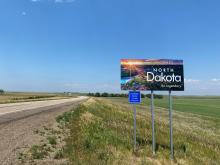
Vermont Welcome sign

“These are Capital Project Funds (courtesy of the American Rescue Plan Act) from projects that came in under budget,” Fish explained, noting how most of the $245 million the state has received to build out broadband networks has already been awarded to the 10 Communications Union Districts (CUDs) now bringing fiber service to Vermonters long neglected by the big incumbent providers.

Harrison County, Texas Strikes Partnership With Etex Telephone Cooperative

Harrison County, Texas officials say they’re poised to use the county’s remaining Rescue Plan (ARPA) funds to strike a fiber expansion partnership with Etex Communications, a subsidiary of the locally-owned Etex Telephone Cooperative.

The Harrison County Commissioners Court says it’s putting the finishing touches on a $4.5 million public-public partnership with Etex that will help deliver fiber access to the Western end of the heavily underserved Texas county with the help of $1.5 million in federal ARPA funds.

Image
ETEX Communications in Harrison County TX logo

ARPA Funds To The Rescue

Etex Telephone Cooperative was originally formed in 1952 to meet the communication needs of people living in rural northeast Texas. Beginning with 743 members when the co-op was first created, the provider now services more than 12,600 members scattered across a service territory of 710 square miles of rural East Texas.

“Internet is a big issue. It’s almost as fundamental as water and electricity. You gotta have it,” Harrison County Judge Chad Sims tells The Marshall News Messenger. “It is an essential thing. So we’re happy to partner with ETEX.”

Alpine County Open Access Fiber Among Big Winners In Latest California FFA Grants

The California Public Utilities Commission (CPUC) has announced another $237 million in new grants that will help fund broadband expansion across 21 different California towns, cities, counties, and tribal communities. Meanwhile, numerous additional grants that are waiting in the wings are expected to get formal approval sometime in September.

Alpine, Mono, Nevada, Placer, Santa Barbara, and Tulare counties are among the latest winners in California’s $2 billion Last Mile Federal Funding Account Grant Program (FFA).

That program is an extension of California’s ambitious Broadband For All initiative, a $6 billion effort aimed at dramatically boosting broadband competition and access across the Golden State.

At an August 22 meeting, CPUC officials formally approved both a third and fourth round of FFA broadband funding. With these latest two rounds of funding, the CPUC says it has doled out $434 million in grant awards across 22 counties across California.

Open Access Fiber Comes To Alpine County Via Third FFA Round

The third round of formally approved grant awards included $95 million in funding for 10 broadband projects across California’s Alpine, Modoc, Riverside, Santa Barbara, and Tulare counties. This round of awards also included grants for the Fort Bidwell Indian Community in Modoc County and the Santa Ynez Band of Chumash Indians in Santa Barbara County.

Alpine County’s $7 million grant for fiber broadband expansion will be managed by the Golden State Connect Authority and help fund the Alpine County Broadband Network, an open access fiber network that will deliver fiber for the first time to 721 unserved locations and 818 unserved residents across Alpine County.