
American Rescue Plan

Content tagged with "American Rescue Plan"

Related Topics
Displaying 61 - 70 of 237

Washington DC Earmarks $61.3 Million In Rescue Plan Funds For Broadband, Community Improvements

Washington DC Mayor Muriel Bowser has announced that the District is poised to use $61.3 million in American Rescue Plan Act (ARPA) funds to “support the construction of community facilities” and expand affordable broadband to underserved communities.

Though details are scant, according to the District’s announcement, the funding received from the Treasury Department will be used to drive improvements for the District’s Southeast Library, the Shaw Library, Library Community Business Centers, the Anacostia Recreation Center, and the Ward 8 Senior Wellness Center. District leaders say they’re also eyeing as-yet-undefined improvements to affordable broadband access across the city of 689,000.

Image
Washington DC utility trucks

Rescue Plan recipients are facing an end-of-year deadline to both budget and obligate (contract) the federal funding for use or risk losing the funds entirely.

“The Biden-Harris Administration is making progress across the country to ensure Americans have access to the services and facilities that help them lead healthy lives and access economic opportunity,” U.S. Deputy Secretary of the Treasury Wally Adeyemo said of the funding.

“These resources will deliver critical upgrades at community facilities for residents, particularly students and seniors, that provide essential services like high-speed Internet, financial literacy, and early learning opportunities.”

Harrison County, Texas Strikes Partnership With Etex Telephone Cooperative

Harrison County, Texas officials say they’re poised to use the county’s remaining Rescue Plan (ARPA) funds to strike a fiber expansion partnership with Etex Communications, a subsidiary of the locally-owned Etex Telephone Cooperative.

The Harrison County Commissioners Court says it’s putting the finishing touches on a $4.5 million public-public partnership with Etex that will help deliver fiber access to the Western end of the heavily underserved Texas county with the help of $1.5 million in federal ARPA funds.

Image
ETEX Communications in Harrison County TX logo

ARPA Funds To The Rescue

Etex Telephone Cooperative was originally formed in 1952 to meet the communication needs of people living in rural northeast Texas. Beginning with 743 members when the co-op was first created, the provider now services more than 12,600 members scattered across a service territory of 710 square miles of rural East Texas.

“Internet is a big issue. It’s almost as fundamental as water and electricity. You gotta have it,” Harrison County Judge Chad Sims tells The Marshall News Messenger. “It is an essential thing. So we’re happy to partner with ETEX.”

Alpine County Open Access Fiber Among Big Winners In Latest California FFA Grants

The California Public Utilities Commission (CPUC) has announced another $237 million in new grants that will help fund broadband expansion across 21 different California towns, cities, counties, and tribal communities. Meanwhile, numerous additional grants that are waiting in the wings are expected to get formal approval sometime in September.

Alpine, Mono, Nevada, Placer, Santa Barbara, and Tulare counties are among the latest winners in California’s $2 billion Last Mile Federal Funding Account Grant Program (FFA).

That program is an extension of California’s ambitious Broadband For All initiative, a $6 billion effort aimed at dramatically boosting broadband competition and access across the Golden State.

At an August 22 meeting, CPUC officials formally approved both a third and fourth round of FFA broadband funding. With these latest two rounds of funding, the CPUC says it has doled out $434 million in grant awards across 22 counties across California.

Open Access Fiber Comes To Alpine County Via Third FFA Round

The third round of formally approved grant awards included $95 million in funding for 10 broadband projects across California’s Alpine, Modoc, Riverside, Santa Barbara, and Tulare counties. This round of awards also included grants for the Fort Bidwell Indian Community in Modoc County and the Santa Ynez Band of Chumash Indians in Santa Barbara County.

Alpine County’s $7 million grant for fiber broadband expansion will be managed by the Golden State Connect Authority and help fund the Alpine County Broadband Network, an open access fiber network that will deliver fiber for the first time to 721 unserved locations and 818 unserved residents across Alpine County.

Shot Clock Winding Down on ARPA Funds For Broadband Projects

Communities looking to leverage American Rescue Plan Act (ARPA) funding for broadband or other local infrastructure need to act soon or risk losing access to a once-in-a-generation funding resource.

Most ARPA recipients seem well aware of the deadline, but data suggests more than a few communities could drop the ball.

As part of the 2021 American Rescue Plan Act (ARPA), $25 billion was specifically earmarked for broadband expansion.

But the law also created the State and Local Fiscal Recovery Funds (SLFRF) program, which doled out $350 billion for states, municipalities, and tribal governments to offset pandemic losses or flexibly invest in local infrastructure.

Maine Awards $9.6 Million For Fiber In Lincoln, Waldo Counties

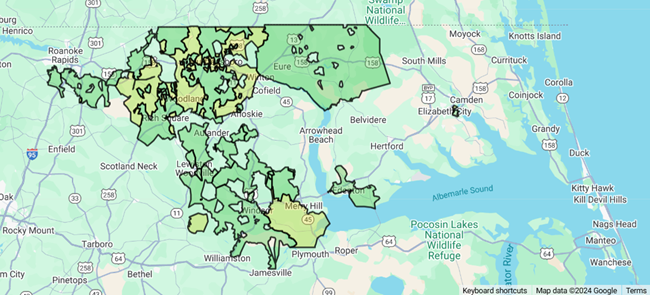
Maine’s state broadband office, the Maine Connectivity Authority (MCA), has unveiled $9.6 million in new grant awards to help bring affordable fiber to 15,561 homes and businesses across 12 widely underserved communities in the Pine Tree state.

According to the announcement by the MCA, the grants will primarily be focused on leveraging public-private partnerships to drive fiber into unserved locations in Waldo and Lincoln Counties.

The grants are part of the MCA’s Partnerships for Enabling Middle Mile Program (PEMM), which addresses large-scale, regional broadband needs by leveraging middle mile infrastructure.

Image
Maine Middle Map

Lincoln County saw a grant award of $6 million matched by $24.3 million in private and public investment including county ARPA funds (which the MCA notes was the “highest percentage of financial commitment from any public-private partnership awarded through an MCA program to date”).

The deployment, which is expected to begin in 2025, involves a partnership between Lincoln County and Consolidated Communications and will bring fiber that passes 14,436 homes and businesses in Woolwich (in Sagadahoc County), Wiscasset, Alna, Dresden, Boothbay, Edgecomb, Waldoboro, Whitefield and Nobleboro.

“This is probably the most exciting thing since cable TV came into any of these towns,” Evan Goodkowsky, broadband infrastructure consultant for Coastal Maine Regional Broadband, told the Lincoln County News.

Oakland Secures $15 Million Grant To Bring Broadband Into Underserved Neighborhoods

After two years enmeshed in the unglamorous work of coalition-building, speed test data collection, and pushing state leaders to invest in better telecommunication infrastructure across Oakland’s most disadvantaged neighborhoods, digital equity advocates in the East Bay city are finally seeing the fruits of their labor pay off.

The city was recently awarded a $15 million grant from the state’s $2 billion dollar Federal Funding Account, administered by the California Public Utilities Commission (CPUC).

The grant will fund the construction of a city-owned, open-access, hybrid middle mile/last mile fiber network – one of a half-dozen grant awards the CPUC approved in the first round of funding, most of which went to support community broadband initiatives.

Courtesy of federal Rescue Plan dollars, the infusion of cash will allow the city to deploy nearly 13 miles of new middle mile 144-count fiber, upgrade almost 12 miles of existing city-owned fiber, and add 9 miles of new last mile fiber connections. As the city’s network is built, it will be connected to the state’s new massive open access middle mile network now under construction.

The FFA grants are part of California’s larger Broadband For All initiative, a $6 billion effort aimed at seeding competition and expanding broadband access across the Golden State.

The Oakland project not only paves the way for the city to connect 14 community anchor institutions (CAIs) and nine public safety buildings, it will also expand high-speed Internet access to thousands of unserved and underserved addresses in West and East Oakland.

Fort Collins Municipal Network Celebrates 20,000 Subscriber Milestone

Fort Collins, Colorado has repeatedly won awards for being a trailblazer in the municipal fiber space, and local subscribers continue to take notice. The city-owned and operated Connexion network operation just announced it has passed the 20,000 subscriber mark, after nabbing a significant new wave of state and federal funding for expansion earlier this year.

Fort Collins began thinking about a citywide fiber deployment as early as 2012. By 2015, locals had voted to exempt the city from a counterproductive state law restricting communities from building their own broadband networks.

Image
Fort Collins 20K subscriber celebration flyer

Construction of the municipal network began in 2018. Subscribers began to connect to the network in 2019, and by 2023 fiber service was available to every last home and business in the city of 169,000.

Thanks to local leaders, city residents now have access to some of the fastest, most affordable broadband available anywhere, including symmetrical 1 gigabit per second (Gbps) service for $70 a month; symmetrical 2 Gbps service for $100 a month; and symmetrical 10 Gbps service for $200 a month. Connexion service comes with no usage caps or long-term contracts.

As part of its celebration of reaching 20,000 subscribers, Connexion officials say they will give away a year of free Internet access to 20 subscribers chosen at random. 

To mark the occasion, Chad Crager, Executive Director of Fort Collins Connexion, said:

CVEC’s Firefly Nabs $12.2 Million Of $41 Million In New Virginia Broadband Grants

Central Virginia Electric Cooperative’s (CVEC) Firefly Broadband subsidiary has been awarded a new $12.2 million grant from the state of Virginia. The award will help fund a major update to an already massive effort to extend affordable broadband to vast swaths of rural Virginia.

According to a cooperative announcement, the $12.2 million in Virginia Telecommunication Initiative (VATI) grant funding will be used to help fund a broader $48.6 million partnership with Rappahannock Electric Cooperative, Dominion Energy, and county governments.

These current VATI funds were largely made possible by federal COVID relief legislation passed in 2021. Such ARPA (American Rescue Plan Act) funding saw fewer overall restrictions and greater flexibility than infrastructure bill funding (BEAD) authorized the same year, resulting in states more quickly doling out funding for emerging broadband deployments.

“The fiber construction project will span approximately two years, covering 603 miles and reaching nearly 6,000 additional eligible locations in the counties of Amherst, Appomattox, Buckingham, Campbell, Fluvanna, Goochland, Greene, Louisa, Madison, and Powhatan,” CVEC said of the plan.

Image
CVEC Firefly RISE project map

CVEC and Firefly’s expansion into unserved Virginia comes after the cooperative first finished an ambitious, $130 million plan to install over 4,500 miles of fiber-optic cable across 14 counties, providing broadband internet access to all of its 39,000 members.

California Awards $86 million in Federal Funding Account Grants, Community Broadband Projects Big Winners

Imperial, Lassen, and Plumas Counties are among the first recipients of California’s $2 billion Last Mile Federal Funding Account Grant Program (FFA). The cities of Oakland, Fremont, and San Francisco have also been awarded significant state awards.

The FAA grants are part of California’s ambitious Broadband For All initiative, a $6 billion effort aimed at dramatically boosting broadband competition and access across the Golden State.

All told, the California Public Utilities Commission (CPUC) awarded 11 FFA grants totaling over $86.6 million. Prominent awardees from this first round include publicly-owned broadband projects: the Golden State Connect Authority (GSCA) – a joint-powers broadband authority comprising 40 rural California counties – and Plumas Sierra Telecommunications for projects across Imperial, Lassen, and Plumas Counties.

“These projects will build community-based, future-proof, and equity-focused broadband infrastructure across California,” said CPUC President Alice Reynolds. “The Federal Funding Account – and these projects – are a shining example of our state’s Broadband For All values and objectives.”

Transforming Connectivity for Every New Yorker - Episode 610 of the Community Broadband Bits Podcast

In this episode of the podcast, Chris speaks with Joshua Breitbart, Senior Vice President of the ConnectALL Office at Empire State Development in New York. They delve into New York’s municipal infrastructure program, which is investing over $200 million into municipal broadband across the state. Joshua shares insights on the ConnectALL initiative, which aims to transform New York's digital infrastructure with over a billion dollars in public funding.

The discussion highlights the importance of state and local partnerships in developing diverse models for municipal broadband. Joshua explains how the program leverages federal funding, such as the Capital Projects Fund (CPF), to support a range of approaches tailored to meet local needs. The conversation covers various projects, including Dryden Fiber, Southern Tier Network, and initiatives in Franklin County, illustrating the innovative ways these communities are expanding broadband access.

Joshua also reflects on the lessons learned from pilot projects and the flexibility needed to address underserved areas. The episode emphasizes the critical role of local expertise and planning in achieving digital equity and expanding broadband deployment. As the program rolls out, Joshua shares his excitement about the rapid deployment of services and the transformative impact on local communities.

Listeners are encouraged to stay tuned for future updates and to explore related initiatives aimed at improving broadband access and digital equity across the state. You can find more information about the ConnectALL Municipal Infrastructure Grant Program here.

This show is 26 minutes long and can be played on this page or via Apple Podcasts or the tool of your choice using this feed.

Transcript below.

We want your feedback and suggestions for the show-please e-mail us or leave a comment below.

Listen to other episodes or view all episodes in our index. See other podcasts from the Institute for Local Self-Reliance.

Thanks to Arne Huseby for the music. The song is Warm Duck Shuffle and is licensed under a Creative Commons Attribution (3.0) license