
affordability

Content tagged with "affordability"

Related Topics
Displaying 161 - 170 of 267

Lancaster PA Revives Public Private Partnership Plans With Shentel’s Glo Fiber

Lancaster, Pennsylvania has revitalized the city’s long percolating plan for a municipal broadband network, this time via a public-private partnership (PPP) with Shenandoah Telecommunications Company (Shentel). The city’s quest for more affordable, reliable broadband is a quest that’s taken the better part of a decade to finally come to fruition.

Lancaster city officials recently announced that they’d selected Shentel with an eye on ensuring uniform broadband availability to the city of 57,000.

“In 2022, the City issued an RFP for a partner to achieve stated goals, which received five responses, and led to the selection of Shentel,” the city said. “The contract will result in Shentel installing fiber at its sole cost to provide service to 100% of the city’s residents. Shentel plans to commence design and construction immediately upon execution of the final agreement.”

According to Lancaster officials, the city hired CTC Technology & Energy Engineering & Business Consulting to evaluate the city’s needs. The determination to proceed with a PPP with Shental was driven, in part, by the historic broadband grant opportunities being created thanks to the 2021 Infrastructure Investment and Jobs Act (IIJA), and the American Rescue Plan Act, the latter of which provided $39.5 million to the city.

Murfreesboro, TN Soon To Be Awash In Affordable Fiber Thanks To Local Cooperative, Google Fiber

Murfreesboro, Tennessee suddenly finds itself awash with looming broadband competitors thanks to the city’s booming growth. In less than a month, United Communications – owned by not-for-profit electric cooperative Middle Tennessee Electric (MTE) – and Google Fiber have unveiled major plans to expand affordable gigabit fiber within city limits.

MTE-owned United Communications says it has some big plans for the city of 157,000, starting with broadband upgrades for the utilities’ 77,000 existing electricity customers.  

According to a recent announcement, the cooperative-owned ISP will spend $85 million in existing cash reserves to deploy 1,400 miles of fiber in the city, bringing affordable gigabit access to existing MTE electricity customers. As with many utility deployments, the upgrades will prove beneficial for electrical grid monitoring and maintenance.

“We’ve already completed phase one in the Boro, which includes our fiber backbone and service to more than 1,000 homes and businesses. As part of phase one, we also built fiber to the square in downtown Murfreesboro,” United President and CEO William Bradford said in a statement. “It was a privilege to put our fiber infrastructure to work by connecting our neighbors in disadvantaged communities and adding resiliency to the local emergency communications network.”

Image
Middle Tennessee Electric logo

Last year, United received $53.4 million in grants from the Tennessee Emergency Broadband Fund (made possible by the The American Rescue Plan Act of 2021) to help shore up broadband access in numerous Tennessee counties, including Bedford, Franklin, Giles, Lincoln, Marshall, Maury, Moore and Williamson.

Digital Equity Advocates Say California Risks Bumbling Plan To Deliver Equitable Broadband

California digital equity advocates say that recent cuts to the state’s ambitious broadband deployment plan unfairly harm low-income and minority communities. And despite promises from state leaders that the cuts will be reversed, local equity advocates say the process used to determine which neighborhoods should be prioritized remains rotten to the core.  

In 2021, California state leaders announced a $7 billion, multi-armed plan to bring affordable, next-generation fiber to every state resident. A key part of the plan involved building a $4 billion statewide middle-mile open access fiber network designed to drive down the costs of market entry, improve competition, and reduce broadband prices.

At the time, California officials said “the statewide network will incentivize providers to expand service to unserved and underserved areas.” Groups like the EFF lauded the “historic” investment, likening it to bold, early efforts to ensure rural electrification.

But last May, California officials quietly announced they’d be making some notable cuts to the state’s affordable broadband expansion plan. Blaming inflation and rising construction costs, the state’s renewed budget called for a 17 percent reduction in planned broadband investment, on average, across the state.

Colorado and Texas Municipal Broadband Networks Nab National Awards

From Colorado to Texas, municipal broadband providers continue to rack up industry accolades, not just for delivering fiber service–the gold standard of Internet connectivity–but for these networks’ ability to provide ubiquitous access across an entire community at affordable rates.

The National Association of Telecommunications Officers and Advisors (NATOA) recently announced that its Community Broadband Projects of the Year Awards for 2023 will go to the Connexion network in Fort Collins, Colorado and TeamPharr.net in Pharr, Texas.

Awarding Community-Wide Access and Affordability

The Fort Collins award is in recognition for the city having established “a municipal broadband utility created by and for the community to improve the life of all 80,000 residential and commercial properties of Fort Collins through better, more affordable Internet,” NATOA said in announcing the award.

Image
Ft Collins NOC

But it wasn’t just because Fort Collins’ network provides city-wide access to fiber. The award also recognizes that “Connexion offers the fastest Internet speeds available at affordable prices (emphasis added) as well as competitive phone and TV services.”

Cooperative Coalition Bringing Affordable Fiber Service to Rural South Carolina

Local electrical cooperatives say they’re making inroads on efforts to finally bring affordable gigabit fiber connections to long neglected portions of rural South Carolina. Dubbed Carolina Connect, the alliance between Aiken Electric Cooperative, Newberry Electric Cooperative and Mid-Carolina Electric Cooperative is doing what cooperatives across the nation have taken the lead on in recent years in the rural areas many serve: filling the gaps left by regional telecom monopolies disinterested in finishing the job.

Aiken’s website indicates that the cooperative coalition has delivered broadband to more than 14 towns and cities, is currently in the process of bringing broadband to eight more, and has five additional communities in the planning stage. According to the Aiken Standard, the coalition has laid about 6,000 miles of fiber within the nine counties served by Aiken Electric alone; predominantly rural markets spread across the Southwest part of the state.

The deployment is not only delivering broadband to many residents for the first time ever, it’s delivering the kind of affordable pricing locals have never seen, thanks to a notable lack of regional competition between regional telecom monopolies like Breezeline (formerly Atlantic Broadband) and AT&T.

State BEAD Plans and “Chilling Effect” of Municipal Broadband Restrictions

As the National Telecommunications and Information Administration (NTIA) continues to move forward in administering the single biggest federal investment to expand high-speed Internet access in U.S. history, each state and U.S. territory is wrestling with how to best spend the windfall as they lay out their Five Year Action Plans and Initial Proposals necessary to claim their portion of the $42.5 billion BEAD program.

One major barrier to providing universal access to fast, reliable and affordable Internet service–long recognized by ILSR, telecom experts, and a growing number of ordinary citizens–are the monopoly-friendly preemption laws that either outright ban or erect insurmountable barriers to building publicly-owned, locally-controlled broadband networks, aka municipal broadband.

Preemption in the BEAD Era

Currently, 17 states have such preemption laws, most of which have filed their Five Year Action Plans and/or their Initial Proposals. In each of those states, at the behest of Big Cable and Telecom incumbents, state lawmakers have erected legislative barriers to municipal broadband to protect the monopoly players from competition, which is at the very heart of why the digital divide exists in the first place and why tens of millions of Americans suffer from the slower speeds and higher costs that go hand in hand with monopoly service.

Berthoud, Colorado Eyes Community Broadband Options

Berthoud, Colorado, population 11,717, is the latest Colorado community to explore community broadband alternatives to expand public access to affordable fiber. Currently in the process of crafting a request for quote (RFQ), the city tells ILSR it hopes to make its final determination by November and have a preliminary plan in place by the end of the year.

Originally, Berthoud had planned on forming a coalition with three neighboring Colorado towns (Johnstown, Mead and Milliken) in a bid to expand access. That plan involved striking a memorandum of understanding (MOU) with Lincoln, Nebraska based Allo Communications, to deliver fiber to every address within three years.

But city leaders say the original plan wasn’t meant to be.

“The four communities did not strike a deal with Allo,” Berthoud Business Development Manager Walt Elish told ILSR. “We could not come to terms. Since then, we have looked at other options, including a town-owned network.”

Image
Berthoud Welcome Sign

As with many towns and counties, the high cost of a municipally owned broadband network has the city examining different options, including a potential public private partnership (PPP) with existing providers. PPPs are increasingly common but can have their downsides, including less municipal control over pricing or the potential trajectory of the finished network.

Initial BEAD Proposals and Five Year Action Plans Come Into Focus

The key for states to unlock their portion of the $42.5 billion in federal BEAD funds is the submission and approval of their Five Year Action Plans and Final Proposal. The infrastructure law requires states to first file an action plan, and then prepare more detailed Initial Proposals, allowing residents and stakeholders to submit public comments.

So far, 14 states have filed their Five Year Action Plans with the National Telecommunications and Information Administration (NTIA), the Treasury Department agency in charge of allocating the funds to each state and U.S. territory. According to the NTIA’s website, Maine, Louisiana, Delaware, Georgia, Hawaii, Idaho, Kansas, Montana, North Carolina, Ohio, Oregon, Pennsylvania, Utah, and Vermont have all filed their draft Five Year Action Plans.

Image
NTIA logo

The states that are now in the process of completing their Initial Proposals include: Delaware, Kansas, Louisiana, Montana, Ohio, Tennessee, Vermont, Virginia and Wyoming.

Today, we will look at two states (Maine and Louisiana) and follow up with the others as we are getting a clearer picture of how each state intends to put this historic infusion of federal funds to use.

Maine

Timnath, Colorado and Loveland Team Up to Further Expand Celebrated Municipal Fiber Network

Loveland’s municipal broadband utility Pulse is a heartbeat away from expanding into a small neighboring Colorado town eager to offer its residents the same attractive, high-quality Internet access that can be found in Larimer County’s biggest cities.

Officials in Loveland and Timnath, Colorado (pop. 7,800) recently announced the ratification of an Inter-Governmental Agreement (IGA) that greenlight’s a plan to bring ubiquitous, affordable high-speed Internet access to yet another community in the Centennial State, as an increasing number of Colorado cities and towns embrace municipal broadband after years of frustration with the inadequate, high-priced service from the region’s monopoly incumbents.

"The selection of Pulse as our broadband service provider reflects a thorough process of assessment and consideration,” Timnath Town Planner Brian Williamson said in a press statement after the agreement was approved. “We are excited to work together, leveraging their expertise to ensure our residents have access to reliable, high-speed Internet that will contribute to the growth and prosperity of Timnath."

Keeping Up With The Loveland’s

This week Williamson spoke to ILSR about the project and why a town-wide fiber network is such valuable and vital infrastructure.

Image
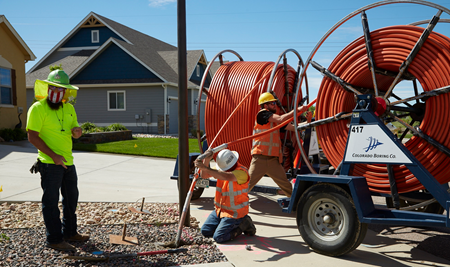
Pulse Fiber Pick Up Truck

“Timnath is an interesting place. We are predominantly a residential community and we are growing quickly,” he said, adding that in a post-pandemic world of distance learning, remote work, and telehealth, an important part of the mix when people decide where to live and work is whether that community has reliable and affordable high-speed Internet access.

Indigenous Connectivity Summit 2023 Calls to Action

Each year since its creation in 2017, the Indigenous Connectivity Summit (ICS) has convened those working on the frontlines of Tribal connectivity. It brings together decision makers and stakeholders to build support for digital sovereignty and quality, affordable connectivity for Indigenous communities. 

With less than 60 percent of those living on Tribal lands in the lower 48 states having access to basic broadband connections – as Native Nations have regularly been excluded from policy conversations around these issues – ICS has become an important voice as the federal government is finally investing billions of dollars to expand high-speed Internet access across Indian Country.

The Summit, held this year in Anchorage, Alaska, was hosted by the Indigenous Connectivity Institute, an affiliate of Connect Humanity, an organization that supports underserved communities’ pursuit of better Internet access and enhancing digital skills. The Summit has become the most prominent event of its type in North America.

Image
Indigenous Connectivity Summit 2023 Calls To Action

Summit participants don’t just convene and talk. They also agree on a series of calls-to-action for governments and other entities with an eye on promoting digital equity in Indigenous communities. Last year’s calls to action, which included messaging around inclusive Tribal consultation, government and industry accountability, Indigenous spectrum rights, and workforce development, served as the foundation for this year’s focus.