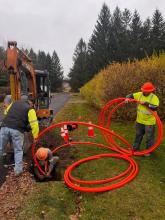


The remote islands of San Juan County, Washington are increasingly being served with next-generation fiber and wireless thanks to Rock Island Communications (RIC), a locally-owned Internet subsidiary of the Orcas Power & Light Cooperative (OPALCO).
Part of a member-owned, cooperative utility that’s been providing electricity to the county since 1937 – RIC is celebrating a decade of what it calls “remarkable growth” for the tall task of remote island deployments to the county of 18,000.
The subsidiary says it just reached 7,000 subscribers across San Juan County, and that its annual revenue has grown dramatically during the last decade – from approximately $1.8 million in 2015 to more than $12.3 million in 2025.
“Over the past decade, Rock Island has also achieved several important financial milestones that demonstrate the success of OPALCO’s long-term vision,” OPALCO’s Krista Bouchey says of the expansion. “The company became cash-flow positive in 2020, and in 2023 and 2024 achieved positive net income, marking a major turning point after years of investing in infrastructure and growing its subscriber base.”
The San Juan Islands are clustered in the most northwest tip of Washington state, off the coast of the cities of Bellingham and Anacortes, not far from the Canadian border. A little more than a third of the residents of the 20 islands are seasonal, and the lion’s share of the territory is only accessible by ferry.
Most of the islands have long been neglected by regional telecom giants who find deployment too costly and logistically cumbersome, so RIC connectivity is a massive sea change for most locals.
In deployed markets, RIC offers subscribers five tiers of fiber service with pricing that generally reflects the logistical and network challenges of remote island connectivity.
Users have the choice of symmetrical 100 megabit per second (Mbps) fiber for $85 a month; symmetrical 250 Mbps fiber for $100 a month; symmetrical 500 Mbps fiber for $130 a month; symmetrical 1 gigabit per second (Gbps) fiber for $185 a month; and symmetrical 2 Gbps fiber for $285 a month. The tiers feature no usage caps, contracts, or hidden fees.
The non-profit subsidiary also offers three tiers of “best effort” fixed wireless service: an “up to” 50 Mbps plan for $50 a month; an “up to” 75 Mbps option for $85 a month; and a 200 Mbps option for $105 a month. In addition, RIC offers broadband customers the option of a managed home phone VOIP service starting at $18 a month.
Buoyed By Grants, Informed By History
OPALCO currently serves more than 11,400 electricity customers on 20 islands in San Juan County, where even basic travel can sometimes prove difficult. The logistics of ferry transport, slower material transit times, and larger regulatory hurdles create unique challenges familiar to most island municipality broadband efforts (see: Maine).
Like countless other publicly-owned cooperative utilities in the U.S., RIC was able to leverage OPALCO’s experiences in rural electrification from nearly a century earlier – as well as their ownership of local utility poles – to bolster and inform their broadband deployment ambitions.
As with other cooperatives, the fiber expansion served the dual roles of connecting local homes and businesses and shoring up grid management.
As a member-owned, non-profit cooperative utility, OPALCO is uniquely positioned to genuinely serve the best interests of the local island communities, as opposed to regional telecom monopolies that find the high costs of deployment too costly and cumbersome to bother with.
Much of the RIC and OPALCO expansion was made possible by a $15 million American Rescue Plan Act (ARPA) broadband grant, which officials say helped pay for the operation to extend fiber service to approximately 1,000 locations across five of the islands in the County.
Like so many municipal operations, the frustration of poor connectivity during COVID lockdowns helped buoy support for community-owned alternatives.
“Because the network was locally owned and operated, Rock Island Communications was able to respond quickly to increased demand and ensure reliable connectivity when the community needed it most,” officials state.
Now the cooperation says it is gearing up for its next major expansion courtesy of a $16.5 million looming Broadband Equity, Access, and Deployment (BEAD) grant. It’s one small part of the $1.2 billion in BEAD grants awarded by Washington State for broadband deployment.
“The funding, awarded through Washington State’s broadband expansion program, will allow Rock Island Communications to further expand high-speed internet infrastructure across the islands and bring reliable connectivity to thousands more homes and businesses,” Bouchey said.
Specifically, the new BEAD funds will help the non-profit, community-owned cooperative utility to deploy roughly 875 new fiber connections and lay the groundwork to serve an additional 3,136 wireless subscribers.
“Together, these projects will allow Rock Island Communications to connect nearly 4,000 additional subscribers, bringing fast, reliable internet to even more island homes and businesses,” RIC officials state.
Header image of Lime Kiln Point Lighthouse on San Juan Island courtesy of Ken Lane Photography on Flickr, CC BY-NC-SA 2.0, Attribution-NonCommercial-ShareAlike 2.0 Generic
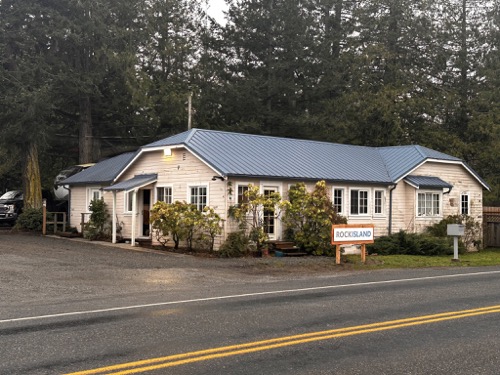
Inline image of Rock Island Communications HQ courtesy of Rock Island Communications Facebook page
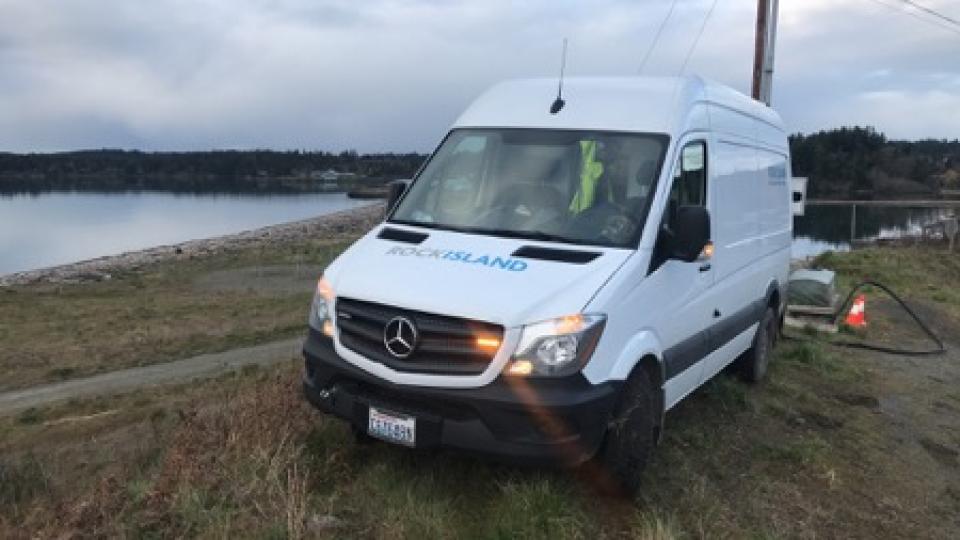
Inline image or Rock Island Communications truck courtesy of Rock Island Communications Facebook page
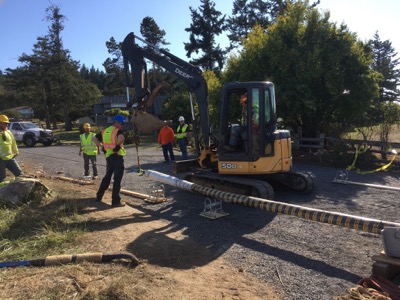
Inline image of Rock Island Communications network builders using tractor courtesy of Rock Island Communications Facebook page