
New York Governor Kathy Hochul has announced a dramatic expansion of the state’s Municipal Infrastructure Program (MIP), resulting in an additional $36 million cash infusion for the growing number of creative, community-owned and operated fiber expansion projects in the state.
According to a state announcement, the existing MIP program, launched in early 2024, has already funded more than $268 million in assorted open access fiber projects across the state. A state broadband office dashboard tracks all active municipal projects funded to date.
That includes efforts like the growing open access municipal fiber network in Dryden, New York, which has been steadily delivering affordable next-gen fiber to the long-underserved rural communities of Dryden and nearby Caroline (population 3,321).
New York State officials say the $268 million in MIP grant funding has funded active projects across 24 New York counties, resulting in more than 2,300 miles of new fiber optic infrastructure and 68 new wireless hubs serving more than 96,000 homes and businesses. Most of this funding was made possible by the 2021 federal American Rescue Plan Act (ARPA).
The MIP program is part of New York state’s billion dollar ConnectALL Initiative, and was specifically designed to support municipal broadband projects proven to be a viable, and increasingly popular, way to bring affordable, high-quality Internet service to long-neglected U.S. communities.
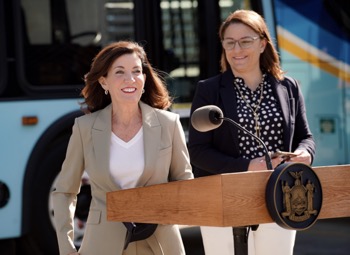
“Our ConnectALL initiative is delivering results — connecting thousands of homes and businesses to high-speed internet across every region of the state,” Governor Hochul said. “With this latest round of funding, we're building on that progress and putting communities in the driver's seat to close the digital divide once and for all.”
ConnectALL officials are accepting applications for broadband grants until April 30, and will begin reviewing applications on February 2. All supported projects must be substantially complete by December 31, and individual awards are expected to be less than $10 million.
State Steps Up To Fill The Void Created By Trump Administration
New York State has picked up the slack created in the wake of an administration that has “terminated” the Digital Equity Act, undermined the federal Broadband, Equity, Access, and Deployment (BEAD) program, and effectively abandoned all pretense of caring about broadband affordability, equitable access, or marginalized populations long trapped on the wrong side of the digital divide.
While politicians routinely pay lip service to the need for universal Internet access, many, if not most, have also generally proven to be largely disinterested in the major strides in infrastructure; particularly the significant boost in affordable broadband access built on the back of $350 billion in American Rescue Plan Act (ARPA) grant funds.
Putting those funds to use – in addition to a historic amount of municipal broadband grants – New York’s ConnectALL also includes a $50 million Digital Equity Program aimed at bridging the digital divide, improving digital literacy and digital job readiness skills, improving access to broadband affordability, and improving access to government cost-saving digital services over the Internet.
ConnectALL also features a $100 million Affordable Housing Connectivity Program, tasked with bringing affordable broadband infrastructure to homes in affordable and public housing, leveraging a $33 million federal investment from the U.S. Treasury Department’s Capital Projects Fund.
That said, ConnectALL’s biggest investment is the ConnectALL Deployment Program, which relies on $644.6 million in federal BEAD funds aimed at shoring up broadband gaps. The lion’s share of BEAD funding will be mostly doled out to the regional private monopolies largely responsible for the country’s lack of competition and broadband access gaps in the first place.
That includes companies like Charter (Spectrum), which was almost kicked out of New York State for substandard service and lying to regulators, and Verizon, which has a long history of taking significant taxpayer subsidies in exchange for fiber networks routinely only half delivered.
But it remains the state’s massive, unprecedented investment in community-owned fiber infrastructure that’s likely to have the most dramatic impact in communities like Dryden, which now has access to symmetrical, affordable fiber broadband for the first time in history thanks to a $9 million state grant and a lot of hard work by locals.
Other municipal broadband projects in New York, like Sherburne Connect (whose pilot helped inspire program expansion) are demonstrating how locally owned and operated telecom infrastructure is bringing meaningful reforms to communities long deemed unworthy of investment by lumbering regional telecom monopolies.
Empire State Development CEO Hope Knight says of the latest funding boost:
“The Municipal Infrastructure Program is helping communities take control of their digital future by supporting locally driven broadband infrastructure projects that expand access, improve reliability, and promote competition."
"This RFA builds on New York State’s commitment to closing the digital divide by investing in infrastructure that strengthens local networks and delivers long-term economic opportunity for communities across the state” Knight added.
New York State is also poised to receive more than $664 million in BEAD funding for further broadband expansion, but it remains unclear if Trump administration hostility to equitable, affordable, community-owned access will somehow limit the use of those taxpayer funds for networks built for and by communities themselves.
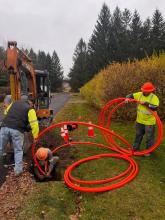
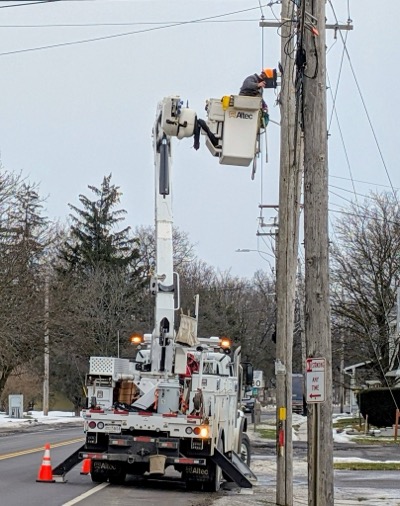
Header image of Dryden Fiber right-of-way fiber install courtesy of Dryden Fiber Facebook page
Inline image of Gov. Kathy Hochul courtesy of Wikimedia Commons, CC BY 2.0, Attribution 2.0 Generic
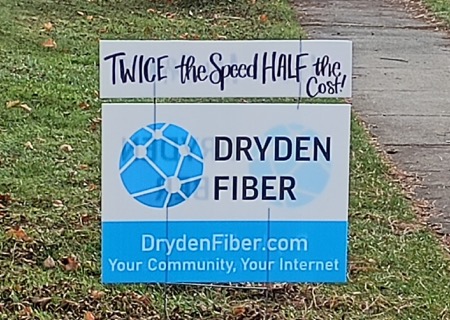
Inline image of Dryden Fiber yard sign courtesy of Dryden Fiber Facebook page
Inline image of Sherburne Connect construction crew splicing fiber courtesy of Village of Sherburne Facebook page