
Starlink

Content tagged with "Starlink"

Related Topics
Displaying 1 - 10 of 53

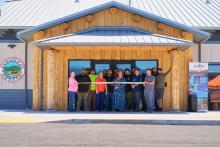
Bois Forte Band Begins Construction on $20 Million Tribal Fiber Project

The Bois Forte Band of Chippewa (also referred to as Ojibwe) has officially begun construction on a foundational fiber optic broadband expansion project in northern Minnesota that is poised to bridge the digital divide for thousands of Tribal residents.

The ambitious undertaking is supported by a significant $20 million grant awarded under the 2021 Tribal Broadband Connectivity Program, marking a major step forward in modernizing infrastructure for the sovereign nation.

The massive project aims to overhaul the existing connectivity landscape across the Bois Forte Reservation.

Image
A graphic illustrates the status of the tribe's fiber network construction

Once completed, the new network will deliver a high-speed, future-proof up to 10 gigabit per second (Gbps) fiber-to-the-home network to over 2,097 largely-underserved Native American households, businesses, and community anchor institutions.

Many Tribal nations were skipped over by past fiber deployments either due to outright hostility to Tribal interests, or a disinterest in the work required to align for-profit deployments with the needs and wishes of what is often multiple Tribal territories.

For Bois Forte, this new fiber network is expected to have a transformative impact across several key sectors, fundamentally improving community access to vital services:

Mergers, Monopoly Prices, and Accountability - Episode 676 of the Community Broadband Bits Podcast

In this episode of the podcast, Chris is joined again by Doug Dawson and Sean Gonsalves for a fast-moving discussion of the latest developments reshaping the broadband landscape. 

The trio unpacks a wave of major telecom mergers, including AT&T’s acquisition of Lumen assets and Frontier’s consolidation, and what growing market power means for prices, competition, and consumers.

They dig into new research from Chattanooga showing the long-term economic and community benefits of municipal fiber, alongside a major California Public Utilities Commission study revealing how lack of competition drives higher broadband prices—especially for low-income households. 

Doug explains how ISPs increasingly use neighborhood-by-neighborhood pricing tactics, leaving long-time customers paying the most for the slowest speeds.

The conversation also revisits Starlink’s controversial demands to rewrite BEAD program rules, the uncertain future of non-deployment funds, and why satellite solutions continue to fall short of their promises. 

Rounding out the episode, the group explores emerging pressures from AI-driven bandwidth demands, consolidation in wholesale fiber markets, and troubling legal trends that raise questions about accountability, regulation, and consumer protections.

This show is 51 minutes long and can be played on this page or via Apple Podcasts or the tool of your choice using this feed

You can also check out the video version via YouTube.

Transcript below.

We want your feedback and suggestions for the show-please e-mail us or leave a comment below.

Listen to other episodes or view all episodes in our index. See other podcasts from the Institute for Local Self-Reliance.

Thanks to Arne Huseby for the music. The song is Warm Duck Shuffle and is licensed under a Creative Commons Attribution (3.0) license

Starlink Demands Less Oversight As It Receives Hundreds Of Millions In New Subsidies

Elon Musk’s Starlink is making new demands of states with an eye on eroding accountability and oversight, reheating concerns about whether spending big money on the Low Earth Orbit (LEO) network is the best possible use of taxpayer resources.

Last year, the Trump administration made revisions to NTIA rules surrounding the $42.5 billion Broadband, Equity, Access, And Deployment (BEAD) program, demanding that states de-prioritize fiber and dole out significantly more money to LEO satellite providers – a move broadly seen as a personal gift to one of the President’s biggest financial donors.

This subsidy reward, slated to be at least $733 million to start, is money that in some cases is being redirected away from higher-capacity, more affordable local options like open access community-owned fiber networks.

The NTIA changes introduced significant new delays in a program already rife with them. The Trump administration’s threat to withhold grant awards from states that focus on affordability – and the high consumer costs, environmental impact, and capacity constraints of the LEO network – risks undermining BEAD’s promise of faster, more affordable access.

Standoff Orbits 'LEO participation' 

Last week, Broadband.io and the Benton Institute for Broadband & Society obtained a copy of a letter Starlink parent company SpaceX sent to individual states, demanding freedom from state oversight and monitoring should they bungle installs or fail to deliver acceptable bandwidth.

When Starlink Rewrites the Rules of Broadband Funding - Episode 675 of the Community Broadband Bits Podcast

In this episode of the podcast, Chris is joined by Doug Adams, head of Broadband Marketers and writer at Broadband.io, and Karl Bode for a wide-ranging discussion on recent developments reshaping federal broadband policy.

The conversation centers on Starlink’s latest efforts to reshape BEAD program requirements through confidential riders sent to state broadband offices—requests that would dramatically reduce accountability, alter performance standards, and deliver large sums of public funding upfront. 

Doug breaks down what states are being asked to accept, why NTIA has reportedly warned states not to sign on, and how these demands differ from the obligations placed on fiber and fixed wireless providers.

Chris and Karl place the moment in historical context, comparing it to past telecom subsidy failures and raising concerns about affordability, capacity limits, consumer protections, and long-term resilience. 

The discussion also touches on broader themes: the erosion of federal oversight, the future of municipal broadband, how ARPA funds are still quietly delivering results in states like New York, and why community-driven fiber networks may once again become the fallback as federal promises falter.

The episode closes with reflections on accountability, public trust, and the real-world impacts of policy decisions on rural communities.

This show is 50 minutes long and can be played on this page or via Apple Podcasts or the tool of your choice using this feed

You can also check out the video version via YouTube.

Transcript below.

We want your feedback and suggestions for the show-please e-mail us or leave a comment below.

Listen to other episodes or view all episodes in our index. See other podcasts from the Institute for Local Self-Reliance.

Thanks to Arne Huseby for the music. The song is Warm Duck Shuffle and is licensed under a Creative Commons Attribution (3.0) license

2026 Predictions with Blair Levin- Episode 671 of the Community Broadband Bits Podcast

In the first episode of the new year, Chris is joined once again by Blair Levin to unpack what 2025 delivered and what 2026 may hold for broadband, media, and technology policy.

The two revisit last year’s predictions on tariffs, deportations, BEAD implementation delays, and federal broadband investment, assessing where expectations aligned with reality — and where they didn’t. 

The conversation also explores deeper structural issues facing the broadband ecosystem: the growing affordability crisis after the end of the Affordable Connectivity Program, the long-term implications for universal service, and the emerging tension between fiber, fixed wireless, and satellite competition. 

Looking beyond broadband, the episode tackles the rising backlash against Big Tech and AI, the expansion of online gambling, consolidation in media ownership, and what Blair calls the shift from free markets to a “market for political affection.” 

The discussion closes with reflections on what it will take to rebuild trust, competition, and accountability in an era where policy, power, and technology are more intertwined than ever.

This show is 51 minutes long and can be played on this page or via Apple Podcasts or the tool of your choice using this feed.

You can also check out the video version via YouTube.

Transcript below.

We want your feedback and suggestions for the show-please e-mail us or leave a comment below.

Listen to other episodes or view all episodes in our index. See other podcasts from the Institute for Local Self-Reliance.

Thanks to Arne Huseby for the music. The song is Warm Duck Shuffle and is licensed under a Creative Commons Attribution (3.0) license

The Satellite Solution That Won’t Scale - Episode 666 of the Community Broadband Bits Podcast

In this episode of the podcast, Chris is joined by longtime guest Sascha Meinrath of Penn State University to unravel what's really happening with the BEAD program—and why federal officials are quietly rewriting the rules behind closed doors. 

Sascha explains how BEAD funding is being diverted away from states and into satellite providers like SpaceX, despite overwhelming data that current Starlink capacity already fails to deliver broadband speeds for most users. 

They also unpack misleading speed test metrics, the dangers of ignoring physics in satellite planning, and the looming risk of space congestion. 

With policy negligence threatening rural investment, economic development, and even national infrastructure, Sascha issues a stark reminder: when science is sidelined, communities pay the price.

This show is 49 minutes long and can be played on this page or via Apple Podcasts or the tool of your choice using this feed.

You can also check out the video version via YouTube.

Transcript below.

We want your feedback and suggestions for the show-please e-mail us or leave a comment below.

Listen to other episodes or view all episodes in our index. See other podcasts from the Institute for Local Self-Reliance.

Thanks to Arne Huseby for the music. The song is Warm Duck Shuffle and is licensed under a Creative Commons Attribution (3.0) license

Small Towns Building Broadband, Broadband Usage, and the Continued Retreat from Fiber | Episode 124 of the Connect This! Show

Connect This! Show

Catch the latest episode of the Connect This! Show, with co-hosts Christopher Mitchell (ILSR) and Travis Carter joined by regular guests Kim McKinley (Tak Broadband) and Doug Dawson (CCG Consulting) to talk about all the recent broadband news that's fit to print.

Topics include:

Join us live on November 20th at 3pm ET, or listen afterwards wherever you get your podcasts.

Email us at broadband@communitynetworks.org with feedback and ideas for the show.

Subscribe to the show using this feed or find it on the Connect This! page, and watch on LinkedIn, on YouTube Live, on Facebook live, or below.

Follow the Money: Comcast, Starlink, and the BEAD Backslide - Episode 664 of the Community Broadband Bits Podcast

In this episode of the podcast, Chris is joined by Karl Bode and Sean Gonsalves to unpack three major broadband stories shaping the moment: 

California’s new law giving tenants the right to opt out of monopolistic bulk billing deals, Comcast’s latest play to cozy up to Washington power, and how the federal “benefit of the bargain” shift is gutting BEAD and funneling billions toward Starlink. 

The trio discusses how these developments expose deeper issues of corruption, enforcement, and the growing divide between corporate priorities and community broadband needs.

This show is 28 minutes long and can be played on this page or via Apple Podcasts or the tool of your choice using this feed.

You can also check out the video version via YouTube.

Transcript below.

We want your feedback and suggestions for the show-please e-mail us or leave a comment below.

Listen to other episodes or view all episodes in our index. See other podcasts from the Institute for Local Self-Reliance.

Thanks to Arne Huseby for the music. The song is Warm Duck Shuffle and is licensed under a Creative Commons Attribution (3.0) license

After BEAD: The Future of Broadband and Accountability - Episode 663 of the Community Broadband Bits Podcast

In this episode of the podcast, Chris and ILSR’s Jordan Pittman sit down for a candid, post-retreat conversation about what comes after the BEAD program.

They dig into the gaps left behind by federal broadband mapping, why millions of Americans will still be unconnected or unable to afford service, and how short-term policymaking risks leaving rural communities behind.

The pair also unpack the challenges with Starlink’s limitations, the false promise of corporate “efficiency,” and why public investment—and accountability—remain key to real digital equity.

This show is 39 minutes long and can be played on this page or via Apple Podcasts or the tool of your choice using this feed.

You can also check out the video version via YouTube.

Transcript below.

We want your feedback and suggestions for the show-please e-mail us or leave a comment below.

Listen to other episodes or view all episodes in our index. See other podcasts from the Institute for Local Self-Reliance.

Thanks to Arne Huseby for the music. The song is Warm Duck Shuffle and is licensed under a Creative Commons Attribution (3.0) license

The Retreat from Fiber, Local Government Inaction, and 8 Million Americans Offline | Episode 123 of the Connect This! Show

Connect This! Show

Catch the latest episode of the Connect This! Show, with co-hosts Christopher Mitchell (ILSR) and Travis Carter joined by regular guests Kim McKinley (Tak Broadband) and Doug Dawson (CCG Consulting) to talk about all the recent broadband news that's fit to print. Topics include:

Join us live on October 24th at 2pm ET, or listen afterwards wherever you get your podcasts.

Email us at broadband@communitynetworks.org with feedback and ideas for the show.

Subscribe to the show using this feed or find it on the Connect This! page, and watch on LinkedIn, on YouTube Live, on Facebook live, or below.