
"Why Local Solutions?" Fact Sheet
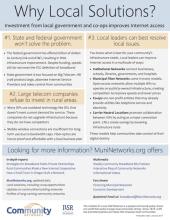
The next time you’re attending a city council meeting, a local broadband initiative committee meeting, or just chatting with neighbors about better local connectivity, take a few copies of our Why Local Solutions? fact sheet.
Our new one-pager addresses three main reasons why local telecommunications authority is so important:
- State and federal government won’t solve the problem - local residents, businesses, and elected officials know what they need, right?
- Large telecom companies refuse to invest in rural areas - we've seen over and over how their promises to improve Internet access go unfulfilled.
- Local leaders can best resolve local issues - they are accountable to the people they see every day and they experience the same reality.
In addition to providing some basic talking points to get the conversation moving, the fact sheet offers resources to guide you to more detailed information on publicly owned Internet networks. This resource is well paired with our other recent fact sheet, More than just Facebook. You've already started to get people interested in all the advantages of high-quality connectivity, now show them how local self-reliance it the most direct route to better access.
Download Why Local Solutions? fact sheet.
Other Fact Sheets At Your Fingertips
Fact sheets are a useful tool for getting your point across without overloading the recipient with too much information. They can easily be digested and carried to meetings with elected officials and often are just the right amount of information to pique someone's curiosity.
Check out our other fact sheets.