
Digital Subscriber Line

Content tagged with "Digital Subscriber Line"

Displaying 21 - 30 of 111

Missourian Reveals Rural Rubs Without Business Broadband

Directly north of Springfield, Missouri, sits Hermitage, a rural community of less than 500 residents. With only a few more than 200 households in Hermitage, it isn’t surprising that none of the big incumbent providers want to install the infrastructure to offer businesses or residents high-quality connectivity. A  recent Missourian article described what it’s like for businesses in a community whose owners need fast, affordable, reliable Internet access when it just isn’t available from the national ISPs.

Failure Expected

In Hermitage, entrepreneurs like local storekeepers cringe on the days when customers want to pay with credit or debit cards. Often their unreliable CenturyLink DSL service fails, sometimes for extended periods, which cuts into their revenue. Cindy Gilmore, who owns a local convenience store, has to either track down customers or take a loss when Internet access fails during mid-transaction and she restarts her modem.

Gilmore pays $89 per month to CenturyLink for service that is advertised as “up to” 1.5 Megabits per second (Mbps) download. Her speed test result on November 12th was .5 Mbps. Two weeks later a similar test reached the advertised speed and then two days later fell to .4 Mbps, which eliminated her ability to process credit card transactions, work from the office, or look up information she needed for supplies.

Rufus Harris works from home as an online car dealer and relies heavily on Internet access. As part of his work, he researches auto recalls and Carfax reports. The only option for Harris at his home office is CenturyLink and he pays $39 per month for residential “up to” 1.5 Mbps Internet access. He often finds himself, however, renting motel rooms for up to $400 per month because his Internet service at home goes down.

“It’s a shame when you pay for a service that you don’t receive,” Harris said. “We’re supposed to get at least 1.5 (Mbps) or up to, and most of the time it’s not near that good. A lot of the time, it might take 2 minutes to change from one page to the next.”

No Co-ops Yet
Oconee County, South Carolina: Achieving Goals Beyond AT&T Obstruction

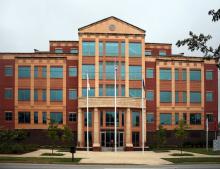
Most residents and businesses in Oconee County, South Carolina, used dial-up connections when county officials applied for stimulus funding in 2010; there were still people in the county with no Internet access at all. A few had DSL connections, but even county facilities struggled with antiquated infrastructure. After an AT&T attack upended their plan to offer retail services, they pressed on and improved connectivity in the rural community. Powerful incumbent forces and a bad state law, however, eventually led this community to choose privatization.

Ripe For Stimulus

We spoke with Kim Wilbanks, who served as Project Manager for Oconee FOCUS, the 240-mile fiber optic publicly owned network. She worked with a small team of people that applied for funding through the American Recovery and Reinvestment Act (ARRA) to obtain funds for the project. Wilbanks and former FOCUS Director Mike Powell were instrumental in establishing the infrastructure. The Wilbanks family used dial-up Internet access until 2010 when AT&T finally installed DSL on her street on the edge of town in the mostly rural county.

The mountains and hills across the county’s 674 square miles create a terrain that is speckled with man-made lakes. Fishing, water skiing, and sailing are popular and the lakes and waterfalls contribute to the region’s hydroelectric energy. Approximately 75,000 people live in Oconee County scattered within many of the small rural communities. The largest city’s population is only about 8,000.

A MuniNetworks Holiday Tradition


Along with family, appreciating what we have, and sharing our benefits, the holidays have a strong sense of tradition. Several years ago, our team put together "Twas The Night Before Muni Fiber" and we've made it a tradition to share it each Holiday Season.

We look forward to more collaborations, challenges, and sharing in 2018. Enjoy and thank you for your support!


2015-12-Twas-the-Night-Before-Muni-500.png

Transcript: Community Broadband Bits Episode 281

This is the transcript for Episode 281 of the Community Broadband Bits podcast. Will Rinehart of the American Action Forum in Washington D.C. discusses telecommunications and economics with our host Christopher Mitchell. Listen to this episode here.

Will Rinehart: And I do think that obviously good policy is very very important and that's where you and I agree a lot. You know there's obviously some good policies that can be enacted. There's probably better conversations that could be had in this space and that's also something else that I really do really want to see. You're

Lisa Gonzalez: listening to episode 281 of the Community Broadband Bits podcast from the Institute for Local Self-Reliance. I'm Lisa Gonzales as a research organization. We here at the institute make it a habit to hear all sides of the debate along the way we make connections with people who offer perspectives on policy that differ from ours. We consider these conversations critical as we analyze factors that help us create policy recommendations and resources for local communities. This week Christopher talks with Will Rinehart from the American Action Forum. They got together at the recent broadband community's economic development conference in Atlanta. In this conversation you'll hear the two discuss a variety of topics they talk about the area of telecommunications and economics and the forum's approach. You'll also hear that these different perspectives aren't as black and white as they first appear. Now here's Christopher with Will Rinehart from the American Action Forum.

Christopher Mitchell: Welcome to another edition of the community broadband bits podcasts. I'm Chris Mitchell with the Institute for Local Self-Reliance. Coming to you from Atlanta sitting practically on a runway at the Atlanta airport with Will Rinehart the Director of Technology and Innovation Policy with the American Action Forum. Welcome to the show. Thanks Chris. Thanks for having me. We're at the broadband community's event here. We just had our second panel which is called a blue ribbon panel and general session kind of thing. And you and I are typically brought on as people who have very opposing points of view.

Another Perspective on Policy From American Action Forum - Community Broadband Bits Podcast 281

Christopher went to Atlanta for the Broadband Communities Economic Development Conference in early November, and while he was there, he touched base with this week’s guest Will Rinehart. Will is the Director of Technology and Innovation Policy at the American Action Forum, a DC nonprofit organization that’s been around since 2009.

Will and Christopher don’t always see eye to eye on issues that affect telecommunications and broadband policy, but both agree that it’s important to have spirited debate to share perspectives. Only by examining issues from different sides can we craft policy that creates lasting benefits.

In this interview, Will describes his organization and his work there. Chris and Will look at compelling issues such as ISP competition, government regulations, and how the FCC’s 2015 upgraded definition of broadband has reverberated in the market. The two get into franchising and ubiquitous broadband, local authority, and connectivity in rural America. It’s a spirited discussion chock-full of issues.

You can tweet to Will, he’s @WillRinehart on Twitter.

This show is 30 minutes long and can be played on this page or via Apple Podcasts or the tool of your choice using this feed

Transcript below. 

We want your feedback and suggestions for the show-please e-mail us or leave a comment below.

Listen to other episodes here or view all episodes in our index. See other podcasts from the Institute for Local Self-Reliance here.

Thanks to Arne Huseby for the music. The song is Warm Duck Shuffle and is licensed under a Creative Commons Attribution (3.0) license.


KentuckyWired: Partners, Poles, Problems Plague Project

With the best intentions, Kentucky announced in late 2014 that it would build out a statewide open access fiber optic network to at least one location in each county to encourage high-quality connectivity in both urban and rural communities. Hopes were high as rural residents and businesses that depended on DSL and dial-up envisioned connectivity to finally bring them into the 21st century. After almost three years and multiple issues that have negatively impacted the project, legislators and everyday folks are starting to wonder what's in store for the KentuckyWired project. 

Local Communities Are Best Suited To Deploy Community Networks

There is no one-size-fits-all method of deploying across a state filled with communities and landscapes as diverse as Kentucky. From the urban centers like Louisville and Lexington to the rocky, mountainous terrain in the southeastern Appalachian communities, demographics and geography vary widely. But most lack modern Internet access and local ISPs have found it hard to get affordable backhaul to connect to the rest of the Internet.

There are several municipal networks in Kentucky, some of which have operated for decades. In addition to Glasgow, Paducah, Bowling Green, Frankfort, and others, Owensboro is currently expanding a pilot project that proved popular. As our own Christopher Mitchell discussed at the Appalachia Connectivity Summit, several cooperatives have made major fiber-optic investments in the state.

When it comes to connecting residents and local businesses, we strongly believe local entities are the best choice. Local officials have a better sense of rights-of-way, the challenges of pole attachments, and the many other moving pieces that go into network investment. Projects with local support see fewer barriers - people are more willing to grant easements, for instance. 

Talbot County, Maryland, RFI: Due Date September 1st

Talbot County, Maryland, has issued a Request for Information for Partnership for Deployment of High-Speed Broadband (RFI). Submissions are due no later than September 1st.

Looking For Ideas From Potential Partners

The RFI describes the county’s desire to work with a private sector partner who can bring gigabit capacity (1,000 Megabits per second) to the community. While county leaders prefer Fiber-to-the-Premise (FTTP) they note that the rural character and geography of the region may require a hybrid fiber/wireless solution.

The county plans on offering assistance in obtaining grant funding, providing access to rights-of-way and existing public assets, and easing any partner through the permitting process. The county encourages all types of entities to submit responses, including incumbents, cooperatives, and nonprofit organizations.

This Is Talbot County

Approximately 38,000 people live in Talbot County, which is located on the state’s eastern shore of Chesapeake Bay. Both Baltimore and Washington D.C. are 90 minutes away; Easton (pop. approx. 16,000) is the county seat.

Agriculture has been an important part of the county’s economy since European settlers landed there in 1630 and it continues today with corn, soybeans, and poultry. Healthcare is also an economic driver in part due to the high number of retirees in Talbot County. Tourism that centers on the community’s proximity to the ocean also employs many residents.

The Connectivity Situation

Fiber-coaxial networks exist in Talbot County, including a municipal network in Easton and areas in the county where private provider Atlantic Broadband offers Internet access. Many of Atlantic Broadband subscribers are in the bay communities in the western areas.

logo-easton-md-utilities.png The RFI states that incumbent Verizon supplies DSL via its copper infrastructure to more populated areas. There is also fixed wireless available in some areas.

Freedom FIBER, Tombigbee Electric Cooperative in Alabama

Huntsville, Alabama, already has high-speed Internet service through Google Fiber, but the surrounding rural areas must look to their local cooperative for better connectivity. Tombigbee Electric Cooperative has started an ambitious Fiber-to-the-Home (FTTH) project to eventually cover its entire service area over four counties in northwestern Alabama.

In a press release, Tombigbee Electric announced that their Freedom FIBER network will start providing Internet service in the towns of Hamilton and Winfield in September 2017. It’ll take about a year to get the new network to everyone in the designated build out area.

Much Needed Connectivity

Hamilton is the seat of Marion county with about 7,000 residents; 20 miles to the south, Winfield has a population of 5,000. As of June 2016, about 75 percent of the population in Marion County does not currently have access to FCC-defined 25 Megabits-per-second (Mbps) download speeds.

With Freedom FIBER, residents will have a choice between two tiers of Internet service: 100 Mbps for $49.95 per month or 1 gigabit (1,000 Mbps) for $79.95 per month. The co-op will also offer phone service for an additional $29.95 each month. The fiber network will be much more reliable than CenturyLink’s DSL network, which is currently the only choice in the towns.

An Incremental Plan

Frontier Is A No-Show: Rural Wisconsinites Looking For Promised Connectivity

It’s been about two years since the people of Lincoln County, Wisconsin, learned that Frontier Communications received federal funding to expand Internet access in their region. Now, they’re wondering why Frontier has still not started construction of promised infrastructure.

A Long Road To Nowhere

The community has been seeking ways to improve local connectivity for years. Back in 2013, they held a series of local listening sessions and workshops with officials from the University of Wisconsin-Extension Center for Community Technology Solutions. The goals of the workshops were to educate community members about the importance of connectivity and to learn more about the availability of Internet access at the local level. The meetings addressed both residential and business needs

In the summer of 2015, county officials announced that they had been working on an initiative to find a way to improve connectivity throughout Lincoln County. By engaging members of the public in town hall forums they had learned that the general consensus was:

“For the most part, people are disappointed with their current service.”

“Generally speaking, their current Internet service is not fast enough and there just isn’t enough capacity to do what they want to do.”

Community leaders were also learning that a fair number of home-based businesses were popping up in the county.

Video To Share: Rural America, Broadband Help is Not on the Way

If you live in rural America, chances are you know what it’s like to have inadequate Internet access. If you've heard about the Connect America Fund, however, you probably think help is on the way and your problems will soon be over; you'll get the kind of speeds available in large cities, right? Wrong.

Our short video on rural connectivity and CAF explains how big companies are taking federal subsidies to build networks that provide the same old slow DSL service to rural areas. So, what can people in rural communities do? The video describes how local communities are becoming more self-reliant through publicly owned infrastructure and offers some starting points if you're interested in learning more.

More Of The Same? No Way!

The Connect America Fund (CAF) is offering billions of dollars to build out networks in rural areas, but the companies receiving the subsidies are the same ones that already offer terrible connectivity in most rural communities. Are they using those subsidies to invest in high-speed connectivity for rural areas? No. The DSL connections that those companies are deploying for your home or business with CAF funding is already considered obsolete.

Rather than accepting these substandard solutions, an increasing number of communities have decided to act so they can have the same or better quality of connectivity as urban areas. Rural cooperatives and municipal networks are taking charge of their own telecommunications infrastructure needs. Unless you live in one of these communities, you may have never heard about the fast, affordable, reliable connectivity available from a community network or a cooperative. They’re just doing it and not bragging about it.

YOU Make It Happen

How does a community or a cooperative start offering better connectivity? We’ve created this short video that explains the basics and we invite you to share it with others. It all starts with YOU.

Be sure to check out our other videos, too!