
digital divide

Content tagged with "digital divide"

Related Topics
Displaying 121 - 130 of 263

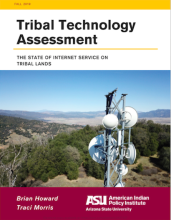
Tribal Technology Assessment: The State of Internet Service on Tribal Lands
Image

Tribal Technology Assessment: The State of Internet Service on Tribal Lands, a report from the American Indian Policy Institute at Arizona State University (AIPI) provides a detailed examination of broadband access, device use, and uses of the Internet by Tribal peoples on Tribal lands. Authors Brian Howard and Traci Morris completed the 2019 report aiming to develop a closer look at the digital divide and "to create a new baseline for future studies with the expectation of potentially measuring growth in coming years."

The AIPI worked with Tribal leadership and members to design a study that would include the participation of those living on Tribal lands. In addition to providing historical perspective on why the issue of digital inclusion has not been studied adequately, the authors address the multiple facets of the digital divide(s) that Native American peoples who live on Tribal lands face and how the large ISPs have left most behind.

The report explains in detail the survey questions, results, and methodology.

Based on the results of the survey, AIPI provides policy recommendations directed at different public and private sectors. At the foundation of their recommendations is the link between local self-reliance and increased adoption of better connectivity:

There needs to be a new model to address the Digital Divide prevalent in rural and Tribal America. What is needed is a positively related regulatory disruption to find new solutions for community based networks for positive social disruption.

AIPI makes recommendations for Congress, such as:

  • Establish the Office of Native Affairs and Policy as a standalone, independent office at the Federal Communications Commission (FCC) with a permanent annual budget.
  • Establish a Tribal Broadband Fund to support broadband deployment, maintenance, and technical assistance training.

Recommendations for the telecom industry include:

Rural Tribal Priority Window Now Open; Advice from MuralNet - Community Broadband Bits Podcast 393

On February 3rd, 2020, the FCC opened the 2.5 GHz Rural Tribal Priority Window, a six month period in which federally recognized Tribes or Alaska Native Villages have the opportunity to apply for licenses to unassigned spectrum over their Tribal lands. This week on the podcast, we have two guests from MuralNet — CEO Mariel Triggs and Edyael Casaperalta, Legal Advisor and Policy Strategist. MuralNet, a nonprofit that focuses on helping indigenous people build their own networks, has been working to spread the word about the Rural Tribal Priority Window.

Historically, national Internet access companies have fallen short in bringing their services to people living on tribal lands. A few Tribes have been able to develop their own community networks, but others have found roadblocks when competing with large ISPs for spectrum or for funding. As a result, Tribal communities are some of the least connected in the U.S. Mariel and Edyael discuss how fixed wireless, using the 2.5 Ghz band spectrum is well suited to help solve this persistent problem. They share some of the challenges they’ve faced and offer some tips with deployment and in working to develop policy.

We learn more about the criteria that tribes need to meet in order to apply and how, even if they don’t plan on building their own network, owning access to the spectrum is, nevertheless, empowering. Tribes may not wish to operate a community network, but owning the airwaves above their land gives them some control over how those airwaves are used.

To learn more about the claiming the airwaves over Tribal Land, check out MuralNet’s website here. They're always willing to answer questions and to help with the process.

Legal Disclaimer: MuralNet employees and contractors are not attorneys. Services offered and statements from MuralNet in this podcast are not legal advice or opinion.

For more information from the FCC, including application information, maps, and any additional requirements, visit their cache of information here.

The Tribal Priority Window closes on August 3rd, 2020, at which time other entities will be able to apply for the licenses.

This show is 47 minutes long and can be played on this page or via Apple Podcasts or the tool of your choice using this feed

Transcript below. 

We want your feedback and suggestions for the show-please e-mail us or leave a comment below.

Listen to other episodes here or view all episodes in our index. See other podcasts from the Institute for Local Self-Reliance here.

Thanks to Arne Huseby for the music. The song is Warm Duck Shuffle and is licensed under a Creative Commons Attribution (3.0) license.

Image of Cibecue, Fort Apache reservation settlement in Arizona by Phillip Capper from Wellington, New Zealand [CC BY]

Digital Equity: Experts Testify on the Hill

As federal, state, and local leaders increasingly recognize the need to make Internet access universal, they are also realizing that adoption is a separate issue. Programs such as the ReConnect and Connect America Funds I and II Auction have helped to expand infrastructure, but even in places where Internet access has been available for years, 100 percent of households do not subscribe. In an effort to better understand digital equity, the House Subcommittee on Communications & Technology of the Committee on Energy and Commerce recently sat down to listen to experts on digital equity. They discussed common misconceptions, hurdles that make wide-scale adoption difficult, and offered policy recommendations to help us achieve digital equity.

Not Only a Rural Problem

Angela Siefer, Executive Director of the National Digital Inclusion Alliance (NDIA) described how her experience as a digital equity warrior has changed from working with people to learn the basics of computer use to the additional problem of helping people get online. Angela's statement addressed some of the most common myths associated with the digital divide that NDIA, through boots-on-the-ground research, has discovered, including:

The digital divide is a rural problem: Census results show that populations in urban areas do not have Internet access subscriptions of any kind; these are often low-income households.

5G will bridge the digital divide: Lack of infrastructure and devices deployed in areas where existing problems with digital inclusion continue with regards to this new technology.

People don't subscribe because they don't think the Internet isn't valuable: Accomplishing day-to-day tasks often require access to the Internet, which is a fact not lost on those who don't subscribe, but the cost is out of reach for many of those same people.

Setting the Bar High in Colorado: Longmont's NextLight - Community Broadband Bits Podcast 392

NextLight, the municipal Fiber-to-the-Home (FTTH) network in Longmont, Colorado, has been serving residents and businesses in the community since 2014 and offers reliable gigabit connectivity at affordable rates. This week, Director of NextLight, Valerie Dodd, is on the show to discuss the past, present, and future of NextLight with Christopher.

NextLight has implemented some special marketing and customer service techniques, which has helped achieve the high take rate that continues to grow. As the network expands to all areas of the city, Longmont has used some creative approaches and contended with a few challenges to connect residents and businesses. Valerie and Christopher talk about some of these decisions and how those choices have panned out.

They also discuss the community's commitment to digital inclusion and how it's paying off in an increasingly diverse and growing city. Valerie describes how her experience with a private sector provider has contributed to NextLight's focus on subscribers and breaks down some of the key differences between a traditional municipal utility, such as an electric service, and broadband service from the city.

We want your feedback and suggestions for the show-please e-mail us or leave a comment below.

This show is 29 minutes long and can be played on this page or via Apple Podcasts or the tool of your choice using this feed

Transcript below. 

We want your feedback and suggestions for the show-please e-mail us or leave a comment below.

Listen to other episodes here or view all episodes in our index. See other podcasts from the Institute for Local Self-Reliance here.

Thanks to Arne Huseby for the music. The song is Warm Duck Shuffle and is licensed under a Creative Commons Attribution (3.0) license.

Net Inclusion 2020, Portland, April 7th - 9th

As we trudge through the snow in Minneapolis, we dream about spring weather and Net Inclusion 2020. It’s one of our favorite annual events and this year folks will gather in Portland, Oregon, to discuss all things digital inclusion. This year, the event is April 7th - 9th.

Learn more and register here.

The annual event, hosted by the National Digital Inclusion Alliance (NDIA), brings together people concerned with digital equity and how to expand it. Policy experts, Internet access providers, and community leaders gather together in order to examine the issue of digital inclusion. Some of the conversations and presentations include:

Local, state and federal policies and policy innovations impacting digital equity

Sources of financial and programmatic support of digital inclusion programs

Digital inclusion best practices from across the country

The first day of the conference will consist of workshop events in the morning hours and site tours in the afternoon. Some of the locations attendees will visit include Free Geek, Open Signal, and the Boys & Girls Club. Wednesday, April 8th, will be dedicated to interactive sessions, as will the morning of April 9th.

Learn more specifics from the schedule here, where you can also check out the growing lost of speakers. Get your tickets before February 8th and receive a discount!

Quick as Lightning

One of the unique features of the Net Inclusion event is the ability for new, creative digital inclusion initiatives to present their ideas at the Lightning Round presentations:

Since our first Net Inclusion in Kansas City in 2016, NDIA has featured Lightning Rounds in plenary sessions as a way to shine a spotlight on dozens of great digital inclusion initiatives, and to encourage peer-to-peer networking among our affiliates and friends. Think of it as a beacon to find the people you’d love to have a hallway conversation with.  

New York City Releases Visionary Internet Master Plan

New York City has been looking for a way to address Internet access disparities - quality, pricing, and infrastructure investment - for years. Their New York City Internet Master Plan from the Mayor's Office of the Chief Technology Officer, released today, recognizes that the current market solution has failed "The Big Apple" and its residents. In order to move forward and to extend broadband to all New Yorkers, the city will take a more active role, which will include open access fiber optic infrastructure and nurturing private sector investment.

Read the New York City Internet Master Plan here.

The Market Failure

The highly-anticipated report, which we hope to cover more in-depth after we've had more time to dig deeper into its 88 pages, describes the breadth of the problem and digs into why New York's Internet access availability is fraught with so much disparity. Other urban centers that struggle with similar digital disparities can use this groundbreaking approach as a foundation to study their own communities and search for a way to bring broadband to everyone.

From the Executive Summary:

The private market has failed to deliver the Internet in a way that works for all New Yorkers. Citywide, 29 percent of households do not have a broadband subscription at home. The same percentage of households are without a mobile broadband connection. The substantial overlap between these under-connected populations means that 18 percent of residents – more than 1.5 million New Yorkers – have neither a mobile connection nor a home broadband connection.

The report notes that the millions of New Yorkers who are not connected also tend to be those from lower-income households who don't have broadband at home. Competition tends to be only in high-density neighborhoods with high income households, which needs to change. The report accentuates the correlation between income levels and disparities in broadband service with striking maps.

Predictions for 2020, Reviewing 2019 - Community Broadband Bits Podcast 388

It’s the end of the year once again, which means the Community Broadband Networks Initiative team at the Institute for Local Self-Reliance takes their place in front of the mic for the predictions show. In addition to offering our expectations for 2020, we review what happened this past year and compare it to the predictions we made at this time last year. Get ready for some opinions and laughs.

Once again, Communications Specialist Jess Del Fiacco and Research Associate Katie Kienbaum weigh in along with Christopher and Lisa. Our newest addition to the team, Michelle Andrews, joins for the first time this year; Michelle is our GIS and Data Visualization Researcher.

We review advancements from cooperatives, the growing interest in municipal projects and open access, and new approaches. We talk about realizations of models we anticipated and also some that took us by surprise. The crew discusses state and federal legislative changes and funding, partnerships, and Christopher even gives Comcast a break. You don’t want to miss this!

This show is 42 minutes long and can be played on this page or via Apple Podcasts or the tool of your choice using this feed

Transcript below. 

We want your feedback and suggestions for the show-please e-mail us or leave a comment below.

Listen to other episodes here or view all episodes in our index. See other podcasts from the Institute for Local Self-Reliance here.

Thanks to Arne Huseby for the music. The song is Warm Duck Shuffle and is licensed under a Creative Commons Attribution (3.0) license.

Image by Lisa Frideborg from Pixabay

Advice for Communities from Industry Guru Doug Dawson - Community Broadband Bits Podcast 387

Doug Dawson from CCG Consulting and author of the POTs and PANs: Pretty Advanced New Stuff by CCG blog met up with Christopher back in October in Alexandria, Virginia, and the two recorded this week's podcast episode. They were attending most recent Broadband Communities event, a place where experts and community leaders gather to talk about latest developments and opportunities in broadband and economic development. Christopher, who's had Doug on the show several times in the past, asked him to provide some general advice to communities interested in improving broadband. Doug shared both advice and observations.

Doug notes that counties, rather than municipalities, are seeking out his expertise more frequently these days. He also goes on to point out that in the past, local communities asked him to determine if they could take steps to improve Internet access but now they simply ask how they can do it. The shift exemplifies the growing understanding that local leaders see how high-quality Internet access and fast, affordable, reliable connectivity drive economic development and help preserve their communities.

Doug and Christopher talk about the growing desire to address digital inclusion and how Doug is increasingly helping local communities find ways to shrink the digital divide. Christopher and Doug also look at reasons why local communities should think twice about investing in publicly owned networks. These types of projects aren't the best course of action for every community and Doug, as a straight talker, helps his clients determine when they should shelve plans to deploy publicly owned networks and look for other answers.

For more from Doug Dawson, check him out in podcast episode 353 and episode 306. Be sure to check out POTs and PANs by CCG for some insightful and thought provoking articles. We don't know how he does it all!

This show is 37 minutes long and can be played on this page or via Apple Podcasts or the tool of your choice using this feed

Transcript below. 

We want your feedback and suggestions for the show-please e-mail us or leave a comment below.

Listen to other episodes here or view all episodes in our index. See other podcasts from the Institute for Local Self-Reliance here.

Thanks to Arne Huseby for the music. The song is Warm Duck Shuffle and is licensed under a Creative Commons Attribution (3.0) license.

Thankful for Growing Efforts at Digital Inclusion

As late November arrives, so does the the holiday season for many of our readers. People reading up on local efforts to improve Internet access will be counting their blessings today, which inspires us to do the same. There are many things we have to be thankful this year.

As access to affordable broadband becomes increasingly critical in today's world, however, and as rates from the large Internet access companies continue to rise, getting online is more challenging than ever for folks with limited incomes. We want to express our appreciation for local communities who adopt policies to make high-quality Internet access available to lower income households through their municipal networks.

A Growing Awareness

Wilson, North Carolina, decided that as part of the community network's mission, they would offer fast, reliable fiber Internet access available to those living in public housing residences. Since then, we've seen other communities take creative approaches to ensure that everyone can use the network, not only those who are already better off. Municipalities that see the value of publicly owned fiber optic infrastructure understand the value of eliminating cherry picking as a way to tap into their undiscovered human capital.

Unlike large corporate Internet access providers, publicly owned networks don't need to maximize profit from every subscriber in order to please shareholders. They consider themselves in place for the public good. Munis can dedicate themselves toward digital inclusion efforts, which are in line with their mission.

During Digital Inclusion Week in October, we detailed some of the innovative approaches that local decision makers are adopting to ensure the least fortunate in their communities have access to the community's new fiber tools. Here are just a few:

Broadband for America’s Future: A Vision for the 2020s

Image

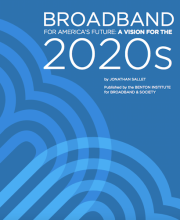
The Benton Institute for Broadband & Society has a reputation for looking at today’s reality with an eye toward tomorrow’s needs. In their report, Broadband for America’s Future: A Vision for the 2020s, Benton Senior Fellow Johnathan Sallet continues that perspective and offers insightful recommendations for a new National Broadband Agenda.

Download the report, Broadband for America’s Future: A Vision for the 2020s here.

Broadband for All Needs a New Approach

As access to high-quality connectivity becomes more critical each day, those without fast, affordable, reliable Internet access lose ground more quickly as time passes. In addition to the opportunities that come with broadband access, lack of adoption translates into lack of technical skills. Innovation isn’t slowing down for folks who don’t have broadband. 

As Sallet notes, access to and adoption of broadband improves our economy, strengthens communities, and empowers American workers. Obtaining that access and expanding that adoption, however, is proving more challenging than it should be.

In his report, the author reviews in detail the barriers that have prevented the U.S. from achieving its goal of ubiquitous access and adoption of broadband. He’s able to make recommendations based on four key policy areas:

Deployment of networks where adequate broadband does not exist;

Competition to increase choices and spur lower prices and better-quality service to their residents;

Affordability and Adoption for those who wish to have broadband in their homes but lack the means or the skills to acquire it; and

Community Anchor Institutions, such as schools and libraries, that increasingly serve their users wherever they are. 

"The Same Fabric of Truth-Seeking"