
Appalachia

Content tagged with "Appalachia"

Related Topics
Displaying 11 - 20 of 26

Ohio Valley ReSource Covers Appalachian Broadband Summit, Quotes Christopher

Ohio Valley ReSource - July 18, 2017

Country Connection: Rural Residents Ask FCC To Improve Internet Access

[Republished in WFPL, WKU - Western Kentucky Radio, West Virginia Public Broadcasting, WKMS Murray State Radio, WEKU FM]

Written by Benny Becker

More than two million people across the Ohio Valley live in areas that lack any option for fast and reliable internet service. This week some of them had a chance to tell a member of the Federal Communications Commission what that means for their work, studies, and everyday life.

The Appalachian Connectivity Summit in Marietta, Ohio, explored possible local solutions. But the event came during a week that also saw large internet providers suing to stop one way to connect more people to broadband service. ...

Net Gains

For more than a decade, Christopher Mitchell has been working on broadband expansion issues with the Minnesota-based Institute for Local Self-Reliance. Mitchell gave the connectivity summit’s keynote address, and Frontier got a mention in his talk.
Access Appalachia

Update: Please note, this information is now out of date. It was developed in 2017. 

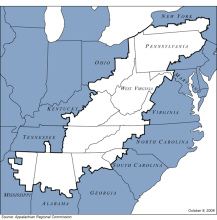
This is the central hub for ILSR’s research on Internet access around the Appalachian United States. We have compiled federal statistics on broadband availability and federal subsidies for large Internet Service Providers. We've created detailed maps of 150 counties in Kentucky, Southeast Ohio, and northern West Virginia.

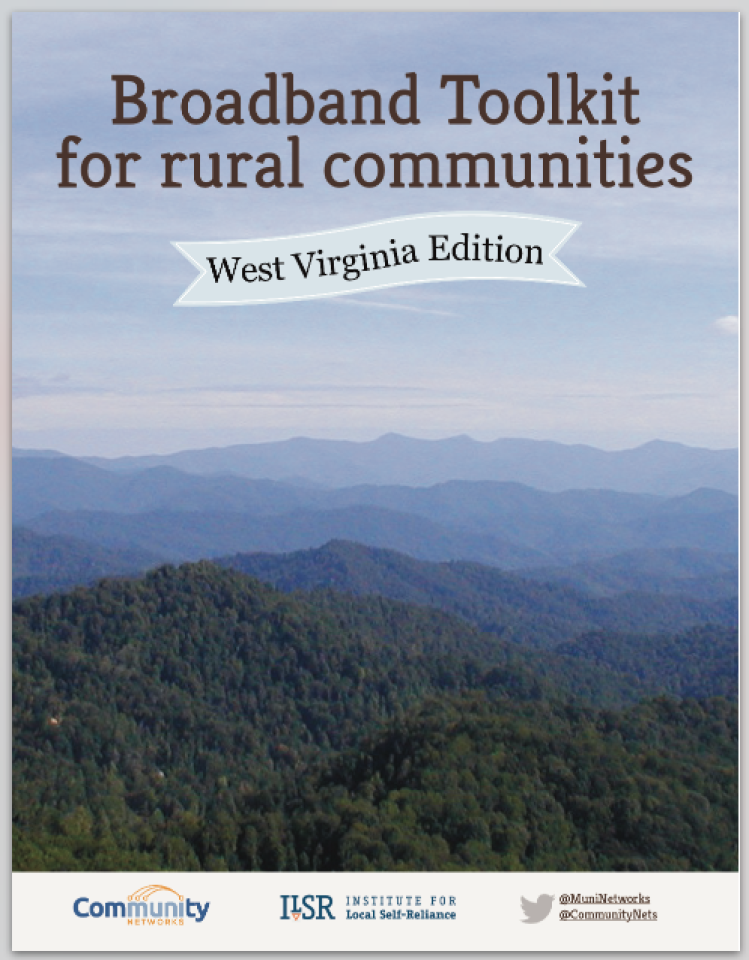
We've also created Rural Toolkits for Kentucky, Southeast Ohio, and northern West Virginia. These toolkits offer a big picture look at connectivity on a regional and statewide level.  They also provide action steps for folks to learn more and get involved.

Remember these three key details when reading through this information:

Internet access: if you can get online, check email, and browse the web.

Broadband: the Federal Communications Commission (FCC) currently defines this as speed of 25 Mbps download and 3 Mbps upload. 

Fiber-to-the-Home (FTTH): a high-speed fiber-optic connection directly to the home. This type of technology can support speeds of more than 1,000 Megabit-per-second (Mbps).

Appalachia can get better Internet service, but the big companies aren’t going to do it. Cooperatives and small towns are stepping up and delivering world-class Internet service.

Kentucky

Image

This information covers the entirety of the state – all 120 counties.

Rural Toolkit: This toolkit provides the basics of how to get started. From what is broadband to the details of federal funding, this toolkit has got you covered. At the back, it includes a statewide fact sheet, which is also available separately.

RFP For Assessment And Feasibility Study In Alexander County, North Carolina

Alexander County, North Carolina, recently released a Request for Proposals (RFP) to find a firm to conduct a broadband assessment and feasibility study. Applications are due July 24th.

Rural Connectivity

In addition to examining what type of service and where service is currently available, the county wants a firm that will help create a strategy to improve what they already know is poor connectivity throughout the county. Funding sources should be identified along with helpful public policy suggestions.

According to the RFP, approximately 50 percent of 1,954 respondents in a recent indicated that their Internet service did not have sufficient speed. Sixty-five percent don’t have access to broadband as defined by the FCC (25 Megabits per second download and 3 Mbps upload), and about 12 percent use their mobile devices to access the Internet. Sixteen percent noted that affordability is a problem. Approximately 84 percent of respondents indicated that they’d like to have more options for Internet access.

Alexander County

Alexander County is mostly rural and home to about 38,000 people. Manufacturing is an important part of the economy but farmland makes up much of its 264 square miles. Taylorsville is the county seat and the only town, with a few other unincorporated communities in the county. Bethlehem, a census designated place is located in the southwest corner of the county and is also somewhat densely populated, relative to the rest of the county.

The community is on the west side of the state, about an hour north of Charlotte. The Appalachian Regional Commission (ARC) classifies the community's economic status as "transitional" and the North Carolina Department of Commerce considers it an average economically distressed county. A little more than half of school kids qualify for free and reduced lunches. Unemployment is at 3.2 percent as of April 2017. County leaders hope that improving connectivity within the region will also help diversify the economy and improve the employment situation for residents.

Existing Fiber

Appalachian Ohio-West Virginia Connectivity Summit, July 18th

Rural areas in southeastern Ohio and north West Virginia are plagued by poor connectivity. In the Appalachian region, people are organizing to find ways to solve the problem themselves rather than face the risks facing communities with no access to high-quality Internet access. On July 18th, the National Rural Assembly will hold "The Appalachian Ohio-West Virginia Connectivity Summit" in Marietta, Ohio.

Connecting Experts With Community Members

The summit will bring experts together to share their knowledge with participants who are interested in learning more about ways to improve local connectivity. In addition to a keynote address by Christopher, breakout sessions will include topics such as broadband policy, technology, and organizing.

There will also be an afternoon panel discussion titled “Community Ownership Models” and FCC Commissioner Mignon Clyburn will be sharing remarks. The event is one stop on her #ConnectingCommunites listening tour around the U.S.

You can learn more about the summit and the speakers at the Rural Assembly website. They’ve also collected a list of resources and want you to share your broadband stories.

Register, Agenda

There will also be a Town Hall later in the evening on the 18th. Check out the complete itinerary online and Register for either event if you plan to attend. The Summit will take place at Washington State Community College and the Town Hall will be held at Marietta High School.

For more and to stay up to date, follow the Summit FB page.

Image courtesy of The Appalachian Ohio-West Virginia Connectivity Summit FB page.

Highlands Looking For A Partner: RFI Responses Due June 9th

Highlands, North Carolina, deployed a Fiber-to-the-Home (FTTH) infrastructure and fixed wireless complement to serve the community. The small rural community has been operating the municipal network in the Appalachians since late 2015, but is now considering passing the mantle to a private partner. They recently released a Request for Information (RFI) and responses are due June 9th.

High In The Appalachians

Tourism is one of the town’s staple economies, as it’s known for its natural surroundings atop the Nantahala National Forest in the mountains. While less than 1,000 people live in the town all year, summer tourists swell the population to around 20,000. There are several country clubs nearby that cater to the affluent second-home owners in Highlands and there are at least 500 homes that are valued at $1 million or more.

The FTTH network does not serve the entire community. Local leaders want the network available to the entire community, in part to keep second home owners in Highlands for extended periods of time. With better connectivity, many could work from home. The community also operates a municipal electric utility that owns 2,600 utility poles and 110 miles of line, most of it aerial. Interestingly, the Highlands Electric Utility serves over 3,000 accounts, some in the suburban Atlanta areas.

Highlands issued the RFI to search out  provider that would be interested in expanding the FTTH network and acquiring more customers for the network as a whole. They still want to own the infrastructure, but hope to attract a provider willing to lease the existing network and add to it.

Read the rest of the RFI.

Responses are due Friday, June 30th.

Erwin Expanding Again, Moving Into The Mountains

Erwin Fiber is growing in stages and now that the utility in Erwin, Tennessee, has completed phase three of its Fiber-to-the-Home (FTTH) deployment, about half of its electricity customers have access to high-quality Internet access. That’s not all - phase four this spring will bring gigabit connectivity to more rural customers in two nearby mountain communities.

Reaching Out In Steps

All told, Erwin Fiber more than tripled its service area in 2016. A December grant from the Appalachian Regional Commission (ARC) will allow the utility to complete the spring build out, which will serve an additional 680 homes and 30 businesses. The Temple Hill and Bumpass Cove areas located in the mountains outside of downtown Erwin will have access to Erwin Fiber's symmetrical Internet access. Due to the remote character of these neighborhoods, people here had little prospect of obtaining high-quality Internet access from other providers. The 35-mile expansion will cost approximately $400,000.

November’s expansion added 2,200 homes and businesses, while a similar effort last March included 1,300 homes and businesses. Both expansions came after the community successfully experimented with a 2015 pilot project in which the city’s electric utility connected an initial 1,200 customers. The utility needed the infrastructure for the electric system other utilities; it was the right to to invest in the equipment for high-speed connectivity and phone service 

Not An Impluse

The municipality of about 6,000 people had considered the investment some 15 years prior but couldn’t afford the investment until recent years when the cost of deployment decreased. In January, Christopher interviewed Lee Brown and John Williams from Erwin Utilities who discussed the community’s project and explained how the fiber infrastructure is benefitting all the utility customers, even those who don’t subscribe to FTTH services.

Christopher Talks North Carolina, Local Solutions

How do we connect rural America? Unreliable, slow Internet service with data caps is the norm for much of the country. Even though the federal government gives billions of dollars to large telecom companies, North Carolina is one of the many states that still has an urban and rural digital divide.

Western North Carolina Public Radio (WCQS) recently spoke with our Christopher Mitchell about local ways to improve rural Internet access. While Christopher spoke of electric cooperatives, two other initiatives are also seeking creative solutions in the western half of the state.

Potential Service from Electric Cooperatives

Communities across the U.S. are already bringing better connectivity to their homes and businesses. Specifically, Christopher pointed to the growing number of electric cooperatives providing Internet service: 

“When you look at the threat communities face from not having broadband Internet—the way people are moving away, and fewer people are willing to move in—these electric membership corporations really have to think about what they can do to make sure there’s a high quality of life.”

In our 2016 North Carolina Connectivity report, we explored the work of two local electric cooperatives, Lumbee River and Blue Ridge Mountain. They collaborated with telephone cooperatives to provide high-speed Internet service in the several rural counties near Georgia.

Spotlight on Local Solutions

The WCQS article reported on two more local initiatives: the community network in Highlands, North Carolina, and the nonprofit Land of Sky Regional Council

Back in 2015, the people of Highlands saw that poor Internet access was hurting their community. They quickly built the Altitude Community Broadband network. Highlands Internet Technology Director Matt Shuler told WCQS: 

Pikeville, KY, RFP For FTTP: Responses Due Jan. 4, 2017

Earlier this spring, Pikeville, Kentucky, released an RFI for partner interest to bring Fiber-to-the-Premises (FTTP) to businesses, community anchor institutions, municipal facilities, and residential properties. The Appalachian community is ready to move forward and recently released its Request for Proposals (RFP) for Partnership for FTTP Network Deployment. Responses are due January 4, 2017.

A Measured Approach

The community wants any potential partners to focus on a project to be executed in phases. This RFP is for Phase One, described as:

Phase One of the City’s multi-stage project will include constructing a fiber backbone in the selected service area—approximately 57 miles of distribution fiber that will pass 2,850 homes, businesses, and other community organizations that represent potential customers. Phase One will also include constructing a network “core” site that will aggregate traffic from the FTTP sites and house the network’s routers that will allow for interconnection with other networks including the network’s “upstream” connection to the Internet. Planning for upstream connectivity is a critical element of the partnership, and will require meaningful coordination between the City, the Partner, and the Commonwealth. 

Eventually, the goal is to deploy a network that will serve the city of Pikeville (pop. 7,000), nearby Coal Run Village, and other areas in Pike County. Pikeville expects to receive grants, but also anticipates contributing to the cost of the project with funds from bonds, loans, or other mechanism. They also state in the RFP that, depending on the type of partnership, they anticipate some sharing of risk and financial contribution from the partner they choose.

Pikeville

NC Rural Electric Cooperatives Teach Model Collaboration

Throughout the October Broadband Communities Magazine conference, folks kept repeating this sentiment: some partnerships are smooth and others have rough patches. At the conference, we heard from several electric cooperatives who had partnered with other cooperatives to provide next-generation connectivity to their communities.

We specifically want to highlight the work of two North Carolina electric cooperatives: Lumbee River EMC and Blue Ridge Mountain EMC. They were both included in our report North Carolina Connectivity: The Good, The Bad, and The Ugly. Each co-op took the bold step of building a Fiber-to-the-Home (FTTH) network throughout sparsely populated regions. At the conference, we were able to learn first-hand about their experiences.

Despite the Distance: Lumbee River EMC & HTC

HTC Chief Executive of Marketing Brent Groome described how the two cooperatives collaborated despite being nearly an hour away from each other. Their work together has involved a commitment to similar values and dedication to improving rural communities. (Lumbee River EMC’s representative was unable to attend the conference as much of the service territory had suffered flooding from the recent hurricane.)

Lumbee River EMC’s entry into Internet service brought fiber connectivity to southeastern North Carolina. The co-op provides electricity to more than 50,000 members. In 2010, the USDA provided Lumbee River EMC with nearly $20 million in funding to install fiber. A state law, however, imposes certain restrictions on electric co-ops and USDA funding. The electric co-op had to find another company with the drive and expertise to provide Internet service.

Cool & Connected in "Little Gig City"

Few communities in Tennessee have next-generation, high-speed connectivity, but the city of Erwin built its own network despite Tennessee’s restrictions. Now through a collaboration of federal and regional agencies, this “Little Gig City” will get assistance showing off their fiber network.

The planning assistance program, called Cool & Connected, will provide direct assistance to Erwin to develop a marketing plan for the fiber network. Cool & Connected looks to promote the Appalachian communities by using connectivity to revitalize small-town neighborhoods and encourage vibrant main streets with economic development.

Federal and Regional Collaboration

U.S. Environmental Protection Agency Administrator Gina McCarthy explained the program in The Chattanoogan

“Cool & Connected will help create vibrant, thriving places to live, work, and play. We’re excited to be working with these local leaders and use broadband service as a creative strategy to improve the environment and public health in Appalachian communities.”  

Three governmental agencies have brought together the Cool & Connected program to provide planning assistance to ten chosen communities in six states near the Appalachian Mountains. Agencies partnering on the initiative are the U.S. Environmental Protection Agency’s Office of Sustainable Communities, the U.S. Department of Agriculture’s Rural Utilities Services, and the Appalachian Regional Commission through the Partnership for Opportunity and Workforce and Economic Revitalization (POWER) initiative.

The “Little Gig City” That Could