
rural

Content tagged with "rural"

Related Topics
Displaying 21 - 30 of 1065

Mecklenburg Co-Op Celebrates 7,500 Fiber Customer Milestone

Empower Broadband, a wholly-owned subsidiary of Virginia-based Mecklenburg Electrical Cooperative, says it has successfully deployed affordable fiber access to more than 7,500 subscribers across long-neglected and underserved portions of the Old Dominion state.

Mecklenburg Coop, created in 1938, serves 31,000 residential and business electrical customers across portions of nine Southside Virginia counties and five northern North Carolina counties. Like many cooperatives, Mecklenburg and Empower are leveraging generations-old experiences at rural electrification to migrate into the broadband business.

In 2022, the coop broke ground on a $154 million initiative to bring high-speed internet to 14,634 unserved and underserved locations in Halifax, Mecklenburg, and the southern portions of Charlotte and Brunswick counties. As of today, the Mecklenburg fiber network consists of 2,900 miles of fiber and passes by 23,443 locations, with additional expansion planned.

Clallam County, WA Launches $22 Million Fiber Expansion Plan

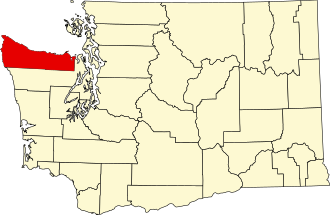
Clallam County, Washington and Astound Broadband have begun construction on a major new joint partnership that will bring affordable fiber access to more than 1,500 homes across the largely rural Northwestern part of The Evergreen State.

In a joint announcement, Astound states that it will be deploying more than 100 miles of fiber across long-neglected Clallam County, starting with a 15-mile deployment along the State Route 112 Highway corridor, beginning just west of Port Angeles.

The deployment is a joint collaboration between The Public Utility District (PUD) No. 1 of Clallam County, Astound Broadband, and the Northwest Open Access Network (NOANet), a nonprofit coalition developed by regional Washington Communications Utility Districts (CUD) to bring more reliable, affordable fiber access to neglected rural Washington communities.

Image
Clallam County WA map

Clallam county uses the NOANet fiber optic system for real-time metering, energy management, load control, and networking among remote utility facilities, though they’re keen to leverage the open access network to help provide last mile residential service.

The new $22 million fiber investment is being funded by a combination of a $16 million grant from the the Washington State Broadband Office made possible by the American Rescue Project Act (ARPA), $4.5 million from the Washington State Department of Commerce Public Works Board Broadband Program, and $1.7 million in funding from Clallam County.

The expansion will provide last mile fiber access to at least 1,500 new local residents, but will also prioritize bringing fiber to fire houses, schools, libraries, medical clinics, and other key anchor institutions in the county of 78,000.

Oregon’s Coos-Curry Cooperative Passes 5000th Fiber Customer Milestone

Oregon’s Coos-Curry Electric Cooperative just connected its 5,000th customer, marking a major milestone in the Oregon cooperative’s five-year-effort to bring affordable fiber access to rural state residents long stuck on the wrong side of the digital divide.

The recent celebration of the milestone, documented by the Curry Coastal Pilot, featured a homeowner whose recent fiber connection came 80 years after the same cooperative first connected the home for electrical service.

First created in 1939, the Coos-Curry Cooperative is one of over 200 U.S. electrical cooperatives leveraging their century-old experience in rural electrification to bring affordable fiber access to long-neglected parts of the country – markets that in most cases were left behind by regional telecom monopolies disinterested in improving affordable access.

The cooperative’s fiber wing, dubbed Beacon Broadband, was first launched back in 2021, and offers locals fiber optic broadband at three tiers of service: a symmetrical 500 megabit per second (Mbps) tier for $50 a month; a symmetrical 1 gigabit per second (Gbps) tier for $85 a month; and symmetrical 2 Gbps tier for $120 a month.

Unlike many regional Oregon private telecom monopolies, Coos-Curry Electric Cooperative’s fiber tiers don’t feature usage caps, long-term contracts, or hidden fees.

BEAD in Limbo: How Federal Delay Is Shaking Up Louisiana's Broadband Future - Episode 649 of the Community Broadband Bits Podcast

In this episode of the podcast, Chris talks with Josh Etheridge, Chief Strategic Officer of EPC—a broadband construction company based in Louisiana—about the real-world consequences of the federal government’s pause on BEAD funding. 

Josh breaks down how the delay has disrupted local businesses, sidelined workers, and stalled broadband expansion in some of the country’s most disconnected communities. 

From equipment sitting idle to families laid off, he lays out how uncertainty at the top is rippling down through the industry—and what’s at stake if BEAD doesn’t move forward soon.

This show is 36 minutes long and can be played on this page or via Apple Podcasts or the tool of your choice using this feed.

Transcript below.

We want your feedback and suggestions for the show-please e-mail us or leave a comment below.

Listen to other episodes or view all episodes in our index. See other podcasts from the Institute for Local Self-Reliance.

Thanks to Arne Huseby for the music. The song is Warm Duck Shuffle and is licensed under a Creative Commons Attribution (3.0) license

Pushback Mounts Over Trump Administration ‘Termination’ of Digital Equity Law

The Trump administration’s dismantling of a popular broadband grant program has been greeted with disgust and anger by those doing the heavy lifting to bridge the country’s digital divide, leaving many states' planned broadband expansions in limbo, and affordable broadband advocates contemplating potential legal action.  

The unprecedented choice to destroy digital skills training and broadband adoption programs created by an act of Congress is seeing escalating pushback by a growing coalition of frustrated lawmakers and state broadband offices.

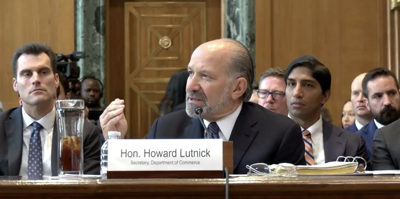
Last week, President Trump announced via a Truth Social post that he was ending the Digital Equity Act, falsely claiming that the program was “unconstitutional” and “racist.”

“No more woke handouts based on race!” the President said. “The Digital Equity Program is a RACIST and ILLEGAL $2.5 BILLION DOLLAR giveaway. I am ending this IMMEDIATELY, and saving Taxpayers BILLIONS OF DOLLARS!"

Image
A black and white hand holds up a cell phone to photograph President Trump

But the popular program was perfectly legal, barely focused on race, and was proving to be of broad benefit to countless Americans – including many of the President’s own supporters in long-neglected rural counties.

The $2.75 billion Digital Equity Act was passed by Congress as part of the 2021 infrastructure bill. It mandated the creation of three different grant programs intended to shore up equitable, widespread access to affordable Internet, while providing the tools and digital literacy education needed to help neglected U.S. communities get online.

A legal challenge to the Trump administration’s unilateral decision to kill a law passed by Congress seems all but certain.

Vermont’s Otter Creek CUD Finishes Fiber Expansion, Focuses On Customer Service

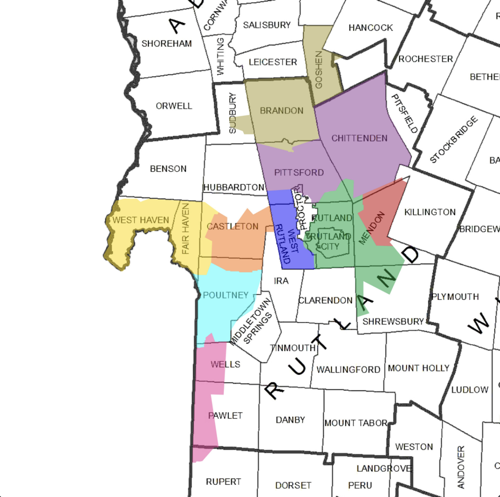
Vermont’s Otter Creek Communications Utility District (CUD) says it has completed its ambitious fiber deployment, bringing affordable access to more than 6,000 homes and businesses in the Rutland County region of the Green Mountain State.

Otter Creek is another example of the way Vermont’s long under-served communities are bonding together via innovative new partnerships taking direct aim at the digital divide.

When last we had checked in on Otter Creek CUD, the CUD had just received a $9.9 million grant by the Vermont Community Broadband Board (VCBB). Otter Creek CUD then leveraged that grant funding to form a public-private partnership with Consolidated Communications.

Image
Otter Creek CUD logo

Otter Creek CUD Chair Laura Black tells ILSR that the partnership involved 335 miles of new fiber passing *6,000 locations. Of the total target reach, 1290 locations had never had broadband access previously. Between the Otter Creek grant awards and contributions from private providers, more than $24 million has been invested in Rutland County to expand fiber access.  

“We partnered with the existing ILEC business in most of our area, Consolidated Communications, to build and operate the fiber network with both their own contribution and grant funding we were able to secure,” Black said. “As well, a portion of our area was peeled off to allow the ILEC in three of the towns in our District to be served by the existing small ILEC business – Shoreham Telephone – under their own grant funding program (EACAM).”

Stringtown, MO Gets Connected: How Local Partnerships Are Closing the Rural Broadband Gap - Episode 644 of the Community Broadband Bits Podcast

In this episode of the podcast, we spotlight Stringtown, Missouri— a rural community that now has fast, reliable Internet thanks to a powerful local partnership. 

Chris talks with Patty Boyers, President and CEO of BOYCOM, and Robbie Myers, Butler County’s Emergency Management Director, about the barriers they faced, the grant that made it possible, and how broadband is transforming everything from public safety and telehealth to economic development. 

This show is 37 minutes long and can be played on this page or via Apple Podcasts or the tool of your choice using this feed.

Transcript below.

We want your feedback and suggestions for the show-please e-mail us or leave a comment below.

Listen to other episodes or view all episodes in our index. See other podcasts from the Institute for Local Self-Reliance.

Thanks to Arne Huseby for the music. The song is Warm Duck Shuffle and is licensed under a Creative Commons Attribution (3.0) license

BEAD Under Threat: Fiber, Satellites, and the Fight for the Future of Rural Internet Access - Episode 643 of the Community Broadband Bits Podcast

In this episode of the podcast, former BEAD Director Evan Feinman joins Christopher Mitchell and Sean Gonsalves to talk about the turmoil brewing inside the BEAD program. 

They break down what’s really behind the push for more satellite connectivity, the threat of sidelining state-led fiber projects, and the political forces stalling progress. 

With billions on the line and rural communities waiting, this episode cuts through the noise and asks: are we about to squander a once-in-a-generation opportunity?

This show is 46 minutes long and can be played on this page or via Apple Podcasts or the tool of your choice using this feed.

Transcript below.

We want your feedback and suggestions for the show-please e-mail us or leave a comment below.

Listen to other episodes or view all episodes in our index. See other podcasts from the Institute for Local Self-Reliance.

Thanks to Arne Huseby for the music. The song is Warm Duck Shuffle and is licensed under a Creative Commons Attribution (3.0) license

Chittenden County CUD Will Soon Emerge From The 'Dark Ages' with Fiber Expansion

Vermont’s Communications Union Districts (CUDs), which were the subject of a recently released ILSR report, continue to make steady inroads in delivering high-quality broadband access to long-neglected rural Vermont residents.

In 2021 the Vermont legislature passed Act 71, ensuring CUDs would play a key role in expanding fiber access in the Green Mountain state. In Vermont, municipally-led CUDs – municipal entities created by two or more towns with a goal of building communication infrastructure – can legally fund needed broadband expansions through debt, grants, and donations – but not taxes, though they themselves are tax-exempt nonprofits.

The CUD model allows municipalities to bond together to tackle broadband network deployments that might otherwise prove too costly or logistically difficult if attempted alone.

The results have been transformative for state residents long underserved or completely unserved by the state’s regional incumbent monopoly providers. Locals at times have likened the transformation to moving out of the “dark ages.”

Much of Vermont’s $150 million ARPA-based broadband package went toward assisting CUDs in a state where 85 percent of municipalities and 90 percent of all underserved locations fall under an existing CUD’s jurisdiction.

Consolidated Cooperative and Delaware County, Ohio Unveil $4.9 Million Fiber Expansion

The Delaware County, Ohio Board of Commissioners and Consolidated Cooperative have announced the start of a $4.9 million joint initiative to dramatically expand affordable fiber optic broadband access to large swaths of the heavily underserved county.

According to county officials, the expansion will be funded via American Rescue Plan Act (ARPA) funds, and the deployment will target more rural communities largely in the northwestern and north-central portions of Delaware County.

“We are very pleased to see this project taking tangible form now,” Delaware County Board Of Commissioners President Barb Lewis said of the project.

“So many more families, especially in the rural parts of the county, will finally be able to connect to high-speed Internet from their homes and farms, rather than having to travel someplace else to access it.”

Consolidated Cooperative provides electricity service to 15,900 electric members via 18,000 meters across eight counties in north central Ohio. The cooperative, which won the county contract during a competitive sealed bid process last year, says it has begun network construction and plans to begin offering service to impacted areas as early as this spring.

Consolidated offers four tiers of broadband service: symmetrical 300 megabit per second (Mbps) fiber for $80 a month, symmetrical 500 Mbps fiber for $100 a month, symmetrical 1 gigabit per second (Gbps) fiber for $120 a month, and a specialized symmetrical 1 Gbps “Gamer Gig” service (featuring reduced latency and “prioritized” routing) for $140 a month.