Alexandria, Virginia, Ready to Invest in I-Net
In early November, the city of Alexandria, Virginia, began seeking bidders to construct an institutional network to connect city facilities.

Fast, affordable Internet access for all.
In early November, the city of Alexandria, Virginia, began seeking bidders to construct an institutional network to connect city facilities.

As late November arrives, so does the the holiday season for many of our readers. People reading up on local efforts to improve Internet access will be counting their blessings today, which inspires us to do the same. There are many things we have to be thankful this year.

This past October at the Broadband Communities Economic Development event, Christopher returned with all sorts of news from different places around the country where people are taking control of local connectivity. He also returned with an award from the Coalition for Local Internet Choice (CLIC).

The community of Coldwater, Michigan, is considering an upgrade to its existing community network cable infrastructure by investing in fiber optic upgrades to connect homes and businesses.
Several rural counties in east central Indiana, where high-quality Internet access isn't readily available, can anticipate changes in the future, thanks to their local electric cooperative.
California
The City of Redding wants to bring the city up to speed with high speed Internet for all by Sade Browne, KRCR News
Connecticut

Shelby, a community of about 9,300 people located in north central Ohio, has recently released a Request for Proposals (RFP) for a Broadband Needs Assessment and Feasibility Study. The municipality is exploring new ways to improve local connectivity. Proposals are due December 20th.

Located in the far north of New York State and with only around 3,700 residents, Tupper Lake can enjoy the Adirondacks and natural beauty. Spectrum Cable and Verizon offer services in the community, but community leaders are exploring better options.

Multichannel News recently published an informative and detailed look at municipal networks and the surge in interest that communities have exhibited as they've explored ways to improve local connectivity.

Alabama communities with lower population density haven’t attracted big national Internet access providers, but their electric cooperatives are increasingly picking up the slack. In recent months, yet another electric cooperative announced that “it’s about time” for Fiber-to-the-Home (FTTH) for members.
Members are Ready
When Vermont passed legislation to establish "communications union districts" in 2015, funding options expanded for regional community network ECFiber.
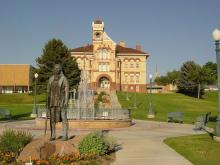
UTOPIA Fiber will soon be branching out as they continue to forge partnerships with local communities in their region. In addition to expanding their own infrastructure, the organization is working across the state line to help Idaho Falls expand a municipal network.
Funding in Place

The U.S. Department of Agriculture (USDA) recently awarded a $2.85 million grant to Forked Deer Electric Cooperative headquartered in Halls, Tennessee, and $9.75 million to Orangeburg County, South Carolina to develop broadband infrastructure.

Open access networks offer opportunities for competition and innovation that networks owned and operated by one entity can’t provide. We've written about open access networks owned, operated, and funded by public entities; now private investors are increasingly attracted to these competitive, fiber optic environments.

In early November, Founder and President from The Broadband Group, Tom Reiman, appeared on Fox Business to discuss partnership opportunities that may indicate a shift in perspective.
Strange Distruption

This past summer, consultants hired by Lakeland, Florida, shared their opinion that the community has the necessary components to launch a broadband utility.
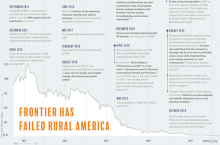
Despite raking in hundreds of millions in government broadband subsidies, Frontier Communications has failed time and time again to bring reliable, high-speed connectivity to the rural communities it serves. Our new fact sheet, Frontier Has Failed Rural America, presents evidence of Frontier’s negligence and suggests that rather than continuing to trust Frontier, government officials should look to publicly owned and community-minded providers to connect rural residents, businesses, and institutions.

Christopher Mitchell, Director of the Community Broadband Networks initiative at the Institute for Local Self-Reliance, recently appeared on Marketplace Tech to discuss security concerns around Chinese equipment used in many rural broadband networks.

Colorado
Loveland breaks ground on city-owned broadband utility by Carina Julig, The Denver Post