For Communities at a Crossroads, Chicopee’s Municipal Fiber Network Shows the Path to Success

Chicopee, Massachusetts, Ward 1 City Councilor Joel McAuliffe wrote an editorial recently that is well worth reading.

Fast, affordable Internet access for all.
Chicopee, Massachusetts, Ward 1 City Councilor Joel McAuliffe wrote an editorial recently that is well worth reading.
Westfield Gas+Electric (WG+E) started its broadband division WhipCity Fiber and the buildout of their network five years ago.

While large Internet service providers routinely face some of the lowest customer satisfaction rates in the country, municipal broadband networks, like FairlawnGig in Fairlawn, Ohio, have set themselves a
Iowa
Iowa receives $26.2 million in emergency education relief to expand broadband access, Discover Muscatine
Minnesota

Last week, the Institute for Local Self-Reliance shared a statement on the killing of George Floyd and the ongoing — and necessary — protests against police brutality in Minneapolis, where ILSR has an office and where the Community Broadband Networks initiative i

I have been tracking from afar local grassroots efforts in Cambridge, Massachusetts, to start a municipal broadband network for years. I've visited them locally and spoken to various people from citizens to elected officials about the different options. The following are my observations. I'm not trying to channel their thoughts on how to move forward.

Over the weekend, Frontier filed comments with the Federal Communications Commission (FCC) announcing that it would “welcome the inclusion” of the census blocks where it claims to newly offer broadband service into the upcoming Rural Digital Opportunity Fund (RDOF).
Colorado
Little-known Internet network plans Western Colorado expansion to link students, nonprofits to supercomputers by Tamara Chuang, Colorado Sun
Louisiana

A bill close to being passed by the Louisiana State Legislature would allow electric cooperatives to expand Internet access but only in parts of the state without broadband currently.

As the novel coronavirus has spread across the United States, so too have efforts to bring Internet access to digitally disconnected households during a time of nationwide social distancing.

Across the country, more people than ever are working and learning from home, making a quality Internet connection vital for everyone in every locality during the Covid-19 pandemic. For Americans in inadequately connected areas — rural and urban — adapting to a more isolated and remote learning and working lifestyle proves extremely difficult when lacking a reliable Internet connection.
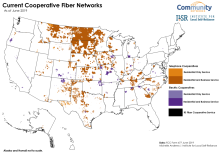
The fourth edition of our report, Cooperatives Fiberize Rural America: A Trusted Model for the Internet Age, reveals the steady growth of cooperative fiber since we originally released the report in 2017. In the report, we present rural telephone and electric cooperatives as a proven model to connect rural communities across the country with high-quality Internet access. This version updates the maps and analysis in the report with the most recent federal data.

BroadbandNow.com — a company that mostly focuses on crunching different data sets to provide information on where broadband is available — has released its second report on municipal broadband barriers.
California
Partnerships can close the digital divide by Apoorva Pasricha & Kevin Frazier, GovTech
Colorado
In March, we reported on the formation of Deerfield Valley Communications Union District in Vermont.

In their recent, biased report bashing community broadband, the Taxpayers Protection Alliance (TPA) alleges that municipal broadband networks are “GON With the Wind,” but it’s really the report’s authors who have run off with reality. To counter TPA’s erroneous and misleading claims, the Community Broadband Networks initiative has prepared a response to the report in which we summarize its many shortcomings and errors.
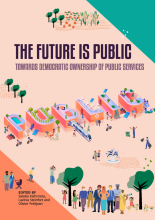
Yesterday, the Transnational Institute (TNI) released The Future Is Public, a book that explores international municipalization efforts and the benefits of public ownership.
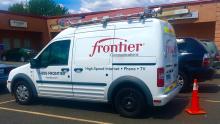
Late last month, we reported on Frontier Communications’ claim that it now offers broadband in 17,000 rural census blocks in an effort to remove those areas from the Federal Communications Commission’s (FCC’s) upcoming rural broadband funding program.