
Alford, Massachusetts

Content tagged with "Alford, Massachusetts"

Parent
Displaying 1 - 5 of 5

Seeking the Commonwealth of Connection: How Small-Town Volunteers and Public Partnerships Transformed Internet Access in Western Massachusetts
Image
CoC header image

Fifteen years ago, Western Massachusetts residents in the small hill towns were stuck on aging broadband infrastructure. While their neighbors in the eastern part of the state were seeing new investment and expanding coverage, they were not. But instead of giving a handout to the regional monopoly, they rolled up their sleeves and got to work. The result? Between 2018 and 2022, 19 very small towns in Western Massachusetts built fiber-to-the-home (ftth) networks and transformed their telecommunications future forever.

Seeking the Commonwealth of Connection: How Small-Town Volunteers and Public Partnerships Transformed Internet Access in Western Massachusetts [pdf] tells the story of how this came to be, and the impact it is had for residents, businesses, and community anchor institutions in the region. The 8,000 people who live there pay less for their broadband service than those living in most major metro areas around the country, and know their customer service representatives by name. The real estate market has gotten a boost, not only keeping people of all ages in the areas, but bringing in working professionals from New York City and transforming local business’ ability to process credit card transactions and stay competitive. Internet service outages are measured in minutes or hours instead of days. And the money they pay for that service stays in their communities, helping them plan for the future and build new revenue streams to further improve the lives of their citizens.

Public-public partnerships like these not only bring direct benefits to communities, but they strengthen the ties within and between them. Far-flung neighbors are more likely to know each other by name. The stacking effects of the gains will be felt for generations.
New Report: Public Partnerships Transform Internet Access in Western Massachusetts

Fifteen years ago, Western Massachusetts residents in the small hill towns that dotted the most rural parts of the state were faced with an increasingly stark choice. To stay where they and their family had always lived, they had to accept that they would always have second-class broadband service. The full breadth and depth of the Internet would probably be inaccessible to them, because the monopoly Internet Service Providers (ISPs) decided that even though there was profit to be had in the region, it wasn't enough to upgrade or expand those networks. Or, residents could move east, where new investment was happening but where they would have to start over. 

Image
Western Massachusetts report communities

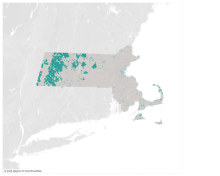
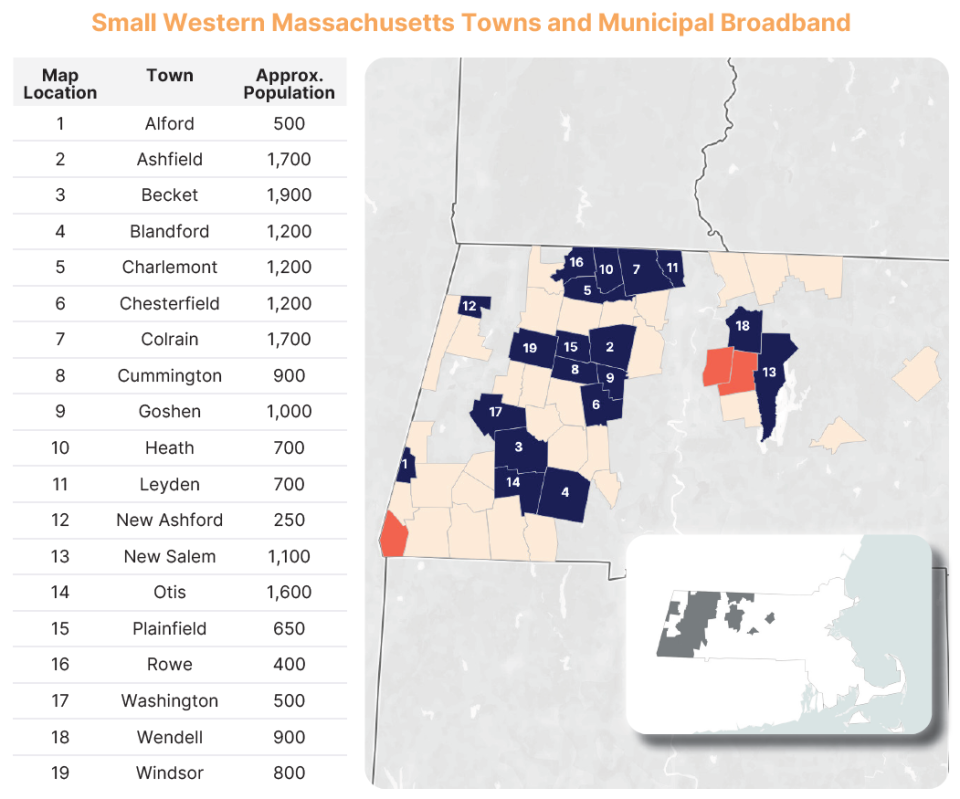
Instead, they charted a third path. Over the course of a decade, towns came together, building a grassroots movement. Leading the charge was a cadre of champions that drove thousands of miles, held hundreds of meetings, and inspired dozens of voting campaigns to partner together and build their own broadband networks. Such was the weight of their determination that the state's will was bent their way. Between 2018 and 2022, 19 very small towns built fiber-to-the-home (ftth) networks and transformed their telecommunications future forever. And the special nature of that change comes in no small part because of the public partnerships that have been established, both among themselves and with neighboring community Westfield - itself a municipal provider who today operates these new networks on behalf of the communities. 

WhipCity Fiber Charges Forward in Westfield and Massachusetts Despite Pandemic

Westfield Gas+Electric (WG+E) started its broadband division WhipCity Fiber and the buildout of their network five years ago. The project started with only serving Westfield, but WG+E is now contracting with other small towns in Massachusetts to assist in building and potentially operating their own fiber networks.

Today, WG+E is slated to help connect 12,400 households in 20 Massachusetts towns over the next 10 years. In order to do this, WG+E and WhipCity Fiber will receive more than $10 million over the next ten years through the Federal Communication Commission’s Connect America Fund Phase II auction, which awarded $1.5 billion in subsidies to broadband providers to expand rural connectivity across the nation. The 20 towns that are partnering with WG+E to build fiber networks are: Alford, Ashfield, Blandford, Becket, Charlemont, Chesterfield, Colrain, Cummington, Goshen, Heath, Leyden, New Ashford, New Salem, Otis, Plainfield, Rowe, Shutesbury, Washington, Wendell, and Windsor.

Adapting While Expanding

Westfield has been slowly building out its network, which is owned and operated by WG+E, and it is now roughly 75 percent complete. Lisa Stowe, the communications manager at WG+E, said that they temporarily paused new installations in Westfield due to the Covid-19 pandemic. However, she is hopeful that they will begin connecting new customers and resume their buildout of the network this year.

Image

To construct the WhipCity Fiber network, Westfield issued a $15 million bond. The city must pay down that bond and do routine updates to the network as they continue expanding. Stowe explained that they are well on track to having the network fully constructed within their original six year timeline.

Folks In Alford, Massachusetts, Finally See Bright End Of Crappy Internet Tunnel

On April 14th, folks in Alford, Massachusetts, gathered at their fire house to attend a presentation about the bright future of their connectivity. After a long journey to find better connectivity in the small western Massachusetts town, residents and businesses are now subscribing to Fiber-to-the-Premise (FTTP) Internet access from AlfordLink, their own municipal network.

Years Of Work

With only around 500 residents in Alford, it’s no surprise that big incumbents decided the lack of population density didn’t justify investment in 21st century connectivity. By 2012 and 2013, the community had had enough; they decided to pursue their own solution with a municipal network. Alford voted to form a Municipal Light Plant (MLP), the entity that that manages publicly owned networks in Massachusetts.

In addition to the $1.6 million the town decided to borrow to spend on fiber optic infrastructure, the town will also receive around $480,000 in state grant funds. The Massachusetts Broadband Institute (MBI) is handling distribution of funds to Alford and other towns that have decided to use the funding to invest in publicly owned Internet infrastructure.

Alford, Blandford, and Shutesbury, are a few of the hilltowns contracting with Westfield Gas+Electric (WG+E) in Westfield. WG+E’s WhipCity Fiber began by serving only Westfield, but now contracts with other small towns to either assist them as they establish their own telecommunications utilities or to provide Internet access and operate a publicly owned network. In very small communities like Alford, they may not feel they have the resources or expertise to manage a gigabit network, but don’t want to relinquish control of their connectivity to an untrustworthy corporate incumbent.

Alford, MA, Releases RFP: Deadline Dec. 21

Alford, Massachusetts, located along the western border of Massachusetts, recently released a Request for Proposals (RFP) for fiber optic network design and contractors; the community wants to deploy a Fiber-to-the-Premises (FTTP) network. Deadline for proposals is December 21, 2016.

A Long Journey To Now

Alford is home to approximately 500 residents and has pursued better connectivity since the early 2000s, when it first approached the incumbents. As is often the case, national providers continued to pass by Alford over the years leaving them with old, unreliable technology. During 2012 and 2013, the community took the necessary steps and voted to create a Municipal Light Plant (MLP), the entity that manages publicly owned networks in Massachusetts. Since then, they have formed a broadband committee, conducted surveys of local interest and requirements, and examined financial models. 

In 2015, the town approved a measure to borrow $1.6 million to cover the expenses to deploy a FTTP network. The Massachusetts Broadband Institute (MBI), the state agency tasked with administering more than $71 million in federal American Recovery and Reinvestment Act (ARRA) and state funds, informed the MLP Board that the town will receive approximately $290,000 in grants funds.

The Alford MLP’s November update reports that the community has made significant progress on make-ready work to prepare utility poles:

The MLP has now come to an agreement with Verizon and National Grid about the extent of “make-ready” work required to prepare the poles to accept fiber. In the next few weeks the MLP will make payments to the utilities, clearing the way for the work to begin. The MLP has no control over the timing of the work, which will probably begin around year- end and which can take up to six months to complete. 

The Project