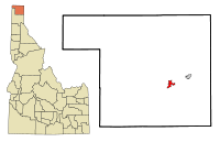

Bonners Ferry, with around 2,500 residents in Northern Idaho, realized three years ago that fiber would only find their community if they installed it themselves.
“We are a little isolated up here…We don’t have the density that would attract this kind of thing.”
Mike Sloan, Bonners Ferry Economic Development Council Director, went on to describe the situation in a recent Bonners Ferry Herald article. Even though some BTOP and BIP federal stimulus project awards came to Idaho, none of them made it to Bonners Ferry. Nevertheless, Sloan and other community leaders knew the infrastructure would be crucial to the economic well-being of the region. The project has been in the works for the past three years. Sloan went on to tell reporter Cori Flowers:
Sloan said fiber optic isn’t just a means for easier internet surfing, it’s absolutely essential to economic progress. “Any area that doesn’t have this is at a distinct disadvantage,” Sloan said. “If we ever want to attract businesses to our area, we need this.”
In order to fund the build-out, Bonners Ferry plans to create a revenue bond, with anticipated revenue from the network designated to repay the bond. With the participation of several other area regional communities, leaders are optimistic. The network will travel along electrical lines and will end at the Canadian border.
The project, still in its planning phase, will be reviewed by the Panhandle Area Council, the City of Bonners Ferry, and municipal legal counsel before moving forward.
Comments
Support for this project
This Bonner's Ferry project is the exact kind of initiative we need
As an “Army Brat”, I had the privilege of traveling with the family to a new duty station somewhere in the free world every three years and to live in countries where our freedoms and way of life are unknown. Some of these places like Haiti where I spent three years didn’t have stable electricity, clean water or good roads. Commerce and jobs were tough.
In Haiti for example, all but a very few streets in Port O Prince, the Capital were gravel. In the early 50ies when I was there – roads were the backbone of commerce. Good roads meant good commerce meant good jobs. In the late fifties and early sixties, when I lived in France, and traveled through Germany, and Switzerland, rail also played a big part in commerce. As we moved things faster and cheaper our markets expanded and jobs changed to keep thing running.
Then in the Korean War era when I was discharged from the 101st Airborne Division, the airplane joined the mix and we again expanded and moved goods even farther and jobs again changed. Well you see where I’m going. Our infrastructure is key to our economy.
By the time I left College, worked for Page Communications Engineers on a 5 year contract building the telecommunications network in Iran, received my Wisconsin Professional Engineer registration and started MIS Labs, a professional engineering consulting firm, we had containers that would move from truck to train, to boat and event to plane and we were in a global market. The company I started and ran until 2001, MIS Labs, helped organizations use the tools of technology to improve their business performance. A few of our projects include: The technology infrastructure in The Monona Terrace and the associated access network (how they connect to the internet) for Monona Terrace, City of Madison and Dane County and the backup datacenter. Now you will remember the Wrestling Governor of Minnesota – well he cut the support to educational networks. Our project became NENet – a private high speed network that serves the all the libraries, schools and colleges in the North East quarter of the State of Minnesota, and last - The American Family Mutual Insurance Company, all their Madison buildings, the World HQ complex, their five regional offices, and all their claims centers throughout the US.
I share this with you because after the recall election Wisconsin can become The Tail that Wags the Dog. In the focus of the Nation centered on Wisconsin, we will need to build on the hard foundation that has been put in place and show how innovate and Bring Jobs Back. For the most part, these will not be the traditional, labor intensive, hard work and sweat jobs that have left. There will be some of them but the really good paying jobs will be information technology rich jobs that take place within the framework of the latest in collaborative technologies to connect the subject matter experts with live audience and a virtual community physically located all over the world. I know that sounds like a real mouthful but if you want to see one of these in action, watch your kids playing one of the new collaborative computer games. As these jobs lift the Wisconsin economy all sectors will benefit. A rising tide truly lifts all boats.
When Jim Schildbach, my Campaign Financial Manager, works his day job as a Partner in Privesco, a financial management firm, he doesn’t drive to Chicago, take a high speed train, or even a trolley car to work, he sits in his home office and works whenever he needs or wishes. He has at his disposal all the collaborative capability and situational information available to him in his Chicago office.
This is the technology infrastructure that we need to deploy to all our pristine North Woods, our lake communities, our glacial drumlins, and yes our cities, towns, villages, and our rural areas.
This technology infrastructure is the transportation of our future. It will bring innovation and good jobs back.
I support this project and want to help.
High speed communications is
High speed communications is like a highway. A new highway opens up new areas of opportunity. Good luck and success to Bonners Ferry as it blends its hydro-power with its planned network of information power.