Verizon Plans to Abandon Copper Wires In Islands Damaged by Sandy

Victims of Sandy are still recovering from the killer storm that ripped through the east coast last year. Two places hardest hit by the "Frankenstorm" were Fire Island, New York and the Barrier Island in New Jersey. In addition to homes and property, residents lost phone and Internet communications when telephone wires went down. They are still waiting to be reconnected.

Our readers know about the huge fight that has embroiled consumer advocates and the leading telephone providers in the past few years. AT&T and Verizon seek deregulation to escape the "carrier of last resort" obligation that requires maintenance of traditional copper lines for telephone service. AT&T and Verizon want to shed that responsibility in favor of wireless service that is less expensive to maintain, even though it does not support the range of uses today's copper networks do. 

Verizon is the incumbent telephone provider in Fire Island and Barrier Island but decided it will not repair damaged lines. It wants to instead deploy its inferior Voice Link wireless service on the island.

The Voice Link technology basically attaches to your house and uses Verizon's cellular network to connect the telephones in your home. Homeowners can continue to use their home phones, but the quality tends to be worse than on a proper wired telephone network. 

Under federal law,  telephone providers are obligated to replace or repair downed copper lines unless they substitute with a "line improvement," such as fiber-optic lines. Voice Link cannot be described as a "line improvement" - the only benefit it provides is that it costs Verizon less to build and maintain. 

Public Knowledge Logo

Jodie Griffin from Public Knowledge recently pointed out some of the many shortcomings of Voice Link, as revealed on Verizon's own Terms of Service. The people most harmed by this scaled back service include the people who, in one way or another, are most vulnerable. Harold Feld, also from Public Knowledge, addressed what he sees as the most critical changes and who those changes most affect:

1. Voice Link will not allow you to receive collect calls, use calling card minutes or other forms of cheap long-distance provider, and requires you to have a separate international plan to make international calls.

Who gets hurt most. Immigrant communities, anyone with a loved one incarcerated or who otherwise needs to make a collect call. Since Voice Link also does not support any data plan, anyone who used to subscribe to VZ DSL and depended on Skype or other VOIP product is equally out of luck. Again, given the tremendous use of Skype by immigrant communities to call relatives back in their country of origin, this hits them particularly hard.

 2. Voice Link will  not work with life alert systems or security alarm systems.

Who gets hurt. The elderly trying to maintain independence. Anyone with a burglar alarm or fire alarm system that does not have independent wireless connections.

 3. Voice Link will not work with DVRs or Fax machines.

Who gets hurt. Any consumer that owned this kind of equipment and stuck with Verizon because they wanted to keep using it.

 4. Voice Link will not work with credit card machines or other electronic payment processing.

Who gets hurt. Small businesses, especially when combined with losing their fax service to take orders by fax.

 5. 9-1-1 calls may fail due to congestion on network or for other reasons, including Verizon negligence in routing the call.

Who gets hurt.  Well, any of those elderly whose Life Alert no longer works, for a start.

Voice Link also cannot be used for Internet access, which whittles down an already short list of providers. 

FCC Logo

Verizon appeared to be circumventing the process until a June 7th request to the FCC. The telecom giant received permission from the New York Public Service Commission (NYPSC), and immediately began nurturing a plan to follow suit in other locations. Harold Feld, from Public Knowledge, wrote about Verizon's long term plans on his Tales of the Sausage Factory blog:

Since the NYPSC gave Verizon permission to deploy Voice Link instead of copper on Fire Island (at least on an interim basis), Verizon has moved full speed ahead to deploy Voice Link in other areas where Sandy destroyed the infrastructure, and is gearing up to deploy Voice Link in Florida to replace copper with Voice Link in something called “Project Thunder,” no doubt in anticipation of the active hurricane season predicted by the National Weather Service at NOAA.

Verizon's action is shifting U.S. communications policy without moving through the proper (however flawed) channels of the FCC, shifting the balance away from the public interest. If the FCC allows Verizon to move forward unilaterally, AT&T will certainly follow suit. In a later post, Feld wrote:

In some ways, this is a little thing impacting only a few communities. In other ways, it is a very big deal. If there is a single moment to point to and say “This is it! This is The Day We Started To Shut Down The Phone Network,” that day is today. With this little routine barely noticed filing for an administrative procedure that impacts a handful of communities.

While the FCC will ask for public comment on Verizon's application, we should contact them now to express our concern about this situation. The public deserves a policy and a process for replacement of old copper lines. That policy needs to include improved service - not a more limited communications mechanism - and needs to be in place now rather than during natural disaster recovery.

CapeNet Celebrates Launch

CapeNet is officially open throughout Cape Cod. Cape Cod Today reports Governor Deval Patrick, President of Massachusetts' Senate Therese Murray, and State Senator Dan Wolf spoke on June 14th at an official event titled "This Changes Everything."

Planning for the new fiber network began seven years ago as a joint idea between Cape Cod Community College and Woods Hole Oceanographic Institute. In addition to $8 million in state, county, and CapeNet contributions, the project received a $32 million stimulus award. The network spans 37 towns along its 350 mile trail. According to the CapeNet website, community anchor institutions will include 30 libraries, five colleges, and six research facilities. Approximately 62,000 businesses will have the ability to connect.

Catching Up on Clarksville - Community Broadband Bits Episode #51

Clarksville is the fifth largest city in the state but was among the first networks in nation to offer symmetrical fast connections with a 10 Mbps basic offering when it launched. Christie Batts, Broadband Division Manager of Clarksville Department of Electricity, joins us to share some of the lessons learned and successes from Clarksville, which is now offering a gigabit everywhere in the community.

Clarksville has a significant population attached to a military base, which results in significant churn - meaning frequent connect and disconnect requests. High churn is costly to utilities. But having its own fiber network helps to keep costs lower for other utility services as well as benefiting the community.

However, Clarksville also had some difficulties that led to a large change in management. Though the network has not been subsidized in any way, it is only now on track to be where the utility wants it to be financially.

And finally, Christie Batts offers some thoughts on how to engage a local Chamber of Commerce.

This show is 25 minutes long and can be played below on this page or subscribe via iTunes or via the tool of your choice using this feed. Search for us in iTunes and leave a positive comment!

Listen to previous episodes here. You can can download this Mp3 file directly from here.

Thanks to Eat at Joe's for the music, licensed using Creative Commons.

Wireless Internet Access Fact Sheet

Wireless networks have been incredibly successful, from home Wi-Fi networks to the billions of mobile devices in use across the planet. So successful, in fact, that some have come to believe we no longer need wires.

We developed this fact sheet to clarify some misconceptions about what wireless Internet networks are capable of and the importance of fiber optic cables in building better wireless networks as our bandwidth needs continue to increase.

This fact sheet defines important terms, offers some key points clarifying common misconceptions, compares 4G and 3G wireless to wired cable, and more. We also include references to additional resources for those who want to dig deeper.

Download our Wireless Internet 101 Fact Sheet Here [pdf].

If you want updates about stories relating to community Internet networks, we send out one email each week with recent stories we covered here at MuniNetworks.org. Sign up here.

Smart Conduit Policy in Sandy, Mount Vernon Reduces Network Cost

More communities now embrace "dig once" policies to facilitate installation of future and current networks. The idea is to be mindful of trenching for transportation and utility projects and encourage collaboration between agencies. However, this is implemented in a variety of ways, some more effectively than others. By establishing requirements for conduit installation in development codes, communities can save big dollars if they build or expand a network in the future.

Communities such as Sandy, Oregon, and Mount Vernon, Washington, have instituted such policies. Both communities require private developers to install conduit when disturbing existing roads or building roads for new subdivision construction. Conduit itself is inexpensive and the digging is already done, so the added burden is light.

Both of these communities have plans, including maps, that allow them to be strategic in where they require conduit to be placed. They are not simply adding conduit blindly, though that policy may be better than doing nothing at all (experts are divided on the matter).

In Sandy, the code change (see Sec. 17.84.60) was a simple expansion of existing policy. The city added "broadband (fiber)" to the list of public facilities, such as public water, sanitary sewer, and storm drainage. Underground communication lines join a list of other required improvements that are to be installed in new developments at no expense to the city. Other items on that list include drainage facilities, mailbox delivery units, street lights and a underground power lines. (see Sec. 17.100.300).

Anticipated connectivity raises the value of new homes and makes them more attractive to today's buyers. Scott Lazenby, City Manager in Sandy, spoke to us for a recent podcast and told us how a developer in the area is excited about the potential. SandyNet plans to offer 100 Mbps Gbps residential service via the new conduit at an incredibly low $40 per month; the developer sees that as a major selling point.

Sandy Logo

In Mount Vernon, Washington, the community added conduit placement requirements in 1999 to help with the build of its open access telecommunications network. The code reads:

12.20.015 Construction standards for the regulation of use of public rights-of-way and public property.

All developments shall be required to construct and install telecommunications conduit on all streets that are affected, disturbed, constructed and/or improved by development unless otherwise approved, pending a review by the city engineer. This conduit shall be for the purpose of installing telecommunications cable, fiber optic wiring or other infrastructure as necessary.

This conduit shall be placed at horizontal and vertical locations as determined by the city engineer. The conduit shall conform to the size, shape and characteristics as determined by the city engineer based on industry standards. Once installed and accepted by the city, the conduit shall become the property of the city of Mount Vernon.

Development as defined in this section shall mean the construction of improvements such as buildings, homes, subdivisions, streets, and utilities. (Ord. 2927, 1999).

Kim Kleppe, Information Systems Director, notes that the policy has helped immensely in locations where aerial installation was not possible. Kleppe says the city has relaxed the requirement in recent years for residential builds because community leaders are now focused on commercial and government growth for the open access network. We interviewed Kleppe in episode #38 of the Broadband Bits podcast.

Even if a community does not ultimately build its own network, the underground pathways will be in place for leasing should a private provider choose to build. Local communities need to take advantage of any tool that can facilitate possible expansion of their telecommunications utility, whether that utility exists today or is still just an idea.

Ames Tribune Editorial Board Wants a Gig

We continue to see more and more of what we might call "gigabit fever." This is not just a "me too" bubble centered around superfast Internet access. It is a recognition by more and more communities that the refusal of their cable and DSL duopoly to invest in next-generation networks is materially harming their future.

Shortly after Cedar Falls announced it was the first community in Iowa with universal access to a gigabit courtesy of the municipal utility, the Ames Tribune made the case for a gigabit there also.

Ames is home to the excellent Iowa State University (as is Cedar Falls, with U of Northern Iowa). I can praise them as long as I don't say anything about the Hawkeyes, rivals to my beloved Gophers.

Unfortunately, the municipal utility in Ames is less than enthusiastic about following the Cedar Falls approach.

Yet Don Kom, director of the City of Ames Electric Department, tells us: “There has been no discussion at my level of bringing fiber from the city to our customers. We’re not having that discussion.”

Certainly the city has many pressing issues and priorities to address, but super-fast Internet service ought to be high on its list. Besides the fact that it’s the wave of the future and we ought to try to keep pace with that wave, Ames has an impressive history of ambitious and innovative achievements. From burning trash for power to building a large man-made lake, from CyRide to the Main Street revival, Ames is a leader, not a follower, in tackling big things.

Ames provides a reminder that while municipal electric utilities have been at the forefront of investing in FTTH networks historically and gigabit networks more recently, many municipal electric utilities are spending a lot of energy trying to avoid stepping outside their historic business models.

I'm reminded of an interview with Harold DePriest, the visionary CEO of Chattanooga's Electric Power Board, who runs the first network in the US capable of delivering a gig anywhere in the city at a moment's notice (see our case study, Broadband at the Speed of Light).

Story County Iowa Logo

I asked Harold about the role of a municipal electric utility and he said the municipal utilities were formed to ensure the community could take full advantage of the new technology of the day because the private sector was not investing in a way to allow everyone to benefit. It was not about electricity, it was about doing what needed to be done for a community to have the infrastructure it needs to thrive.

That said, either Ames or Story County could move forward with a project absent assistance from the utility. Seattle found its electric utility quite reluctant as well and has settled with a public-private partnership. Other local governments have moved forward with no electric utility - it is a harder path, but by no means impossible.

At the risk of copying too much from the Ames editorial, I do want to highlight how they finished it. Very well written:

And, to take this a step further, while Ames should be taking steps to become a gigabit city, Story County should be looking for ways to extend broadband service to everybody in the county. It’s disturbing, frankly, to imagine that some rural residents are still coping with the sluggish Internet speeds of the 1990s.

It’s pretty clear now that the Internet is not just a fad. It’s equally evident that most of America’s future economy will involve the Internet in some way. Let’s get started now on making Ames a gigabit community on a par with anybody else in the country. It’s not overly dramatic to argue that our economic future depends on it.

Nixa, Missouri, Approves Study But Suddenlink Protests

Not long ago, we learned about Nixa, Missouri, and a group of local entrepreneurs interested in a community owned network. In May, the City Council approved funding for a preliminary study to explore the possibilities for a municipal network. The study will cost $45,000.

According to Rance Burger of the News-Leader, a May 20 council meeting drew Suddenlink Mid-South Regional Manager LaDawn Fuhr, who advised against consideration of the initiative. Fuhr addressed the council:

“We respectfully believe that should you decide to compete against private enterprise, that we will be well-positioned through our local services, investments and fiber-rich network to answer the challenge,” Fuhr said.

“We’re worried if the city continues on this path, the nature of our relationship would eventually change in at least one respect, we would become competitors,” Fuhr said.

Once again, we see a paradox. Only if the community invests in a network will the existing cable company consider investing in its network, customer service, and other aspects of a business that is not presently faced with competition.

The City has already dedicated staff time to the potential project. In an April, 2013, memo, City Administrator Brian Bingle shared research findings and potential approaches. The City is interested in a fiber network for both SCADA and telecommunications uses. According to the memo, Nixa and Sho-Me Technologies, a local subsidiary of Show-Me Power Electric Coop, already have a positive working relationship and may expand the scope of their collaboration. Sho-Me owns existing fiber resources in the area and has expressed a desire to work with the City. While Sho-Me is not interested in serving last mile to residents or businesses, the Marshall, Missouri company may want to connect community anchor institutions.

Nixa conducted business and residential surveys earlier this year and detailed results are in the April memo. DSL, Cable, and U-Verse, are sprinkled throughout the area but most respondents still replied positively to a potential municipal network. Affordability is top priority for residents. Potential commerical subscribers listed affordability and more robust service as their main concerns. 

Regardless of Suddenlink's toss of the gauntlet, Nixa City Council invited them back when the study is complete in 60-90 days.

“We’ll let you guys know whenever that comes back, and we’ll be talking about it again,” [Councilman Brian] Steele said. “We’ll probably have a lot better questions to ask you at that point.”

Wired Highlights Local, Public Option for Internet Networks

Klint Finley from Wired.com joined a Media Consortium press call that our own Christopher Mitchell participated in regarding community owned networks, Google Fiber, and concerns about the future of Internet access. He wrote about the event and the promise of municipal networks.

Finley referred readers to us:

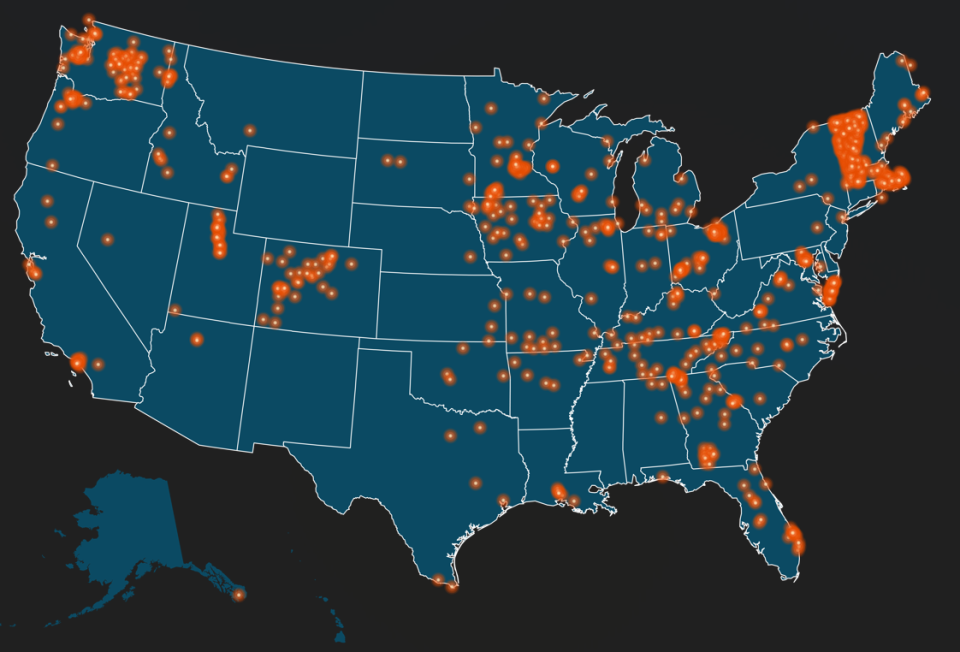
But there’s no guarantee that Google Fiber will come to the rest of the United States, and many communities may want to start building an alternative right away. Mitchell said the first step towards building a municipal broadband service in your area is to get educated about what other communities have done. That’s the purpose of the site muninetworks.org, which compiles information about municipal broadband initiatives across the country. The goal is to create a comprehensive resource for community organizers. Users can explore the projects in different states through the Community Network map.

We continue to find more local governments moving forward with their own investments to improve local access, suggesting that many understand the folly of hoping some distant corporation will build the network they need to be successful in the digital economy.


Responding to "Crazy Talk" - Community Broadband Bits Episode #50

For our 50th episode, we're trying something new: Lisa and I respond to three common claims made by opponents of community owned networks. We owe these three particular arguments to the Executive Director of the trade association of Wisconsin telephone companies. Each of the clips we respond to come from claims he made at a workshop at the 2012 WiscNet conference.

We play a short claim by him and then Lisa and I respond to it. For this show, we look at claims that telephone companies already serve everyone with broadband, that the rapid iteration of mobile phone technology delegitimizes public sector investment in networks, and that public investment "crowds out" private investment.

These are very common arguments offered every time a community considers building its own network, but they are quite weak. As Joey Durel, Mayor of Lafayette, so often reminds us, the big companies don't win by having good arguments. They win by buying steaks and football tickets -- lobbying. Campaign contributions help too.

At any rate, let us know if you like this format and what questions we should consider the next time we do it. We want your feedback and suggestions for the show - please e-mail us or leave a comment below. Also, feel free to suggest other guests, topics, or questions you want us to address.

This show is 12 minutes long and can be played below on this page or subscribe via iTunes or via the tool of your choice using this feed. Search for us in iTunes and leave a positive comment!

Listen to previous episodes here. You can can download this Mp3 file directly from here.

Thanks to Eat at Joe's for the music, licensed using Creative Commons.

Leadership Panel Set For November Broadband Communities Conference

In November 2012, Broadband Communities Magazine hosted the first of its Economic Development Conference Series in Danville, Virginia. The second conference, scheduled for November 5-7, 2013, will bring another group of leaders together in Tinley Park, Illinois, just outside of Chicago.

This year, the conference will focus on the Midwest with discussions about Illinois, Indiana, Iowa, Kansas, Michigan, Minnesota, Missouri, Nebraska, North Dakota, Ohio, South Dakota, and Wisconsin.

As usual, our own Christopher Mitchell will speak there and will be generally available to discuss community owned networks with those who attend.

From the announcement:

We are assembling an outstanding multi-disciplinary roster of national, regional, and local experts who have extensive experience in using advanced communications capabilities to foster economic development and create jobs. We will examine what is working well, what is not, and what lies ahead, particularly as federal stimulus funding ends.

Our speakers will provide attendees a wealth of economic research, case histories, how-to materials, and other practical information that they can use effectively in their communities. We will address the latest "hot" topics, including Google Fiber, FirstNet, the Connect America Fund, the FCC's new Health Care Connect Fund, emphasizing their potential to foster economic development and job creation. We will also provide ample time for networking and learning about relevant cutting-edge products and services.

The leadership panel includes:

  • Jim Baller - Conference Chariman and President of Baller Herbst Law Group
  • Joel Mulder - Illinois Broadband Deployment Council, Illinois Municipal Broadband Association, and Senior Director of Business Development, G4S Technology
  • Gary Evans - Former CEO of Hiawatha Broadband Communications
  • James Salter - CEO, AEG
  • Susan Crawford - Roosevelt Institute Fellow
  • Lev Gonick - CEO, OneCommunity (as of July 2013)
  • Blair Levin - Executive Director, Gig.U
  • Diane Kruse - Former Chair, FTTH Council and President of Neo Fiber

You can register now until July 1 for the Special Early Bird Rate. The event will be at the Tinley Park Convention Center and the adjoining Holiday Inn offers a special rate for conference attendees.