
wireless network

Content tagged with "wireless network"

Related Topics
Displaying 1 - 5 of 5

IN OUR VIEW: Decoding The Possible Meaning of “Reforms” to the Tribal Broadband Connectivity Program

In the last two months of the Biden administration, nearly $500 million in grants were announced to support Tribal broadband projects. From Alaska to Virginia, 55 Tribal nations were poised to improve Internet access and advance digital sovereignty in their communities.

As President Trump took office, more than a hundred applicants still awaited word on their proposals, with nearly $500 million still available in the Tribal Broadband Connectivity Program (TBCP).

Then, silence. Ten months of silence.

In early November, Senators Maria Cantwell (D-Wash.) and Brian Schatz (D-Hawaii) sent a letter to NTIA officials asking about the TBCP. The program was established with two appropriations totaling nearly $3 billion. The first round of TBCP grants rolled out throughout 2022 and 2023, totalling nearly $100 million in use and adoption funding and over $1.7 billion in planning or infrastructure funding.

Image
Sen. Maria Cantwell stands behind a microphone and podium with her hands raised in the air, palms upward

The $500 million announced at the end of the Biden administration was part of round two of the program, for which applications were due in March 2024. With about $1 billion available, only about half of the funding in round two had been allocated.

What was happening, the Senators asked, with the rest of that funding? There were other questions too.

San Francisco Wins National Award For Providing Free High Speed Internet Service To Affordable Housing Residents

As the Affordable Connectivity Program (ACP) is now bankrupt and no longer helping low-income households pay for home Internet service, the City of San Francisco is being honored with the 2024 Community Broadband Project of the Year Award by the National Association of Telecommunications Officers and Advisors (NATOA) for its Fiber to Housing (FTH) program.

Built on the back of the city’s municipally-owned fiber optic network – which since 2002 has been used to connect city and public safety facilities, hospitals, libraries and street lights – California’s fourth most populous city is well on its way to extending the city-owned network to deliver free high-speed Internet service to 30,000 affordable housing units across the city.

Image
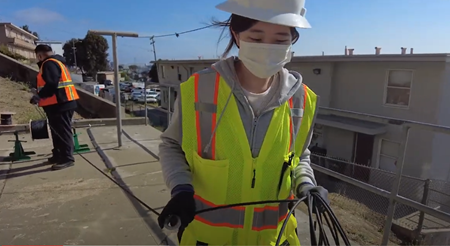
San Francisco technicians deploying fiber across roof

The program currently serves over 14,300 affordable housing units in the city, as well as 1,500 beds at homeless shelters across 115 sites, city officials say. An additional 10,000 residential units are expected to be connected in the coming fiscal year, with the aim of serving 30,000 units by July 2025.

According to the city’s website, the program has connected 52 public housing locations across the city to “fiber-optic and Ethernet cabling in every housing unit.” An additional 63 housing locations are getting free Internet through onsite Wi-Fi with download speeds ranging from 60 to 120 Mbps (Megabits per second), which exceeds the 50 Mbps service Comcast’s Internet Essentials offers.

The Future of LTE Networks | Episode 85 of the Connect This! Show

Connect This

Join us Friday, December 1st at 2pm ET for the latest episode of the Connect This! Show. Co-hosts Christopher Mitchell (ILSR) and Travis Carter (USI Fiber) will be joined by regular guests Doug Dawson (CCG Consulting) and Kim McKinley (UTOPIA Fiber) and special guest Mike Dano (Editorial Director, 5G & Mobile Strategies, Light Reading) to tackle the future of LTE networks - how did we get here, and where are we going? They'll talk about what happened to the 5G hype train, rural mobile wireless, market dynamics, and more. Go back and watch The Only History of LTE You'll Ever Need to catch up on part one of the discussion.

First, the crew tackles the FCC's digital discrimination proceeding in the context of ILSR Researcher Emma Gautier's recent piece on the subject. Then, they pause for a brief moment on what looks like a new dark money, anti-municipal broadband campaign aimed at UTOPIA Fiber in Utah. Finally, Christopher, Kim, Doug, and Travis are joined by Mike Dano to jump into the main subject of today's show: where we're at now, and where we expect to go, with mobile wireless networks.

Email us at broadband@communitynets.org with feedback and ideas for the show.

Subscribe to the show using this feed or find it on the Connect This! page, and watch on LinkedIn, on YouTube Live, on Facebook live, or below.

Remote video URL

Syracuse Launches Surge Link Community Broadband Network

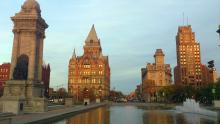
Syracuse officials have launched a new wireless community broadband network they hope will help bring affordable broadband access to the city of 145,000.

Dubbed Surge Link, the effort is backed by more than $3.5 million in federal funding and aims to deliver free broadband access to the city’s lowest income neighborhoods.

Motivated by peak pandemic connectivity headaches, Syracuse put out a request for proposal (RFP) late last year. The city then hired US Ignite as an advisor, and selected Geneva-based Community Broadband Networks (no relation to our program here at ILSR) to build a fixed wireless network capable of delivering discounted access starting with 2,500 underserved Syracuse households.

City officials tell ILSR the network is using Fixed Wireless Access technology, specifically Citizens Broadband Radio Service (CBRS), which is an emerging technology a growing number of municipalities and other nonprofit community groups have been experimenting with as a way to bring broadband to unserved and underserved residents in dense settings. And while CBRS has promise, as US Ignite notes, “because the technology is relatively new, the hardware and software associated with CBRS networks is also new. Vendors may still be working out the kinks in their solutions, particularly if those solutions are being used in novel ways, or need to interface with other older systems.”

It should also be noted that another New York community (Westchester County) embraced CBRS, only to find that it could not deliver the capacity they wanted to many people who needed the service. 

Warren Co. Pennsylvania Seeks Partner to Bring Broadband to Rural Residents

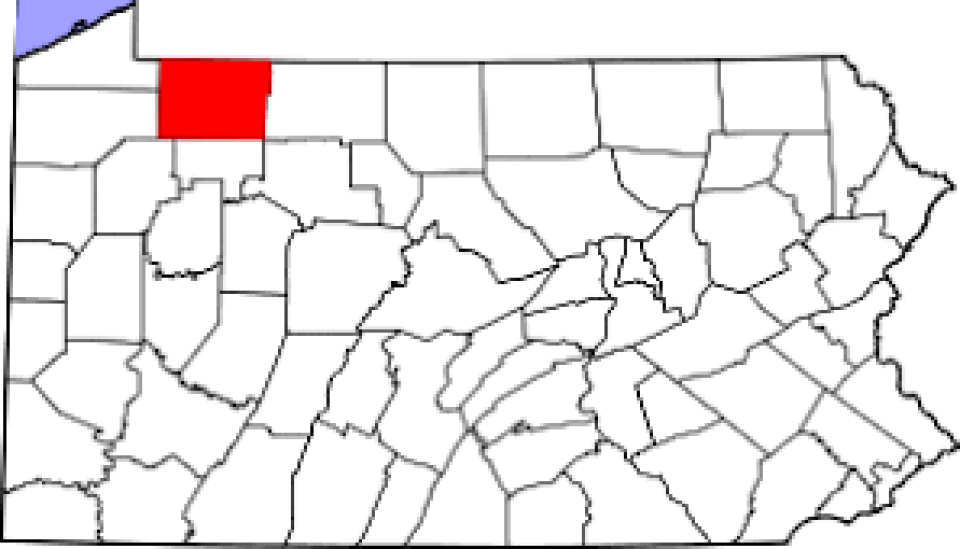
In late August, Warren County Commissioners in northwest Pennsylvania issued a RFP that sought to establish a public-private partnership to bring high-speed Internet connectivity to rural parts of the county near the Allegheny National Forest and River.

County officials are now reviewing proposals for a plan to “design, engineer, procure, install, operate, manage, and maintain high speed Internet to connect and serve the underserved rural areas of the county.” The initiative is part of the county Broadband Task Force’s effort to close the digital divide in a region that is nearly 900 square miles and home to 40,000 residents.

The RFP calls for three required outcomes

  • High-speed Internet access for the fire departments in Garland, Wrightsville, Sugar Grove, Spring Creek, and Spartansburg.
  • Wireless or wireline connectivity to businesses and residential households in Garland, Wrightsville, Sugar Grove, Spring Creek, and Spartansburg communities.
  • Offer “no cost service” to municipal entities in the county.

And while the RFP does not specifically require wireless network proposals, the RFP puts its thumb on the scale in favor of proposals that detail a “Primary Wireless Solution.”

Image

The county would own the infrastructure for three years and, during that time, the Internet service provider who wins the bid will pay a rights-of-way agreement for the network, and will be responsible for the management and maintenance of the network. The county is also willing to provide access to its vertical assets to enable the deployment of wireless technology.