
News

Webinar To Explore ‘Smart City’ Infrastructure and the Costs of Ignoring It

The livestreamed event will bring together community-driven broadband champions who are redefining what it means to be a “smart city” — and what communities risk when they fail to invest in modern connectivity. Moderated by AAPB Executive Director Gigi Sohn and ILSR’s Sean Gonsalves, the livestreamed discussion will bring together community-driven broadband champions who are redefining what it means to be a “smart city” — and what communities risk when they fail to invest in modern connectivity.

Trump FCC Votes To Weaken Broadband ‘Nutrition Label’ Rule That Already Saw Mixed Compliance

The Trump FCC has announced that it's taking formal steps to weaken or eliminate the rules as part of the agency’s broad, frontal assault on consumer protections. On October 30, the The Trump FCC under Brendan Carr voted in favor of a Notice of Proposed Rulemaking (NPRM) to eliminate or weaken the rules; especially requirements that ISPs transparently detail itemized fees buried in their advertised prices.

New Report: Public Partnerships Transform Internet Access in Western Massachusetts

In a new report from the Institute for Local Self-Reliance, we tell the story of how 19 very small Western Massachusetts towns worked together over a decade and a half to build an alternative to the monopoly broadband marketplace and deploy their own municipal networks. It's a unique story of perseverance and the power of public partnerships. "Seeking the Commonwealth of Connection: How Small-Town Volunteers and Public Partnerships Transformed Internet Access in Western Massachusetts tells the story of how this came to be, and the impact it is had for residents, businesses, and community anchor institutions in the region.

Experts: Withholding BEAD Funds Because of State Affordability Laws On Shaky Legal Ground

Legal analysts are questioning the recent assertion by the head of the National Telecommunications and Information Administration (NTIA) that the agency can legally withhold federal broadband deployment funds from states that have laws enforcing net neutrality or that have enacted affordable broadband legislation. Last week in speaking before the conservative Hudson Institute, NTIA administrator Arielle Roth offered remarks that have legal observers scratching their heads in bewilderment.

Superior, Wisconsin’s ‘Game Changing’ Open Access Fiber Network Goes Live

Superior, Wisconsin’s community-owned open access fiber network has gone live in its first two deployment neighborhoods, as the city works toward providing affordable next-generation fiber access to the city’s long under-served community of 26,000. The city’s open access network means that multiple broadband providers can compete over the same shared infrastructure and so far two independent ISPs are offering retail service to residents.

Connexon Completes Grady EMC Fiber Build In Cairo, Georgia

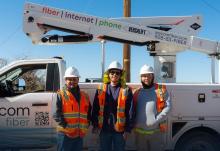
Conexon Connect, the ISP arm of fiber broadband builder Conexon, says it has completed its new fiber build in Cairo, Georgia in close collaboration with Grady Electrical Membership Corporation (EMC). It’s Connexon Connect’s seventh completed broadband fiber to the home project in Georgia and twelfth completed broadband network overall since the ISP was created in 2021.

Federal Reserve Study Offers Broadband Affordability Advocates ‘Novel New Measure’

A recently published study by the Federal Reserve Bank of New York details how to more accurately measure the elusive nature of affordable broadband costs at the community level. It also pinpoints multiple contributing factors such as the state of local infrastructure and how lower performing broadband access technologies can force low-income households to choose between cellular service or home Internet service.

A Constitutional Crisis in Broadband and The Fight to Restore Digital Equity Funding

The Trump administration's illegal “termination” of the 2021 Digital Equity Act continues to have devastating real world impacts on everything from affordable broadband access to protecting Americans from skyrocketing online scams. Earlier this month the National Digital Inclusion Alliance (NDIA) also filed a lawsuit against the government, stating that “the administration’s unilateral decision to end the statutory program and terminate grant funding is unconstitutional and violates the separation of powers between the executive and legislative branches as outlined in the Constitution.”

Cleveland’s DigitalC Gets $500K Google Infusion For Affordable Fixed Wireless

Innovative digital equity nonprofit DigitalC is enjoying new momentum for its plans to expand fixed wireless broadband access in the city thanks to a $500,000 cash infusion from tech giant Google. According to an announcement by the nonprofit, the donation includes next-generation Fixed Wireless Access (ngFWA) equipment from Tarana, which will allow DigitalC to expand its Canopy home broadband service – which provides symmetrical 100 megabit per second (Mbps) at $18 a month – to even more neighborhoods in Ohio.

B4DE: Moving At The Speed of Trust Reprise

The third Building for Digital Equity livestream of the year brought together policy experts and frontline workers to explore how community-driven connectivity solutions are inextricably tied to building local trust. If you missed it, the entirety of the event can be viewed here. The event provided attendees a jolt of hope and optimism, even as the world of digital equity has been upended by the demise of the federal Affordable Connectivity Program, the sudden termination of the Digital Equity Act, and numerous other Trump administration policy shifts that will make it harder to bridge the digital divide.

Trump FCC Kills Popular Program That Brought Free Wi-Fi To Low Income School Kids

The Trump FCC has voted to kill two different programs that helped bring free Wi-Fi to school kids in underserved poor and rural U.S. communities. It’s the latest casualty of an administration that has been taking a brutal hatchet to FCC consumer protection and affordability initiatives, many of which were developed over decades – with popular bipartisan support.

Sertex Will Build Lion’s Share Of Maine’s Massive Middle Mile Network

The Maine Connectivity Authority has chosen Sertex Broadband Solutions to help build and manage a massive portion of the state’s 536-mile middle mile fiber network known as MOOSE Net. Sertex will engineer and construct a 450-mile segment of MOOSE NET on the back of a $30 million grant. The effort is expected to dramatically improve affordable broadband connectivity for 11,000 homes and businesses as well as 200 community anchor institutions, including rural Maine schools, libraries, and healthcare facilities.

Minnesota’s Paul Bunyan Communications Shares $3.6 Million Windfall With Members

The telephone cooperative-owned Paul Bunyan Communications in Northern Minnesota recently announced it was giving a $3.6 million profit windfall back to local community members. It’s the fourth such payout to local subscribers in the last seven years. For distributions of $150 or less, a credit was applied to subscriber’s bills. For sums greater than $150, the cooperative mailed checks out to locals.

Countdown to Next Building for Digital Equity Event: Moving at the Speed of Trust

Slated for October 1 at 3 pm EST, the next B4DE virtual gathering will spotlight local strategies for digital equity and explore why it’s necessary for frontline digital inclusion practitioners to be “Moving at the Speed of Trust.” Building on a phrase popularized by Stephen Covey and echoed by noted writer and activist Adrienne Maree Brown in her book “Emergent Strategy,” the line-up of guests will share their on-the-ground experiences and stories to showcase why bottom-up trust building is not just a soft, emotional concept but a measurable, actionable asset that improves outcomes.

Vermont’s Otter Creek CUD Finished Fiber Build $3 Million Under Budget

Vermont’s Otter Creek Communications Union District not only recently finished its major fiber deployment, CUD leaders say the project came in significantly under budget, saving Vermont state leaders more than $3 million in taxpayer dollars. That money will now be redirected toward efforts to make access more affordable for state residents.

California Regulators To Include Broadband Affordability Requirements In Verizon Frontier Merger Approval

The California Public Utilities Commission (CPUC) is poised to include new broadband affordability requirements as part of the state’s looming approval of Verizon’s massive $20 billion merger with Frontier Communications, even as some consumer advocacy groups worry the changes may not go quite far enough to hold Verizon accountable. The CPUC’s Public Advocates Office has struck a partial settlement with Verizon that the state hopes will take some of the sting out of the telecom industry’s latest consolidation spree.

In Our View: Trump Administration Doubles Down on Pulling Investment Away from Rural Internet Access

NTIA, the federal office administering the largest single investment to expand Internet access across the nation, appears to once again be changing the BEAD program in ways that would only force states to further reduce investment in rural areas. NTIA seems to have added yet another time-consuming wrinkle: a super secret “Best and Final Offer” round imposed on states after submitting final proposals.